Switzerland Keeps Russia Sanctions After Voters Reject Stricter Neutrality Plan
The result preserves Switzerland's current framework, including its ability to cooperate on security matters and impose sanctions on a case-by-case basis
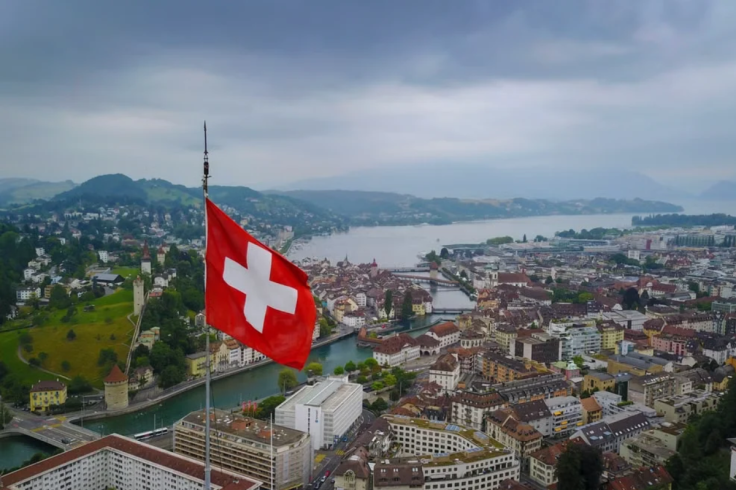
Switzerland will retain its existing approach to neutrality after voters on Sunday rejected a proposal to impose stricter rules on military alliances and sanctions. About 70% voted against the initiative, with all 26 cantons also rejecting it. The final result was 70.15% against and 29.85% in favour.
The initiative, promoted by the Swiss People's Party (SVP), would have added provisions requiring Switzerland to maintain 'perpetual and armed neutrality'. It would also have barred the country from joining or cooperating with military or defence alliances, except if Switzerland were under military attack or such an attack were being prepared.
It would also have prevented Switzerland from imposing sanctions on belligerent states, apart from sanctions ordered by the United Nations and measures designed to prevent sanctions from being circumvented.
That would have restricted the legal basis for Switzerland's sanctions against Russia, which it has largely adopted in line with the European Union since Russia's full-scale invasion of Ukraine in 2022.
What Voters Were Asked To Approve
The measure sought to enshrine 'perpetual' and armed neutrality in the constitution, and it would have barred Switzerland from joining or cooperating with any military or defence alliance unless the country was under attack or such an attack was being prepared. The government opposed the plan from the outset.
When the campaign launched in August, Foreign Minister Ignazio Cassis stressed that the vote was not about giving up neutrality. 'Switzerland has been and is neutral, and it will remain neutral,' he said.
On sanctions, Cassis argued that Bern already judges each case on its merits. 'Neutrality does not require an automatic response; it requires us to take responsibility and weigh up our interests,' he said.
Security officials went further. Markus Mäder, head of the State Secretariat for Security Policy, warned that the rigid approach 'would weaken Switzerland's defence capabilities'.
Simon Plüss, who heads sanctions at the State Secretariat for Economic Affairs, said a refusal to cooperate with European partners was 'likely to cast even greater doubt on its reliability as a supplier of defence equipment'.
Here are the final results for today's votes in Switzerland 🗳️
— swissinfo.ch (@swissinfo_en) September 27, 2026
🇨🇭Neutrality initiative: 29.8 % in favour and 70.2 % against.
🌾Food security initiative: 27.5 % in favour and 72.5 % against.
Voter turnout was 47%. ↩️ pic.twitter.com/zrB1MMSOHh
Russian Activity During the Campaign
The Russian government publicly opposed Switzerland's sanctions policy, while Russian state media and other actors also intervened in the referendum campaign. Russian Foreign Ministry spokeswoman Maria Zakharova repeated Moscow's claim that Switzerland was no longer neutral and criticised its treatment of historical issues.
Swiss authorities also reported covert activity. The State Secretariat for Security Policy (SEPOS) said that it had observed 'coordinated, covert disinformation operations' during the campaign. However, SEPOS said it did not believe foreign actors had a decisive impact on the referendum's outcome.
Ulrich Schmid, a Swiss expert on Eastern Europe, said Russian intervention may have damaged support for the initiative, arguing that direct voting recommendations from abroad can be counterproductive. His assessment does not establish that Russian activity caused the referendum result.
Defeat for the Initiative's Backers
The result was a defeat for the initiative's supporters, including former SVP leader Christoph Blocher, who was a prominent backer and reportedly spent 2 million Swiss francs, about £1.8 million, on the campaign, according to Bloomberg as reported by the Guardian. Opposition politicians were quick to respond.
'Voters understood what the SVP wanted: it wanted Switzerland to isolate itself internationally and shirk its responsibilities when international law is being trampled on,' Green party lawmaker Sibel Arslan said.
The vote leaves Switzerland's existing neutrality framework unchanged, with the Federal Council retaining its existing approach to how it is applied. The Federal Council retains its existing discretion to decide on sanctions on a case-by-case basis, while Switzerland can continue its security cooperation with Nato and European partners.
The outcome matters for Switzerland's defence industry, which officials had warned could lose European customers under a stricter regime.
The result followed reported Russian involvement in the campaign, with Swiss authorities saying they had observed covert disinformation operations but did not believe foreign actors had a decisive impact on the referendum.
Days before the vote, parliament asked the government to lay the groundwork for 'an effective analysis' of foreign influence attempts, suggesting the issue will remain under scrutiny after Sunday's result.
© Copyright IBTimes 2026. All rights reserved.
- Recommended For You