

Paper Straws 'Worse Than Plastic'? Study Finds 6.3 Times Higher Carcinogenic Impact, Plus Recycling Problems
Researchers said simply replacing plastic with another material may not solve waste-management problems
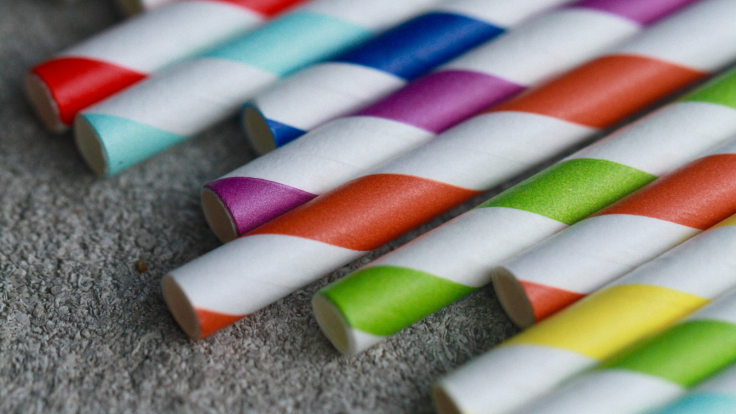
Paper straws have been found to have a carcinogenic impact 6.33 times higher than conventional plastic straws in a South Korean government-commissioned study. The measure refers to a modelled life-cycle impact associated with emissions linked to potential cancer-related effects.
The finding does not mean people who use paper straws face 6.33 times the cancer risk. Instead, the study used a life-cycle assessment to estimate potential health impacts from emissions associated with producing, using and disposing of the straws. The assessment compared conventional polypropylene (PP), paper, biodegradable plastic and bio-based polyethylene (bio-PE) straws across 16 environmental impact categories, including climate change, toxicity and resource use.
Paper Straws Recorded Higher Environmental Impacts
The study found conventional plastic straws had the lowest environmental impact in 10 of the 16 categories assessed, including climate change, acidification, particulate matter and human toxicity. Paper straws recorded higher impacts than conventional plastic in several areas.
Paper straws' carcinogenic impact was 6.33 times higher, while their acidification impact was 2.04 times higher and their ozone depletion impact was 2.23 times higher. 'Carcinogenic impact' is a modelled measure of potential cancer-related effects associated with emissions across the product's life cycle, rather than a person's actual likelihood of developing cancer.
The comparison also found paper straws had 1.62 times the particulate matter impact of conventional plastic straws. The report also found paper straws had the greatest impact in three categories, including mineral resource depletion, ionising radiation and freshwater eutrophication among the categories examined by researchers.
Other alternatives performed worse in some measures. Bio-PE recorded a carcinogenic impact 16.18 times higher than conventional plastic, while biodegradable plastic was 3.34 times higher. Bio-PE is made using renewable plant-based feedstocks but is not biodegradable. Researchers found it had the highest impact in 10 categories, including ozone depletion, acidification and smog.
Recycling Straws Is Difficult Regardless of Material
The research also highlighted a problem extending beyond paper straws: disposable straws are difficult to recycle in practice. Researchers who examined sorting facilities found that straws are too small for machinery or workers to reliably separate. They can therefore be classified as non-recyclable waste and sent for incineration.
Paper straws can face additional obstacles because coatings and adhesives may make them harder to process. The study found that simply replacing plastic with another material does not necessarily solve the waste-management problem. The assessment used South Korean waste statistics that assumed 73.6 per cent of discarded straws were incinerated, and 26.4 per cent were sent to landfill.
Researchers: Cut Single-Use Straw Consumption
The study was commissioned by South Korea's Ministry of Climate, Energy and Environment and carried out by the Korean Society for Life Cycle Assessment between May 2025 and April 2026. Its findings were disclosed by lawmaker Kim Wi-sang on 21 October.
The research team recommended that businesses avoid providing disposable straws by default and instead offer them when customers request one.
The findings have added to the debate over South Korea's approach to replacing conventional plastic straws with alternative materials. The study suggests that reducing the number of disposable straws used may have a greater environmental benefit than simply changing what they are made from.
The findings do not establish that paper straws are universally worse than plastic in every environmental respect. Instead, they show that different materials can create different burdens across a range of life-cycle measures, with conventional plastic recording lower impacts in more categories in this particular assessment.
© Copyright IBTimes 2026. All rights reserved.