Starbucks Makes Major DEI U-Turn, Agrees to End Race and Sex-Based Hiring Preferences Nationwide
The agreement covers diversity-related practices in hiring, promotions, pay, and executive compensation

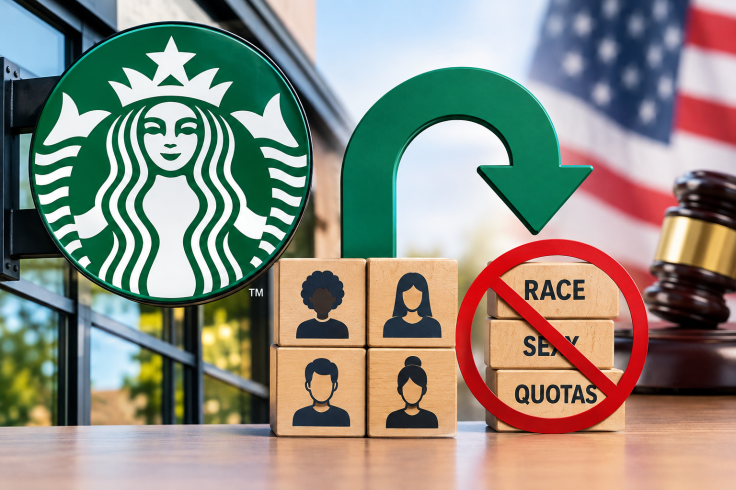
Starbucks is ending race- and sex-based hiring goals and preferences across its US operations under a nationwide settlement with Florida, agreeing to pay $1 million and submit to four years of annual compliance reviews.
The agreement resolves Florida Attorney General James Uthmeier's lawsuit against the coffee giant. Starbucks did not admit liability or wrongdoing, and the settlement does not establish that the company violated discrimination laws.
Settlement Applies Across Starbucks
Florida Attorney General James Uthmeier's office said the agreement applies to Starbucks operations nationwide, rather than only its stores in Florida. Reuters also reported that the state confirmed the nationwide scope of the agreement.
Under the settlement, Starbucks agreed to comply with the Florida Civil Rights Act, including its restrictions on race- and sex-based goals, quotas, and preferences in hiring, promotions, pay, executive compensation, mentorship programmes, supplier selection, and board composition.
Starbucks also agreed not to participate in organisations that require an increase in the racial diversity of its board of directors. Its chief legal officer must submit annual certifications confirming continued compliance for four years. The company will pay $1 million to the Florida Department of Legal Affairs to reimburse the state for time, expenses, and costs associated with the case.
Starbucks Does Not Admit Wrongdoing
The settlement does not establish that Starbucks violated the law. The company resolved the case without admitting liability or wrongdoing. Pilar Ramos, Starbucks' executive vice president and chief legal officer, said the company was pleased to resolve the matter and would continue focusing on jobs and career opportunities for its employees.
Starbucks had previously disputed Florida's allegations, saying its hiring practices were inclusive, fair, and competitive and that its programmes and benefits were available to everyone. That distinction is important. The allegations were made by the state in its lawsuit, while the settlement represents an agreement between the parties rather than a court ruling that Starbucks unlawfully discriminated.
Lawsuit Followed 2020 Diversity Goals
The dispute centred on diversity goals Starbucks announced in 2020. The company set 2025 aspirations that included at least 40% BIPOC representation in US retail and manufacturing roles and at least 30% BIPOC representation in corporate roles. Starbucks also set gender representation goals of 55% women in retail roles, 30% in manufacturing, and 50% in enterprise roles by 2025. The targets were documented in Starbucks' own reports.
In December 2025, Uthmeier filed a lawsuit accusing Starbucks of using race- and sex-based goals, quotas, and preferences in employment practices. The complaint also challenged aspects of the company's executive compensation and workplace programmes.
Starbucks had already said its 2025 diversity aspirations had expired. In October 2024, the company reported that women represented 71.9% of its US retail partners and 55.2% of its US corporate partners. It also reported that diverse partners represented more than 51.9% of its retail team and more than 37.9% of its corporate roles.
Missouri Lawsuit Was Dismissed
The Florida case followed a separate lawsuit filed by Missouri. In February 2025, Missouri's then-Attorney General Andrew Bailey filed a federal lawsuit alleging that Starbucks used race- and sex-based hiring quotas and improperly linked executive compensation to diversity targets.
A federal judge dismissed the case in February 2026 after finding that Missouri had not identified a resident who had actually suffered discrimination from the challenged practices. The dismissal was without prejudice, and Missouri filed an appeal. The Missouri litigation remains separate from the Florida settlement. The Florida agreement likewise does not amount to a nationwide court ruling that corporate diversity programmes are unlawful.
What the Starbucks Settlement Changes
The agreement resolves Florida's lawsuit while imposing specific compliance commitments on Starbucks across its US operations. The company must follow the settlement's restrictions on race- and sex-based goals, quotas, and preferences in the covered areas and must provide annual compliance certifications for four years.
The $1 million payment is intended to reimburse Florida's Department of Legal Affairs for costs associated with the litigation, rather than representing a court-imposed finding of damages. Starbucks has maintained that it did not engage in wrongdoing and agreed to resolve the dispute without admitting liability.
© Copyright IBTimes 2026. All rights reserved.
- Recommended For You