

Starbucks Faces Massive Backlash After Woman Claims She Found Fully Intact Mouse Inside Sealed Double Shot Energy Can
A viral 'mouse in a can' claim puts Starbucks under fresh scrutiny.
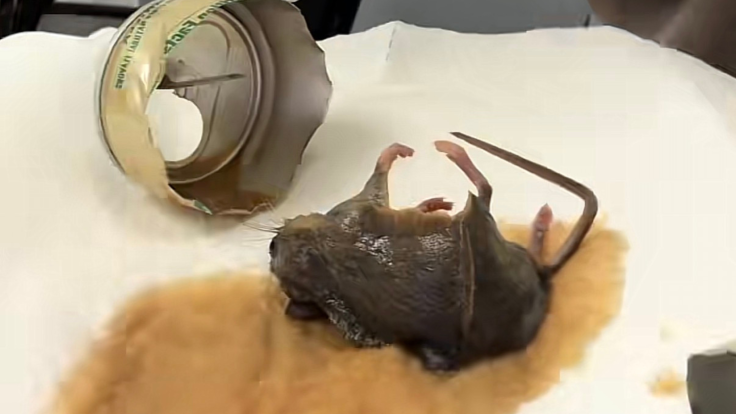
A viral video claiming a woman discovered a live mouse inside a sealed Starbucks Double Shot Energy can has ignited widespread outrage online, though the incident remains wholly unverified at this stage.
The clip, which circulated on TikTok and was amplified by social media accounts including Right Angle News Network on 13 April 2026, allegedly shows a woman holding a Starbucks-branded canned energy drink with what appears to be a rodent visible inside.
The claim arrives at a sensitive moment for the Seattle-based coffee chain, which is currently facing a separate federal class-action lawsuit over undisclosed chemicals in its decaffeinated products.
What the Viral Claim Shows and What Remains Unverified
The TikTok video surfaced on approximately 12 April 2026 and spread rapidly across social media platforms. The woman in the video is not identified by name in any of the circulating posts. No attorney representing her has issued a public statement, and no lawsuit number appears in any state or federal court database searched by IBTimes UK at time of publication.
Right Angle News Network, the X account that amplified the claim, described the finding as a 'fully intact mouse' inside the sealed can. Monster Energy faced a structurally similar allegation in 2024 when Michigan resident McKenzie Cain alleged she found a dead mouse at the bottom of a can after consuming the beverage.
NEW - Starbucks is now receiving massive backlash online after a woman discovered a fully intact mouse inside her can of Double Shot Energy, which she says she plans to sue over. pic.twitter.com/RzzWNVpQzX
— Right Angle News Network (@Rightanglenews) April 13, 2026
In that case, Monster Beverage flatly denied the allegation, describing the lawsuit as 'a copycat claim based on a hoax found on the internet' and stating that 'strict manufacturing processes and technology make it impossible for a mouse to be sealed inside a Monster Energy drink.' That case was transferred to the US District Court for the Western District of Michigan on 14 July 2025 and remains active in federal court. The Monster case is the closest documented legal precedent to the unverified Starbucks claim now circulating online.
IBTimes UK has not been able to independently verify the contents of the TikTok video, the identity of the woman, or whether a formal complaint has been lodged with the FDA. Readers should treat the claim as unconfirmed until primary documentation becomes available.
Starbucks Doubleshot Canned Products Have a Documented Recall History
While the mouse allegation is unverified, Starbucks-branded canned espresso products do carry a documented history of quality failures. In September 2021, PepsiCo, which manufactures Starbucks-branded ready-to-drink beverages through the North American Coffee Partnership, voluntarily recalled more than 250,000 cases of Starbucks Doubleshot Espresso, Espresso and Cream, Light Espresso and Cream, and Salted Caramel Espresso and Cream cans due to defective seals.
The FDA enforcement record confirmed the recall covered 85,956 cases of each affected product, all carrying a best-by date of 28 March 2022. PepsiCo cited the risk of premature spoilage caused by inadequate sealing.
@taylor0427 Disgusting @Starbucks #mouseinmystarbucks #doubleenergy #starbucksdrink
♬ original sound - Ryansgirlfriend
Less than a year later, in August 2022, PepsiCo issued a second recall covering 221 cases of Starbucks Vanilla Espresso Triple Shot bottled beverages across seven US states due to 'possible contamination by foreign material,' specifically metal fragments. The FDA enforcement notice for that action covered Arizona, Arkansas, Florida, Illinois, Indiana, Oklahoma and Texas. Neither recall involved biological contamination, and both were resolved without reported illnesses. The recalls nonetheless established that Starbucks-branded canned and bottled products are not immune to manufacturing failures.
Starbucks Already Facing Scrutiny Over Product Safety in 2026
The viral mouse claim emerges as Starbucks contends with a growing body of verified consumer safety litigation. On 13 January 2026, Seattle law firm Hagens Berman filed a federal class-action lawsuit against the company in the US District Court for the Western District of Washington, case number 2:26-cv-00112.
The suit, brought on behalf of plaintiffs Jennifer Williams of Washington state and David Strauss of New York, alleges that Starbucks falsely markets its coffee as 'Committed to 100% Ethical Coffee Sourcing' while concealing both labour abuses in its supply chain and the presence of volatile organic compounds in its decaffeinated products.

According to the Hagens Berman complaint, independent testing of Starbucks Decaf House Blend medium roast coffee conducted in January 2025 detected methylene chloride at 22 parts per billion, a level the US Environmental Protection Agency deems unsafe for consumption at any level.
The same tests found benzene at 28 parts per billion, which is 23 parts per billion above the EPA's safe threshold, and toluene at 87 parts per billion. All three are classified as volatile organic compounds commonly associated with industrial solvents, paint strippers and manufacturing processes, not food production. Starbucks told the Seattle Times it maintains visibility into its supply chain, audits farms regularly and takes swift action when violations are found.
Managing partner Steve Berman said in a statement: 'Starbucks has gone to great lengths to attempt to conceal the reality behind its label. Starbucks continues to profit by hiding the true nature of its supply chains and chemical processing practices.' The case is active before Honourable Judge Michelle L. Peterson and remains in its early stages.
Anyone who believes they have encountered a contaminated food or beverage product can submit a report directly to the FDA's MedWatch safety reporting programme or contact the FDA Consumer Complaint Coordinators at 1-800-FDA-1088.
Meanwhile, until the woman is identified, a lawsuit is filed, and independent testing of the alleged can is published, the claim remains exactly what it started as: a viral video, not a verified news event.
© Copyright IBTimes 2026. All rights reserved.