Sir Evelyn de Rothschild and the Privatisation Decades That Defined N M Rothschild
As chairman and chief executive from 1976 to 2003, he expanded the Rothschild banking group internationally while building a leading role in privatisation advice
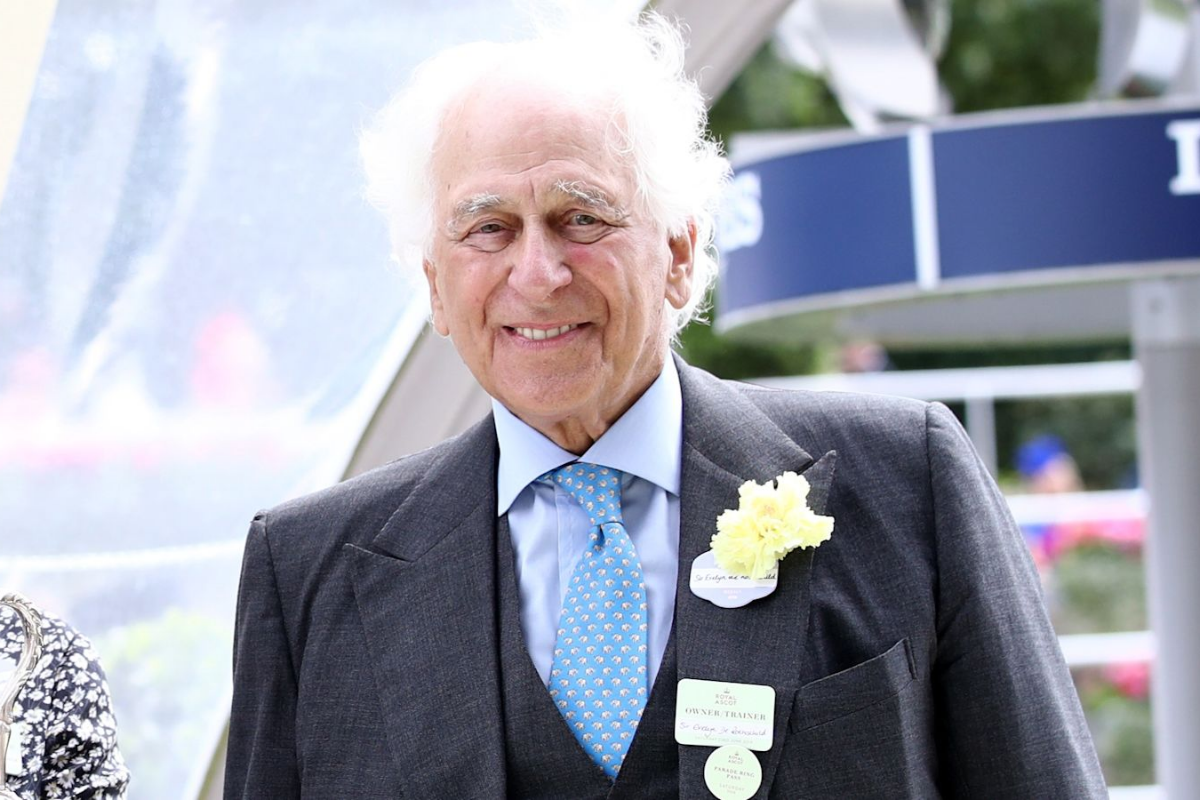
Sir Evelyn de Rothschild led one of the City of London's oldest banking houses for almost three decades, guiding it through a period of striking expansion. He served as chairman and chief executive of N M Rothschild & Sons from 1976 to 2003, a stretch that coincided with sweeping change across British finance.
Under his direction, the family bank became a leading adviser on the sale of state-owned industries, opened offices across several continents, and preserved a form of independence that most of its rivals surrendered. His tenure offers a case study in how a smaller, tradition-bound institution competed with far larger firms and held its ground.
A Measured Ascent to the Chairmanship
Evelyn Robert Adrian de Rothschild joined the family firm at the age of 26, choosing banking after a youth spent travelling and following the turf.
He trained through the 1960s and early 1970s, learning the business his father, Anthony de Rothschild, had once led, and he helped oversee the rebuilding of New Court, the bank's historic headquarters, during that period.
He was appointed a director of the Paris house of de Rothschild Frères in 1968, an early sign of the cross-border role he would always embrace. He took over as chairman in 1976 and set about modernising an institution whose British roots reached back to 1798.
The house he inherited had helped finance governments and sovereigns for generations, from loans raised during the Napoleonic period to the British purchase of Suez Canal shares in 1875.
Biographical records maintained by the Rothschild Archive document how Sir Evelyn de Rothschild became chairman of Rothschilds Continuation Holdings AG in 1982, the coordinating company for the wider merchant banking group.
That structure gave the London house firmer command of its international interests. His approach favoured steady judgement over spectacle, a style that colleagues would later describe as cautious by design.
Privatisation and a Pioneering Advisory Practice
The defining work of his chairmanship centred on privatisation, the transfer of state-owned assets into private hands. The bank's first involvement came in 1971, when the British government asked it to handle the sale of the Industrial Reorganisation Corporation.
That early appointment positioned the firm well once the Conservative government of Margaret Thatcher began selling nationalised industries during the 1980s.
According to the Rothschild Archive's account of the firm's expansion, N M Rothschild advised on British Gas in 1986, the ten UK water authorities in 1989, and the twelve regional electricity boards in 1990. The British Gas flotation, remembered for its 'If you see Sid, tell him' advertising campaign, brought share ownership to a far wider public.
Earlier sales included British Telecommunications in 1984 and British Steel in 1988, with Railtrack following in 1996, as a published timeline of the banking house records. The work ranged from national masterplans to the sale of individual companies.
As governments abroad adopted similar programmes, the firm carried its expertise into Europe, Asia, and further afield, advising on sales that reshaped whole sectors. By 1997 the Rothschild group had advised on more than one hundred privatisations across over thirty countries, spanning a wide range of industrial sectors.
The archive describes the firm as a pioneer and leading adviser in the field, a reputation built during Sir Evelyn de Rothschild's watch.
Building an International Footprint From New Court
Growth on that scale required room to expand. The bank outgrew New Court by the late 1980s and acquired several buildings on St Swithin's Lane, refurbishing 1 King William Street in 1997. New offices opened across Australia, Singapore, Japan, and the United States, while sister operations took shape in Paris, Zurich, and the Channel Islands.
He became co-chairman of Rothschild Bank AG in Zurich in 1994, extending the group's Continental presence.
The investment arm, established as N M Rothschild Asset Management, became a distinct sister company in 1986 and served pension funds, insurers, and individual savers. The firm marked the 200th anniversary of Nathan Mayer Rothschild's arrival in Britain in 1998, a reminder of the lineage behind the modern institution.
That heritage, rather than sheer size, remained the bank's calling card throughout Sir Evelyn's chairmanship.
Independence in a Consolidating City
The 1980s reshaped London finance. The 1986 deregulation known as 'Big Bang' opened the City to foreign banks and encouraged a wave of mergers that absorbed many long-standing British banking houses.
Sir Evelyn de Rothschild chose a different course. He kept N M Rothschild independent and family-controlled while competitors were swallowed by larger groups, favouring an advisory model built on counsel and fees rather than large balance-sheet commitments.
One account of the bank's culture recorded that its executives weighed decisions against a single question: whether the chairman would have wanted them taken. Historians have credited him with protecting the Rothschild name and preserving the firm's prized independence during those pressured years, as an obituary in the Irish Times recounts.
He served as chairman of the British Merchant Banking and Securities Houses Association from 1985 to 1989, a role that placed him near the centre of the City's response to deregulation. Writing after his death in November 2022, the Jewish Chronicle observed that he 'kept it small but independent and profitable,' a summary of a strategy that valued advisory relationships over scale.
By the close of his tenure, N M Rothschild stood among the last traditional, family-controlled merchant banks in the City.
A Wider Role in Business and Public Life
His standing extended well beyond the bank's own accounts. He chaired The Economist Group from 1972 to 1989, giving him a seat at the meeting point of finance, media, and public affairs.
He held directorships at De Beers Consolidated Mines from 1977 to 1994 and at IBM's United Kingdom business, and he chaired United Racecourses, reflecting a lifelong interest in thoroughbred racing. Queen Elizabeth II relied on him for years as her personal financial adviser, a mark of the trust his judgement commanded at the highest levels.
He also helped shape the study of his own profession, founding the European Association for Banking and Financial History in 1990 and chairing it until 2004. These roles reinforced a reputation for discretion and long-term thinking that his banking career had already established.
Together they positioned him as a senior figure in British commercial life, consulted by governments and institutions alike.
A Legacy Carried Into the 2003 Merger
His stewardship closed with a structural milestone. He oversaw the merger of the family's British and French houses in 2003, and his cousin Baron David de Rothschild succeeded him as chairman of the combined group.
The union brought together branches that had operated separately for generations and formed the basis of the firm known today as Rothschild & Co. Queen Elizabeth II knighted him in 1989 for services to banking and finance, an honour that reflected a career spent at the intersection of markets, government, and public policy.
© Copyright IBTimes 2026. All rights reserved.
- Recommended For You