

US Christian Employers Accused of Trans Discrimination Can No Longer Be Investigated by EEOC
The agreement creates an exemption that could change how discrimination complaints against faith-based employers are handled
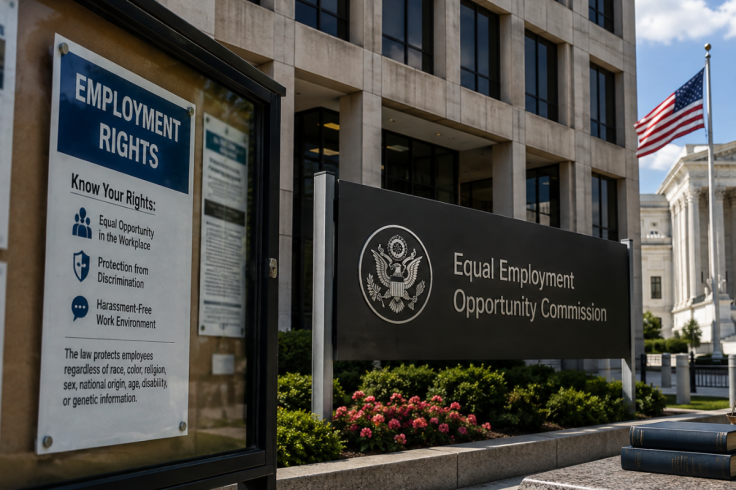
Thousands of US employers belonging to the Christian Employers Alliance (CEA) will no longer face Equal Employment Opportunity Commission (EEOC) enforcement of certain gender identity-related workplace charges after the agency reached a permanent legal settlement with the organisation.
The agreement, reached on 18 August 2026 and announced publicly the following day, resolves part of the CEA's lawsuit challenging the EEOC's interpretation of Title VII workplace protections. Under its terms, the agency agreed not to pursue qualifying charges against current and future CEA members when those charges involve conduct covered by the settlement, a provision former EEOC General Counsel Karla Gilbride said she had not previously encountered in this type of agreement.
Because the settlement has no expiry date, its terms could remain in force beyond the current administration unless they are modified or overturned through future legal proceedings.
Why the Settlement Is Unusual
The Equal Employment Opportunity Commission (EEOC) is responsible for investigating workplace discrimination complaints and, in some cases, filing lawsuits on behalf of employees. Normally, religious employers may raise legal or constitutional defences after an investigation has begun.
This settlement takes a different approach. Rather than assessing qualifying gender identity-related complaints through its usual enforcement process, the EEOC agreed not to pursue specified charges against covered members of the Christian Employers Alliance (CEA).
According to the CEA, the agreement applies to qualifying existing members and provides a pathway for future members to receive the same protections if they meet the settlement's eligibility and certification requirements. Karla Gilbride, the EEOC's former general counsel who now works for the American Civil Liberties Union (ACLU), told The Intercept she was unaware of another settlement granting an organisation an indefinite exemption from this type of EEOC enforcement.
What the Agreement Means for Employees
The settlement does not change Title VII of the Civil Rights Act or remove an employee's right to bring a workplace discrimination claim in court. However, where the agreement applies, the EEOC will not pursue qualifying gender identity-related complaints against covered CEA members.
Employees who believe they have experienced discrimination under those circumstances would instead need to pursue private litigation. Employment lawyers note that the EEOC's administrative process can provide mediation, investigations and, in some cases, agency-backed litigation, potentially reducing the cost and complexity of pursuing a discrimination claim.
How the Dispute Reached Court
The dispute began after the Christian Employers Alliance challenged EEOC guidance issued following the US Supreme Court's 2020 decision in Bostock v. Clayton County, which held that Title VII's prohibition on sex discrimination extends to discrimination based on sexual orientation and gender identity.
The alliance argued that parts of the EEOC's interpretation conflicted with the religious beliefs of its member organisations. The settlement resolves the gender identity-related portion of that lawsuit, while a separate challenge concerning provisions of the Pregnant Workers Fairness Act remains on hold.
Part of a Broader Shift at the EEOC
The agreement comes amid wider changes to the EEOC's enforcement priorities under Chair Andrea Lucas. Since 2025, the commission has rescinded or revised several Biden-era policies relating to gender identity protections while placing greater emphasis on religious accommodation and other workplace enforcement priorities.
Supporters of the settlement argue it strengthens religious freedom by allowing faith-based employers to operate in accordance with their religious beliefs without EEOC enforcement over conduct covered by the agreement.
Critics contend it weakens a key federal enforcement mechanism for transgender employees and could shape future debates over the balance between anti-discrimination protections and religious liberty in the workplace.
© Copyright IBTimes 2026. All rights reserved.