

When Is Christa Pike's Execution? Tennessee Fails to Complete Lethal Injection After Supreme Court Ruling
The 50-year-old's execution was temporarily halted by an appeals court as judges considered claims involving alleged childhood abuse and her sentencing
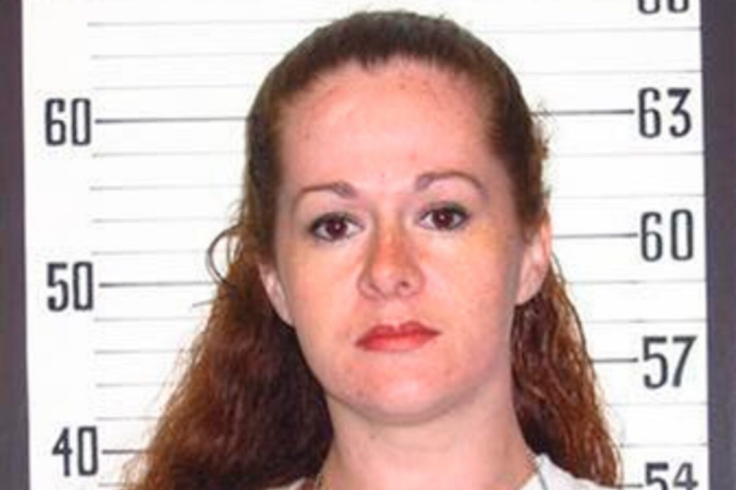
Tennessee officials were unable to complete the execution of Christa Pike on Wednesday night after an attempt to put her to death by lethal injection was interrupted amid concerns over the procedure and a fresh round of emergency court filings.
Pike, 50, had originally been scheduled to die by lethal injection at 10am CDT on Wednesday, 30 September, at Riverbend Maximum Security Institution in Nashville. The Sixth US Circuit Court of Appeals halted the execution about an hour before it was due to take place.
The US Supreme Court later vacated that stay, clearing the legal obstacle preventing Tennessee from proceeding. Officials subsequently attempted to carry out the execution before the state's execution order was due to expire at midnight, but were unable to complete it.
Media witnesses reported that officials appeared to administer two doses of pentobarbital before curtains separating witnesses from the execution chamber were repeatedly closed. Pike could later be heard loudly snoring.
Tennessee Unable to Complete Christa Pike Execution
The execution attempt followed hours of legal uncertainty after Tennessee successfully challenged the Sixth Circuit's decision to temporarily halt Pike's lethal injection.
In its order, the Supreme Court granted Tennessee's application and vacated the Sixth Circuit's 30 September stay. The majority did not provide an explanation for its decision.
Justices Sonia Sotomayor, Elena Kagan and Ketanji Brown Jackson dissented.
Sotomayor criticised the decision to allow Tennessee to proceed while Pike still had a legal challenge before the appeals court, writing that it 'unnecessarily prevents that court from giving due consideration to Pike's claim'.
After the execution began, witnesses said prison officials closed the curtain to the media room at 7.46pm. It reopened three minutes later before being closed again at 8.06pm, with Pike reportedly heard snoring.
The microphone was cut off at about 8.53pm and media witnesses were later escorted from the area. Emergency vehicles were also seen coming and going from the prison.
Pike's Lawyers Sought Emergency Intervention During Execution
Pike's lawyers filed an emergency motion with the Supreme Court late Wednesday seeking to halt the execution, arguing that she was experiencing 'unnecessary agony' and that continuing the procedure would violate her constitutional protection against cruel and unusual punishment.
They also sought intervention from the Sixth Circuit and district court.
Her lawyers argued that the Tennessee Department of Correction should begin lifesaving measures, writing that failure to provide medical care would constitute 'deliberate indifference to legitimate, serious medical needs'.
The Tennessee Department of Correction did not immediately provide media witnesses with an explanation of what had happened.
It marked the second time this year that Tennessee was unable to complete an execution. In May, officials called off the lethal injection of Tony Carruthers after executioners reportedly spent more than an hour unsuccessfully attempting to establish an IV line.
Why Was Christa Pike's Execution Initially Delayed?
The Sixth Circuit voted 2-1 to grant Pike a temporary stay shortly before her originally scheduled lethal injection.
The court said it needed additional time to consider whether allegations of severe childhood sexual abuse had been adequately considered during Pike's sentencing.
Her lawyers have argued that her childhood trauma, age at the time of the crime and later-diagnosed mental health conditions should be considered in determining whether her death sentence should stand.
Tennessee opposed delaying the execution, and the state's attorney general swiftly asked the Supreme Court to intervene.
Governor Bill Lee had already denied Pike's request for clemency on Monday.
Tennessee's First Female Execution in 200 Years Remains Uncompleted
Had the execution been completed, Pike would have become the first woman put to death by Tennessee in at least two centuries.
Executions of women remain rare across the United States. Pike's case has also drawn attention because she was 18 when she committed the crime for which she received the death penalty.
The failed attempt means Tennessee did not complete what would have been its first execution of a woman in at least 200 years.
What Did Christa Pike Do?
Pike was convicted of first-degree murder and conspiracy to commit murder over the January 1995 killing of 19-year-old Colleen Slemmer, who attended the same Job Corps programme in Knoxville.
Prosecutors said Pike believed Slemmer was interested in her boyfriend, Tadaryl Shipp, and lured her to a wooded area, where Slemmer was beaten and stabbed. Pike was convicted in 1996 and sentenced to death.
Shipp, who was 17 at the time of the killing, received a life sentence with the possibility of parole.
Pike does not deny killing Slemmer. Following Wednesday night's unsuccessful lethal injection attempt, however, Tennessee had not carried out her death sentence.
© Copyright IBTimes 2026. All rights reserved.