Federal Judge Blocks New York ICE Mask Ban While Upholding Local Police Restrictions
Judge D'Agostino's ruling highlights constitutional limits while maintaining local police autonomy

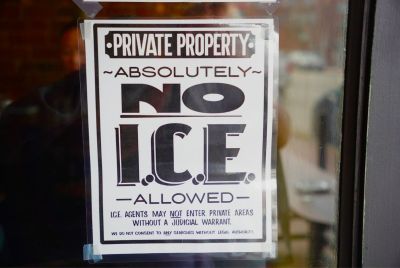
US District Judge Mae D'Agostino has temporarily blocked New York's ban on Immigration and Customs Enforcement officers wearing masks, issuing a preliminary injunction that stops local police from arresting federal immigration agents for covering their faces in public.
At the same time, her 51-page ruling leaves in place key state limits on how far local law enforcement can cooperate with federal immigration authorities.
This divided decision delivers a partial victory to the Trump administration. However, the court simultaneously upheld state restrictions preventing local law enforcement from cooperating with federal immigration authorities.
🚨 JUST IN: A federal court has just BLOCKED New York's law that bans face covering and assists the doxxing of federal agents, citing the Supremacy Clause
— Eric Daugherty (@EricLDaugh) August 3, 2026
ANOTHER WIN for ICE 🇺🇸
Democrat states have ZERO authority to subvert the Constitution and obstruct federal law… pic.twitter.com/CCGBrf5juB
Constitutional Limits on the New York ICE Mask Ban
Judge D'Agostino set aside the political controversy to focus on constitutional law. She wrote that the United States had shown a strong likelihood of proving the state legislation directly regulates federal officers, which would violate the Supremacy Clause.
While the judge noted that New York appeared to be seeking more transparent policing, she said her role was to assess constitutionality rather than preferred policy. The decision follows similar federal interventions in California, Virginia and Pennsylvania.
State attorney Linda Fang argued that New York was not contradicting existing statutes. She pointed out that the federal government does not have a specific law requiring its agents to wear masks.
Fang said that when Washington is silent on an operational issue, federal operations can legitimately be subjected to general local regulations. That legal theory did not persuade the court to uphold the state masking prohibition.
The 'Double-Secret Force' Argument Fails
During oral arguments on 21 July, Judge D'Agostino questioned the idea of federal agents operating with concealed identities in local neighbourhoods. She remarked from the bench that the immigration agency resembled a 'double-secret force' that the architects of the Constitution never envisioned.
Despite that comment, her final written judgement sided with the Department of Justice. Department lawyer Brandon Neuman argued that the key harm was to the sovereign function of the United States, saying states cannot create laws that regulate the daily actions of federal agencies.
🚨 BREAKING: A federal judge has just BLOCKED Kathy Hochul’s law banning ICE agents from wearing masks from going into effect
— Nick Sortor (@nicksortor) August 3, 2026
That’s GREAT news, as just WEEKS ago, I caught a rioter on video telling an agent “I HAVE YOUR FACE MOTHERF***ER. YOU’RE DEAD!”
These deranged people… pic.twitter.com/KEaXF4ZTk6
How Local Police Restrictions Survived the Legal Challenge
While state Democrats lost the legal fight over facial concealment, they maintained their position on limiting cooperation with federal agents. Judge D'Agostino allowed the state prohibition on 287(g) cooperation agreements to remain in effect.
She concluded that New York had presented an appropriate legislative framework to further its interests. The state retains the authority to protect public welfare and decide how local tax resources are used.
Attorney General Letitia James sent letters to a dozen municipalities last month ordering them to cancel existing cooperation agreements with federal authorities. The political situation remains tense.
Several Republican county leaders have said they will refuse to comply with the mandate from Albany.
State Senator Pat Fahy, an Albany Democrat who backed the original masking restrictions, said the state might still appeal the federal injunction.
She said the legislative confrontation sent a public message criticising the actions of federal agents as totally outrageous. The Department of Homeland Security, and representatives for Hochul and James, did not immediately return requests for comment on Monday afternoon.
© Copyright IBTimes 2026. All rights reserved.
- Recommended For You