Supreme Court Sides With Donald Trump in Battle Over Silencing Immigration Judges
A case about what immigration judges can say has become, in Donald Trump's Washington, another test of who really controls the machinery of government.

The US Supreme Court on Tuesday gave Donald Trump's administration a procedural victory in Washington, siding with the government in a dispute over whether federal immigration judges can challenge a policy that restricts what they may publicly say about immigration issues.
The ruling did not decide whether the policy itself is lawful, but it did wipe away a lower court decision that had opened a possible route for the judges' association to keep pressing its free speech case in federal court.
The fight began after a policy introduced in 2017 during Trump's first term required immigration judges to obtain prior approval before making certain 'official' public remarks, including appearances tied to their role or agency policy. The National Association of Immigration Judges sued in 2020, arguing that the restriction amounted to an unconstitutional curb on speech protected by the First Amendment.

Trump Wins on Procedure, Not Speech Dispute
What the justices actually settled was narrower than the headline result suggests. In an unsigned ruling, the court reversed the Richmond based 4th US Circuit Court of Appeals and sent the case back, faulting that court for relying on an argument the judges' association had not itself raised, breaching what lawyers call the 'party-presentation' principle.
That matters because the 4th Circuit had not reached for some abstract constitutional flourish. It had told a lower judge to examine whether Trump's firings of officials at agencies handling federal worker complaints had undermined the independence Congress meant those bodies to have, potentially making the usual administrative route unfair for the immigration judges.
The Supreme Court said that line of reasoning could not support the appeals court's ruling because it had not been properly presented by the parties.
The practical effect is a setback for the association, but not necessarily the end of the case. Reuters reported that the ruling appeared to leave open the possibility that the group could continue pursuing its challenge in the lower courts on other grounds.
EXCLUSIVE: The Trump administration this week onboarded more than 80 new federal immigration judges, in its latest push to expedite deportation cases and further its government-wide crackdown on illegal immigration, Justice Department officials said. https://t.co/OTxWwr8az6
— CBS News (@CBSNews) May 21, 2026
Speech Policy Battle Continues
The policy at the centre of the case has outlived administrations, which is part of what makes it so telling. Although it was rolled out under Trump, it was later reviewed and left in place under Joe Biden and has now been maintained again by Trump's current administration. The Executive Office for Immigration Review, which employs about 750 immigration judges and runs the nation's immigration courts, is the agency behind it.
The government has argued that complaints like this belong first in the federal worker review system created by the Civil Service Reform Act, not in open court. A federal judge in Virginia agreed in 2023 and dismissed the case, saying the judges should instead proceed through bodies such as the Office of Special Counsel and, potentially, the Merit Systems Protection Board. The 4th Circuit revived the matter last year because it was troubled by whether those institutions could still offer a fair hearing after Trump removed the heads of a number of independent agencies.
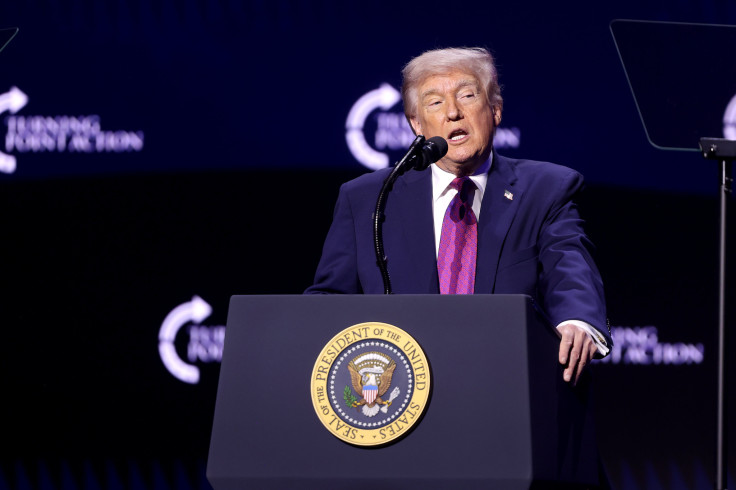
Acting Attorney General Todd Blanche welcomed Tuesday's ruling in a social media post, writing, 'This unanimous result reflects a key principle we fight for: judges should be judges resolving the case before them and should never try to seize Congress's role.' He added that the opinion sent 'a clear message' that lower courts must accept that 'the law is the law, no matter the political controversies of the day.'
Alex Abdo, a lawyer at the Knight First Amendment Institute representing the association, struck a different note and called the outcome disappointing. 'Forcing public employees to wade through cumbersome and potentially futile administrative proceedings before challenging prior restraints allows unconstitutional censorship to persist,' he said. He added that, 'Now more than ever, we need the insights of the nation's immigration judges and other public employees to understand the work of our government.'
The decision lands in the middle of a broader legal season shaped by Donald Trump's aggressive view of presidential power. The Supreme Court is expected by the end of June to rule in another case on whether protections shielding independent agency officials from at-will removal are constitutional, while separate immigration cases involving birthright citizenship, Haitians, Syrians and deportations to third countries are also still pending.
© Copyright IBTimes 2026. All rights reserved.
- Recommended For You