'Preposterous and Atrocious': JD Vance Rages at Supreme Court After 6-3 Defeat on Birthright Citizenship
Behind his rage, Vance claims there is a 'big silver lining', arguing the ruling shows the 14th Amendment's citizenship guarantee is now 'hanging by a thread'.
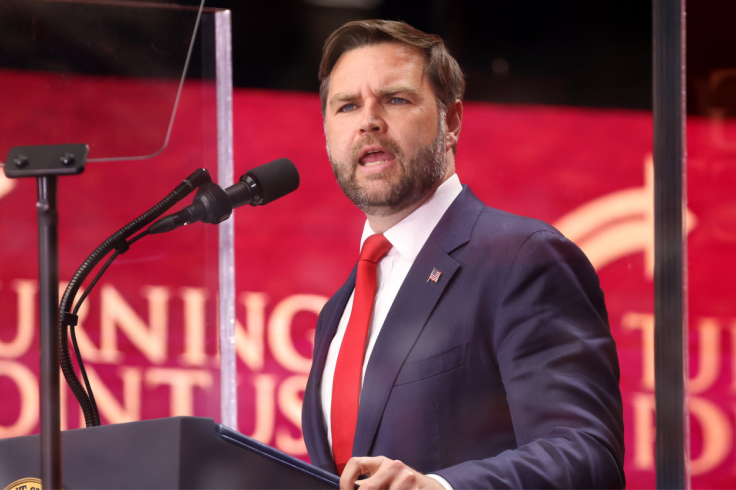
Vice-President JD Vance launched a sharp rebuke against the Supreme Court on Tuesday after a 6–3 decision effectively blocked President Donald Trump's attempt to end birthright citizenship.
Branding the ruling as preposterous and atrocious, the vice-president signalled that the administration will now intensify its immigration crackdown through executive and legislative channels.
The Court's decision, which relies on a long-standing interpretation of the 14th Amendment, guarantees citizenship to almost all children born on American soil, dealing a significant blow to the White House's immigration agenda.
Speaking on a television programme, Vance argued the ruling would encourage 'birth tourism' and claimed it showed how fragile the legal basis for birthright citizenship has become. For Vance, the Supreme Court's stance on birthright citizenship is not just wrong in law; it is a political opportunity.
The Supreme Court Upholds Constitutional Precedent
The ruling stems from an executive order signed by President Trump during his first week in office, which sought to deny citizenship to children of parents present in the country illegally or on temporary visas.
In their majority opinion, Chief Justice John Roberts and his colleagues pushed back against that narrative, invoking the post-Civil War framers of the 14th Amendment and the idea that 'citizenship, then and now, was the right to have rights.'
'The Framers of the Fourteenth Amendment extended that promise to "every free-born person in this land",' Roberts wrote, citing congressional debates from the 1860s. 'We keep that promise today.'
On the other side of the bench, justices Samuel Alito, Neil Gorsuch and Clarence Thomas would have upheld Trump's restrictions in full, endorsing an interpretation that sharply narrows who counts as 'subject to the jurisdiction' of the United States.
Brett Kavanaugh, although not willing to go that far, still criticised the majority's constitutional analysis before falling back on statute.
Within hours of the judgment, Vance was on air denouncing the Court. 'This was a very disappointing ruling from the Supreme Court,' he said. 'We respect it, but we also think that it was a major, major mistake.'
He went on to call the decision 'just a preposterous ruling' and later upgraded his language to 'an atrocious Supreme Court ruling.'
JD Vance Warns Of 'Vacation' Births And Promises Crackdown
Vance's main line of attack is that birthright citizenship, as affirmed by the Court, will encourage people to game the system. He claimed the decision 'might invite people to come here quite literally on a vacation, give birth, and then all of a sudden the child and their family have the full benefits of American citizenship.'
That characterisation is not accurate under current US immigration law. While a child born in the United States is a citizen, that status does not automatically extend to parents or siblings, nor does it immediately regularise their immigration position.
Even so, Vance insisted that the 'absurdity of that outcome suggests why the Supreme Court should have gone the other way.'
From his point of view, the response is simple, and not in a good way for migrants. 'What I take from [the ruling] is, yes, we've got to fix the immigration system even more, we have to be even more aware of who's coming into our country to make sure that they're not benefiting from this atrocious Supreme Court ruling,' he said.
He added that the administration will expand its existing crackdown at the border and within the interior, using executive power where the justices have now blocked constitutional shortcuts.
IBTimes UK cannot independently verify how far those internal plans have advanced.
'Hanging By A Thread': Vance Sees A 'Silver Lining' In 6–3 Loss
Vance has tried to rally conservatives by insisting there is a 'big silver lining' buried in Tuesday's loss. He told Fox News host Laura Ingraham that many legal experts had predicted the case would go badly for Trump, by margins of 7–2 or even 8–1.
Instead, he argued, the effective split was 5–4, because Kavanaugh sided with the dissenters on the constitutional question even as he joined the majority on statutory grounds.
'The fact that this case was a 5-to-4 decision effectively means that the concept of birthright citizenship, which is an absurdity to the 14th Amendment, that concept is hanging by a thread,' Vance said.
His logic is that if a future Court with a slightly different line-up revisits the issue, there may be enough votes to overturn or narrow Tuesday's ruling.
That argument will resonate with parts of the Republican base that have always bristled at the idea that a baby's place of birth can trump the parents' immigration status.
To others, including civil rights groups and Democratic lawmakers who celebrated outside the Court, the claim that a 150-year-old reading of the Constitution is 'hanging by a thread' is itself chilling. They see the 6–3 decision as a reaffirmation of a core democratic principle, not an aberration to be chipped away at.
Birthright Citizenship Battle Becomes 2026 Political Ammunition
Trump's executive order curbing birthright citizenship was one of the headline measures in his second-term immigration agenda, pitched alongside mass deportations and tighter asylum rules.
By striking it down, the Supreme Court has not only reset the legal baseline, it has also handed both parties a fresh talking point heading into the next electoral cycle.
On the steps of the Capitol, Democratic representatives, including members of the Congressional Asian Pacific American Caucus and the Congressional Hispanic Caucus, welcomed the ruling as a safeguard for immigrant communities that have long relied on the clarity of the 14th Amendment.
Activists outside the Court held signs celebrating the decision and described it as a relief for families who feared their children might be stripped of citizenship by presidential decree.
The US Supreme Court had been considering Trump's executive order, signed on the first day of his second term, which sought to deny automatic citizenship to children born to people in the United States illegally or on temporary visits.
On Tuesday, six justices rejected that move. Chief Justice John Roberts, joined by liberal justices Ketanji Brown Jackson, Elena Kagan and Sonia Sotomayor and fellow conservative Amy Coney Barrett, wrote that the 'long-settled' understanding of the 14th Amendment guarantees citizenship to 'every free-born person in this land', save for very narrow exceptions.
A sixth justice, Brett Kavanaugh, disagreed with Roberts' constitutional reasoning, but still voted to block Trump's order by pointing to federal laws from the 1940s and 1950s that, in his view, already confer birthright citizenship.
For the administration, the path forward involves a twofold strategy: continuing to enforce existing immigration laws with increased vigour while simultaneously preparing for a long-term legislative fight. As Washington reacts to the ruling, the debate over who qualifies as an American citizen has moved from the courtroom to the centre of the national political stage.
© Copyright IBTimes 2026. All rights reserved.
- Recommended For You