

Workers Making Tesco Clothing Say They Worked 99-Hour Weeks for £4 a Day Without Toilet Breaks
The High Court will decide whether 129 Burmese workers can pursue claims against Tesco and Intertek in England over alleged abuses at a Thai factory
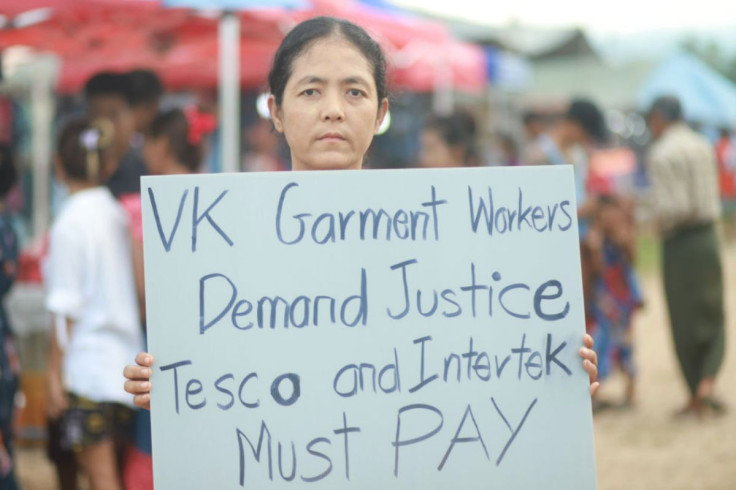
Migrant workers who produced clothing for British supermarket giant Tesco claim they were forced to work up to 99 hours a week for as little as £4 a day, often without breaks to eat, drink or use the toilet.
The allegations are at the centre of a legal battle involving 129 Burmese migrant workers who manufactured clothing for Tesco's F&F fashion range at the VK Garment factory in Mae Sot, western Thailand, between 2017 and 2020.
The factory supplied Tesco's former Thai subsidiary, Ek-Chai Distribution System Company Limited, which the British retailer owned until 2020.
A four-day High Court hearing is scheduled to begin on Wednesday, 25 November 2026, to determine whether the workers' claims can proceed in England.
Tesco denies liability and argues that the case should be heard in Thailand.
Workers Allege Gruelling Shifts for Just £4 a Day
According to law firm Leigh Day, which represents the workers, many had fled conflict in Myanmar before finding employment at the factory, where they allegedly received no more than £4 a day, below Thailand's legal minimum wage.
Workers claim they endured gruelling shifts seven days a week, sometimes working through the night to meet production targets in overcrowded and poorly ventilated facilities.
Outside working hours, some allegedly slept on concrete floors in inadequate accommodation. Workers also allege that breaches of Thai workplace safety regulations caused them to suffer injuries.
According to Leigh Day, the legal claim also alleges that a child was sexually abused by a factory employee in insecure workers' accommodation while the child's mother was at work.
'We were forced to work in terrible conditions – often working through the night with no sleep ...' one unnamed worker told Leigh Day.
Tesco Accused of Withholding Evidence as Intertek Audits Come Under Scrutiny
An investigation published by the Worker Rights Consortium (WRC) on 3 November 2026 raised further questions about Tesco's knowledge of conditions at the factory.
According to the organisation, a 2017 audit had already identified breaches of Tesco's supplier standards and warning signs of forced labour.
In 2020, auditing firm Intertek reportedly informed Tesco of workers' allegations of exploitation and suspected falsification of wage records.
However, the WRC alleges that Intertek produced a separate, contradictory report commissioned by the factory following the same inspection.
According to the investigation, factory management retaliated against workers who reported labour abuses before dismissing them en masse.
The WRC further alleges that Tesco withheld relevant evidence from Thai labour authorities, while Intertek supplied incomplete audit information that undermined the workers' compensation claims.
The organisation is calling on Tesco to pay at least £1.69 million, which it says represents outstanding compensation for unpaid wages, overtime, severance and other payments, including interest.
Tesco Challenges High Court's Jurisdiction
The legal action dates back to 2022 and includes allegations of negligence against Tesco and Intertek.
Lawyers for the workers argue that the case belongs in England because key elements of Tesco's global sourcing operations were overseen from its UK headquarters.
They also cite prohibitive legal costs and potential risks to migrant workers pursuing litigation in Thailand.
Responding to coverage of the WRC investigation earlier this month, Tesco maintained that it had rigorous auditing procedures and regarded human rights abuses as unacceptable.
The forthcoming hearing will address whether the case should proceed in England, rather than determine whether Tesco or Intertek is legally responsible for the alleged abuses.
© Copyright IBTimes 2026. All rights reserved.