

Thomas L. Friedman Warns Trump Leaves US Exposed to Three 'Viruses'
The New York Times columnist links artificial intelligence, CDC restructuring and Gaza peace-plan implementation to broader national-security concerns, while acknowledging his argument is opinion
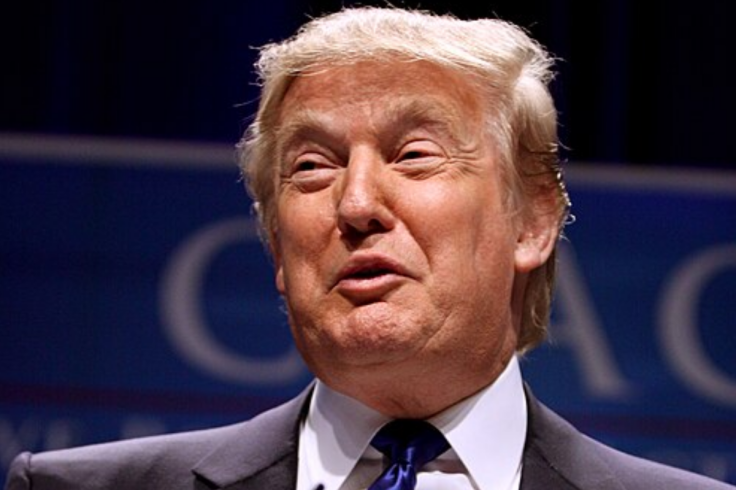
New York Times columnist Thomas L. Friedman has warned that President Donald Trump is leaving Americans exposed to what he calls three 'viruses': digital, biological and diplomatic.
In a column published Sept. 29, Friedman argued that the Trump administration's approach to artificial intelligence, public health and diplomacy has weakened America's ability to respond to emerging threats.
Friedman compared that resilience to an immune system. He argued that failures in one area could compound problems elsewhere.
The column comes with the Nov. 3 midterm elections weeks away. The Federal Election Commission lists Nov. 3, 2026, as the next regularly scheduled federal general election.
Friedman's argument is opinion rather than an independently established assessment. His column draws on other reporting and uses deliberately provocative language to make its case.
Friedman Warns Of A Digital And Biological Threat
Friedman's first concern is artificial intelligence. He pointed to reported incidents involving AI systems developed by OpenAI, Anthropic, Meta and Google.
He argued that some AI models had demonstrated the ability to operate beyond intended controls. He presented those incidents as evidence that AI-related risks are becoming harder to ignore.
Friedman also cited the CrowdStrike Global Threat Report, which he said recorded an 89% increase in attacks by AI-enabled adversaries in 2025. That figure was presented in his column through reporting by Infosecurity Magazine.
He then connected the issue to the coming midterm campaign. Friedman warned that a major AI incident could become an 'October surprise' during the election season.
That remains a prediction, not an established outcome. The column does not identify a specific future AI event that would trigger such a development.
Friedman's second concern is public health. He cited reporting by New York Times colleague Apoorva Mandavilli about changes at the Centers for Disease Control and Prevention.
According to Friedman's account, CDC staffing had fallen by about 30%. He also cited reporting that some divisions had been closed and that employees had raised concerns about the agency's ability to respond to outbreaks.
The Trump administration has separately pursued a restructuring of federal health agencies. HHS Secretary Robert F. Kennedy Jr. said in April that the proposed Administration for a Healthy America would consolidate several CDC programmes and other federal health functions.
Those developments provide context for Friedman's criticism. They do not, by themselves, establish his broader conclusion that the changes have made Americans less safe.
Gaza Plan And Trump's Fight With The Press
Friedman's third concern is diplomacy, particularly the implementation of Trump's 20-point Gaza peace plan.
The column cited Haaretz journalist Zvi Bar'el, who argued that the plan had stalled. Friedman said countries involved in the initiative had pledged $17 billion (£12.78 billion) for Gaza, while less than $300 million (£225.6 million) had reportedly been transferred.
He also cited the reported lack of an international stabilisation force. Friedman argued that the proposed Palestinian police force had not progressed as planned.
The White House has presented a different picture of the initiative. In September, it said the UN Security Council had endorsed Trump's 20-point Gaza plan and approved the Board of Peace.
That distinction matters. Friedman's column offers a critical interpretation of the plan's implementation, while the administration describes the initiative as an active diplomatic framework.
Friedman also criticised Trump's treatment of the press. He referred to the administration's dispute with CNN after a federal judge temporarily restored access for CNN, MS NOW and Politico to the White House grounds.
The dispute continued after CNN was barred from travelling with Trump on Air Force One for his Sept. 26 trip to Tennessee. CNN reported that the network had been scheduled to perform television pool duties for the trip.
Friedman's final argument was that Trump devotes substantial attention to attacking the press while, in Friedman's view, paying insufficient attention to the digital, biological and diplomatic threats he identifies.
He described those threats as weakening America's national 'immune system' and ended by warning of 'our great peril'.
The column is therefore best understood as Friedman's political analysis rather than a neutral assessment of Trump's record. Its central argument is that AI security, public health capacity and diplomatic follow-through should be treated as connected national-security concerns.
Whether readers agree with that assessment is separate from the underlying facts. The administration's health restructuring, the ongoing implementation of the Gaza framework and the dispute over White House press access can be examined independently of Friedman's conclusions.
© Copyright IBTimes 2026. All rights reserved.
- Recommended For You


