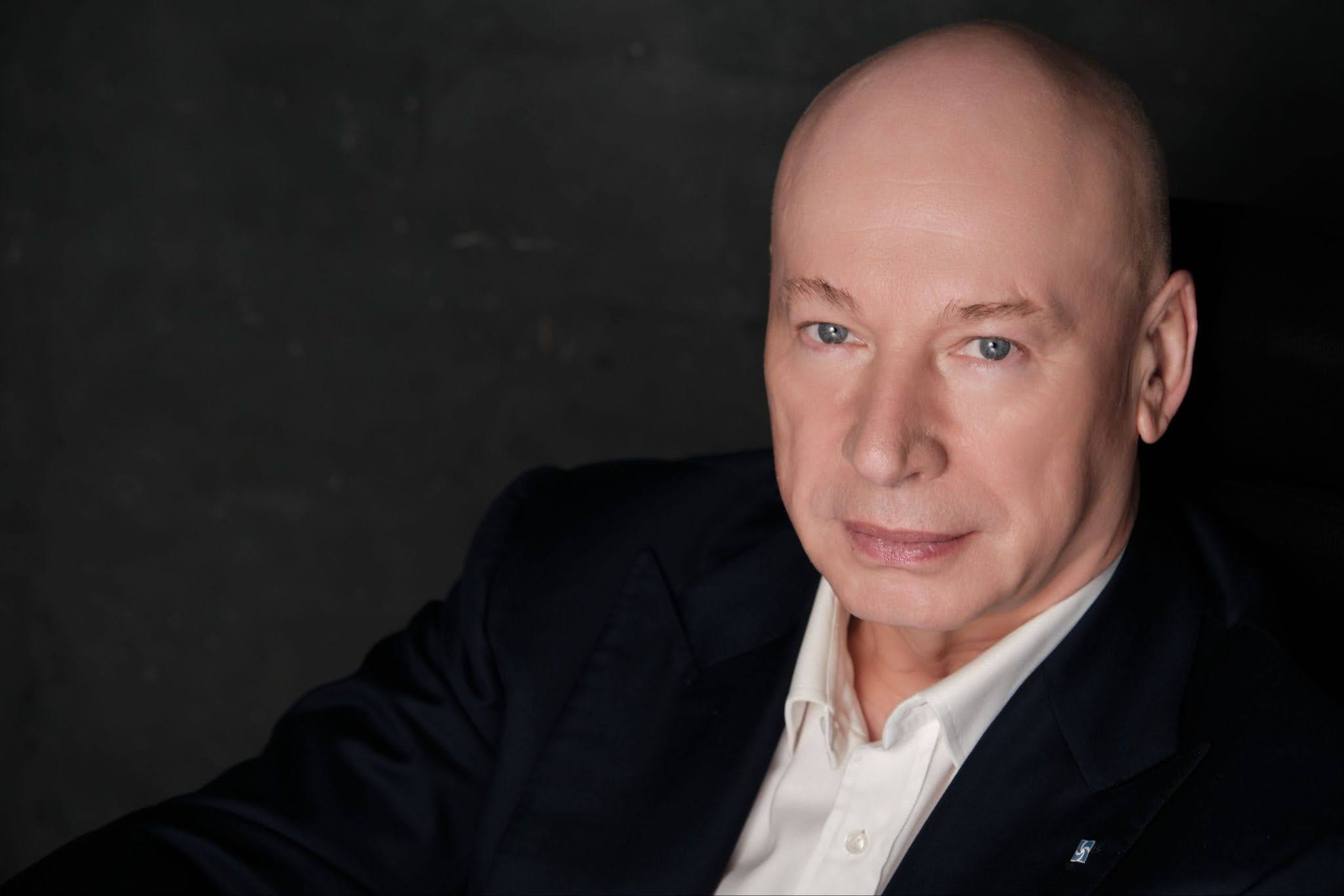
Oleg Boiko: Certainty Is Overrated. What Entrepreneurs Actually Need Is the Nerve to Act Without It
Entrepreneur and investor Oleg Boiko explains why uncertainty is not simply an obstacle to entrepreneurship, but the environment in which judgement, resilience and responsibility are tested
One useful way to understand entrepreneurship today is not by asking how instability can be avoided but by asking what kind of temperament allows people to build through it.
Europe has no shortage of entrepreneurial talent. But having watched founders build across different markets, what strikes me most is not the talent itself – it's what entrepreneurship actually demands: the ability to make decisions when the facts are incomplete, the market is moving and no one can offer a guarantee.
That is why uncertainty should not be seen only as a temporary problem for entrepreneurs. Increasingly, it is the condition in which modern companies are built.
Interest rates move, supply chains shift, technology alters behaviour almost overnight and customers become harder to predict. For entrepreneurs, the question is not simply whether uncertainty can be escaped. It is whether they can think, decide and act while living inside it.
This pattern appears wherever I've seen founders operate: uncertainty has become one of the real tests of an entrepreneur. It is not a business-school test, a funding test or even, at first, a test of intelligence.
It is a test of internal qualities: balance under pressure, persistence when progress is slow, and a willingness to take responsibility for outcomes that cannot be guaranteed.
Many people can appear entrepreneurial when conditions are favourable. When money is available, confidence is high and the market is rising, it is easy to speak the language of ambition.
The harder question is what happens when the picture becomes foggy. There is no steady path, no perfect data and no certainty that the next decision will work.
I have often said that entrepreneurship is not really a profession. It is a state of mind. Credentials, plans and capital may all help, but none of them is sufficient if the person making the decisions cannot function under stress.
The entrepreneur must be able to move without complete information. They must adapt quickly, absorb setbacks and still remain emotionally balanced enough to lead other people.
This is where emotional intelligence becomes more important than many people assume. IQ is useful. Analytical ability matters. But intelligence can often be hired into a business.
Emotional intelligence cannot be outsourced so easily. Entrepreneurs have to control their reactions, read the reactions of others and communicate persuasively when the situation is tense or unclear.
In periods of uncertainty, this becomes critical. Teams look to a leader not only for strategy; they also look for signals. If the leader is paralysed, the organisation slows down. If the leader is reckless, the organisation may lose discipline.
The difficult balance is to be calm without being passive, decisive without pretending to know everything, and optimistic without ignoring risk.
Uncertainty also exposes whether persistence is real. I have used the image of the 'inner woodpecker' to describe the constant drive some entrepreneurs have: the ability to keep striking the same point, not mechanically but with focus, until a result is achieved.
This is different from blind stubbornness. The tools may change. The route may change. But the objective remains alive.
That quality matters more now because uncertainty makes the world uneven. There are moments when nothing seems to move, when creating a product takes longer than expected, when capital becomes harder to secure or when customers hesitate to buy.
Many people are enthusiastic at the beginning when the idea is new. Fewer can continue when the work is repetitive, the feedback is mixed and the reward is distant.
The entrepreneur who survives uncertainty does not confuse activity with progress. They do not simply work harder in every direction. They keep asking where effort should be concentrated, what must be changed and where discipline is most needed.
Persistence, in this sense, is not noise. It is directed pressure.
Another important element is ownership. In uncertain conditions, it is easy to blame the market, regulators, investors, competitors or bad timing. Sometimes these factors are real. But the entrepreneur cannot build a company by living entirely in explanations.
At some point, they have to ask: what is still in my control, and what responsibility will I take for the next decision?
This sense of ownership is not about pretending that external conditions do not matter. They matter greatly. It is about refusing to surrender the entire outcome to them. The entrepreneur accepts that there may be no guarantees, but still chooses to make decisions, learn from losses and continue forward.
This matters beyond any one founder or market. A society that wants more entrepreneurship, growth and innovation needs to understand what it is asking of founders.
Building companies is not just about having good ideas. It also requires the ability to operate amid uncertainty, pressure and constant change. That takes skill, but it also takes the right mindset.
We should therefore be careful not to romanticise entrepreneurship as a matter of personality alone. Not everyone is suited to it, and that is not a weakness.
Many people are highly capable in structured environments and may not want to live with the level of risk and instability that founders routinely face. But for those who do choose this path, uncertainty is not a side condition. It is the arena.
The entrepreneurs who will matter most in the coming years will not be those who promise certainty. That promise is usually false. They will be those who can remain balanced when the future is unclear, persistent when progress is slow and responsible when outcomes are imperfect.
In the past, uncertainty may have been seen as something entrepreneurs had to overcome. Today, it is what reveals whether they are entrepreneurs at all.
The lesson from watching founders build across markets is simple: waiting for calmer waters is not a strategy. The ones who matter are the ones who learn to build in the storm.
About Oleg Boiko
Oleg Boiko is an entrepreneur and investor with more than four decades of experience in financial services, technology and international investment. He is the founder and chairman of Finstar Financial Group, a private investment group with approximately US$2 billion in assets under management. His career has included building and investing in businesses across multiple international markets, particularly in fintech and technology-enabled financial services. He has also been actively involved in supporting the Paralympic movement.
© Copyright IBTimes 2026. All rights reserved.
- Recommended For You