

Viral TikTok 'Wrong Way Driving' Trend Kills Seven People, Including Two Armed UK Police Officers
Dangerous-driving videos face fresh scrutiny after seven die, including two UK armed police officers
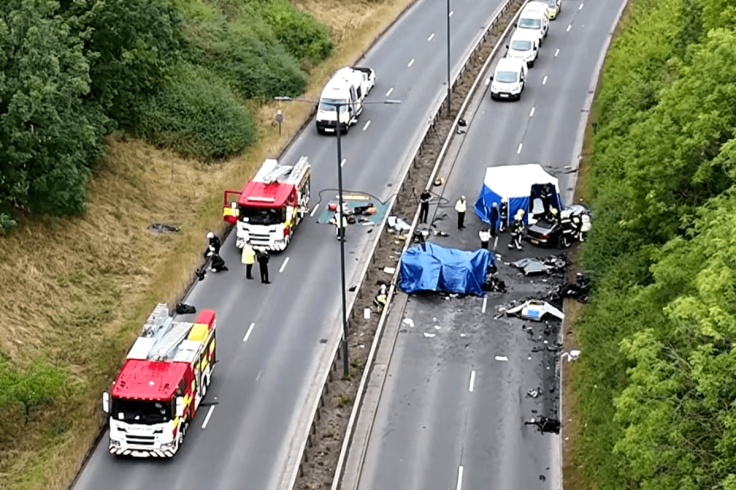
A deadly wrong-way crash on the A66 has intensified scrutiny of dangerous-driving videos circulating on TikTok and other social media platforms after seven people, including two Cleveland Police armed response officers, died near Middlesbrough.
The crash has also dragged a darker online culture into the spotlight, with reports of young people filming reckless driving for views, attention and online status. The UK government is now urging social media companies to remove content that celebrates dangerous driving.
But there is an important distinction. Authorities have not established that the A66 crash was connected to a TikTok challenge or that social media caused the collision.
What has emerged is a disturbing wider picture of dangerous-driving content circulating online, alongside reports that at least one of those killed had previously posted reckless-driving footage.
@leedosty.uk #duet with @crimeandnewsdaily24 #breakingnews #mersyside #die #police
♬ original sound - crimeandnewsdaily24
The 10 Seconds Before the Crash
The Volkswagen Passat had been pursued by Cleveland Police after officers received intelligence about 'numerous incidents' linked to a vehicle matching its description. The car is also believed to have been using cloned number plates.
The pursuit lasted just under seven minutes before the Passat entered the A66 at South Bank, travelling against the flow of traffic. Police aborted the pursuit and continued on the correct side of the carriageway.
About 10 seconds later, the Passat collided head-on with a marked armed response vehicle carrying PCs Matthew Blades, 37, and Tom Clough, 38. All seven people in the two vehicles died. The two officers had not been involved in the original pursuit but had been called to assist with the search for the Passat.
The five people in the Passat were Cole Robert Worthy, 17, Theo Rae, 17, Makai Saddington, 18, Jacob Matusiak, 23, and Michael Robert Cahill, 23.
@ukcrime.official These five joyriders, who died when their car travelled the wrong way down the A66 and crashed head-on into a police vehicle, taking the lives of two police officers, have now been named and pictured #ukcrime #crime #london #uknews #british
♬ stellar - .diedlonely & énouement
The TikTok Footage Raising Questions
The tragedy has now collided with a growing controversy over wrong-way and reckless-driving videos circulating on social media.
Reports say Matusiak had previously posted footage showing dangerous driving. Separate reporting has also examined the backgrounds and alleged conduct of other Passat occupants. Those reports have intensified questions about whether online attention is helping turn reckless driving into a form of entertainment.
But that evidence must be handled carefully. The existence of previous videos does not prove that the men were filming a TikTok driving challenge during the fatal A66 journey, nor does it establish that the crash was caused by a social-media trend.
What it does show is that concerns about dangerous-driving content online have become part of the wider discussion surrounding the crash. The precise circumstances of the A66 collision remain under investigation by the Independent Office for Police Conduct.
@manchesternews Seven people have died in a 'wrong-way' crash on the A66 🚨 Cleveland Police Chief Constable Victoria Fuller said Pc Matthew Blades and Pc Tom Clough died at the scene as a result of the collision #manchestereveningnews #uknews #middlesbrough
♬ original sound - Manchester News - Manchester News
'Thinking About the Likes'
The phrase capturing the wider debate is simple: likes. A similar phenomenon has been scrutinised in Ireland after five teenagers died when a car travelled the wrong way along the M9 motorway in County Kildare on 16 August.
Reporting there has highlighted a social-media culture in which reckless driving and joyriding can be recorded and shared for online attention.
Unlike the A66 case, Irish authorities and reporting have more directly linked the wider behaviour surrounding that crash to social-media activity. Videos showing illegal driving had circulated online, prompting Irish lawmakers to summon TikTok over its moderation practices.
That has raised concerns about a possible incentive created by online attention: increasingly extreme behaviour can attract greater engagement. However, no such motive has yet been established in the A66 investigation.
Government Turns Up the Pressure
Defence minister Luke Pollard has urged platforms to remove videos that celebrate dangerous driving rather than waiting for authorities to flag them.
He warned that social media should not reward such material with views and resulting financial incentives, and challenged companies that claim they can regulate themselves to prove it.
Pollard also said the government would use powers under the Online Safety Act to force platforms to address relevant harmful content where the legislation applies.
Ofcom has confirmed that platforms have duties to minimise children's exposure to content promoting dangerous challenges. It also said TikTok is already under investigation over its compliance with child-safety duties, including concerns about the effectiveness of its age-assurance measures.
TikTok says its rules prohibit content that could result in significant physical harm, including dangerous driving, and that it removes videos and accounts that violate those rules.
TikTok Faces a Bigger Test
That raises a broader question for TikTok and other social platforms: if dangerous-driving content violates platform rules, why does some of it continue to circulate?
Deleting individual videos may deal with the symptoms. The harder challenge is preventing recommendation systems and online engagement from amplifying material that glorifies dangerous behaviour.
That debate has intensified after the A66 and M9 deaths, although investigators have not established that the two crashes had the same cause or motivation.
The Human Cost
Amid the argument over TikTok, the two police officers killed on the A66 should not disappear behind the controversy.
Blades and Clough were not involved in the original pursuit. They had been called to assist with the search for the Passat and were travelling on the correct side of the road when it came towards them.
Clough, a former Civil Nuclear Constabulary officer and father of two, was remembered by his family as 'our hero' and 'our superhero'. Blades' wife described him as her 'beloved husband', best friend and devoted father to their two young boys.
Seven people are now dead. The IOPC investigation will examine the circumstances leading to the collision. The wider debate over dangerous-driving content, meanwhile, has already prompted government intervention and renewed scrutiny of social media platforms.
For now, any direct connection between the A66 deaths and a TikTok trend remains unproven. The separate question facing regulators and platforms is how effectively they can prevent dangerous-driving content from being promoted to audiences, particularly children.
© Copyright IBTimes 2026. All rights reserved.