China's Fortune Teller Purge: Xi Targets Officials Who Seek Psychic Advice
China's anti-corruption campaign under Xi Jinping now scrutinises political loyalty and personal conduct.
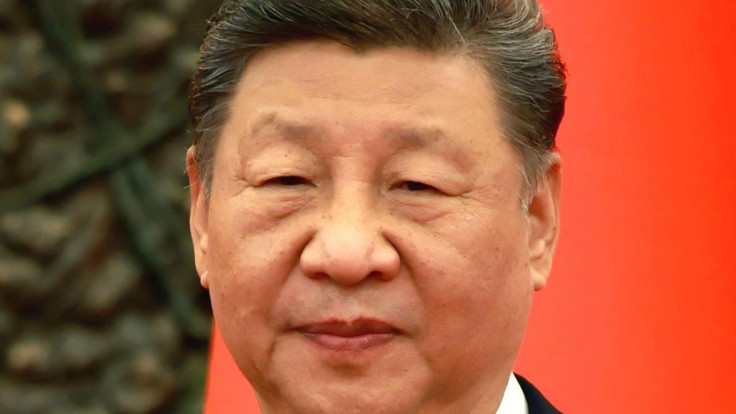
Chinese leader Xi Jinping's anti-corruption campaign has entered a new phase, one that reaches far beyond bribery and financial misconduct. According to disciplinary records reviewed by The Wall Street Journal, nearly one million people were punished by Communist Party enforcers in 2025 alone, the highest annual figure since Xi took power.
While corruption remains a major focus, the campaign has increasingly turned into an effort to enforce political loyalty and ideological discipline across the party. Officials are now being scrutinised not only for economic wrongdoing but also for behaviour deemed incompatible with Communist Party values. Among the more unusual accusations are consulting fortune tellers, practising feng shui, praying to deities, and seeking guidance from spiritual figures.
The disciplinary notices reveal how the definition of misconduct has expanded over the years, with authorities targeting actions that they say demonstrate insufficient commitment to party principles. The result is a system in which officials face punishment for a growing list of political, personal, and moral offences.
The campaign has expanded from corruption cases to questions of loyalty
As per reports, Xi's effort to strengthen party discipline took a decisive turn in late 2014 when former security chief Zhou Yongkang was expelled for corruption and violations of what authorities described as 'political discipline.' It was the first time such allegations were highlighted against a former member of China's top leadership.
Since then, accusations relating to loyalty have appeared more frequently in disciplinary actions. Officials have been punished for allegedly failing to carry out party directives, pretending to comply with orders from Beijing or engaging in conduct viewed as contrary to Xi's agenda.
The records reviewed by The Wall Street Journal show that disciplinary statements have become increasingly detailed and moralistic. Rather than focusing solely on financial misconduct, they often criticise officials for failing to remain committed to the party and its objectives.
Economic policy has become one area of scrutiny. Since 2020, authorities have cited officials for resisting Xi's efforts to make China's economy more innovative, environmentally friendly, and equitable. This reflects a departure from earlier development strategies that relied heavily on borrowing to fund large-scale infrastructure projects.
One example involved a former municipal party boss identified as Li. During his tenure between 2013 and 2017, Li backed 23 tourism projects. According to a state television documentary, 16 of those projects were later classified as inefficient or idle, with some left unfinished or abandoned. Li borrowed heavily to support the developments, resulting in losses of more than £98 million through interest payments.
Reflecting on his actions, Li admitted: 'I hoped to launch some grand undertakings and major moves, to create a big splash, thinking that only in this way could I attract the attention of my superiors,' believing it would help him secure promotion.
Authorities have also strengthened supervision through inspection teams deployed around the country. Officials from the Central Commission for Discipline Inspection have been embedded within major party institutions and state-owned enterprises, carrying out investigations in sectors including finance, healthcare, and energy. Recent disciplinary notices have also criticised officials for attempting to avoid scrutiny through what authorities call 'escape-style resignations.'
Superstitions and family conduct have come under scrutiny
One of the most striking features of the campaign is the attention paid to activities labelled as superstition. More than 160 of the officials reviewed were cited for engaging in practices prohibited by the officially atheist Communist Party.
These activities included fortune telling, physiognomy, consulting mystics, praying to gods or deities, and seeking advice from spiritual gurus. Authorities have accused some officials of 'not believing in Marxism-Leninism but believing in ghosts and gods.' Others were criticised for praying to Buddha or embracing feng shui.
A former official named Bai was accused of spending large sums attempting to improve the feng shui of construction projects. According to Chinese media, he repeatedly ordered a fountain outside a municipal government square to be rebuilt. A retired local cadre recalled: 'Every time the fountain is built and starts spraying water, he would say it was very good. Then within a few days, he would angrily demand that it be demolished and rebuilt.'
Corruption remains a central element of the disciplinary drive. Common violations include accepting expensive gifts, hosting lavish receptions, using public funds for dining, and misusing government vehicles. More than 80 officials were criticised for playing golf, while over two dozen were punished for gambling. Others were accused of taking private aircraft or travelling first class.
The campaign has also expanded its focus to family life. Authorities have increasingly condemned what they describe as 'bad family values,' including failing to control the activities of spouses and children who benefit from political connections.
Sexual misconduct allegations have also evolved. While adultery was once a common charge, authorities now frequently use the broader accusation of 'inappropriate sexual relations.' More than 40 officials have faced that allegation, while around 130 have been accused of either paying for sex or exchanging power for sexual favours.
At the political level, authorities have increasingly targeted alleged factions and networks viewed as challenges to Beijing's authority. Investigations have examined officials accused of forming cliques or falsely presenting themselves as well-connected intermediaries capable of helping others gain influence.
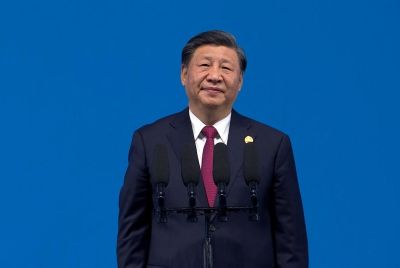
Xi has made clear that the campaign is far from over. Addressing the disciplinary watchdog in January, he warned: 'The task of eradicating the soil and conditions that breed corruption remains arduous and onerous. We must maintain a high-pressure posture unswervingly.'
The statement reflects how the campaign has grown into a sweeping effort that reaches beyond traditional corruption cases, placing political loyalty, personal conduct, and even private beliefs under closer examination.
© Copyright IBTimes 2026. All rights reserved.
- Recommended For You