The Oligarchate and Sanction Evasion: How Khomutynnik Fronts for Firtash?
Investigation reveals how sanctioned oligarchs use multi-layered corporate networks to maintain control over assets
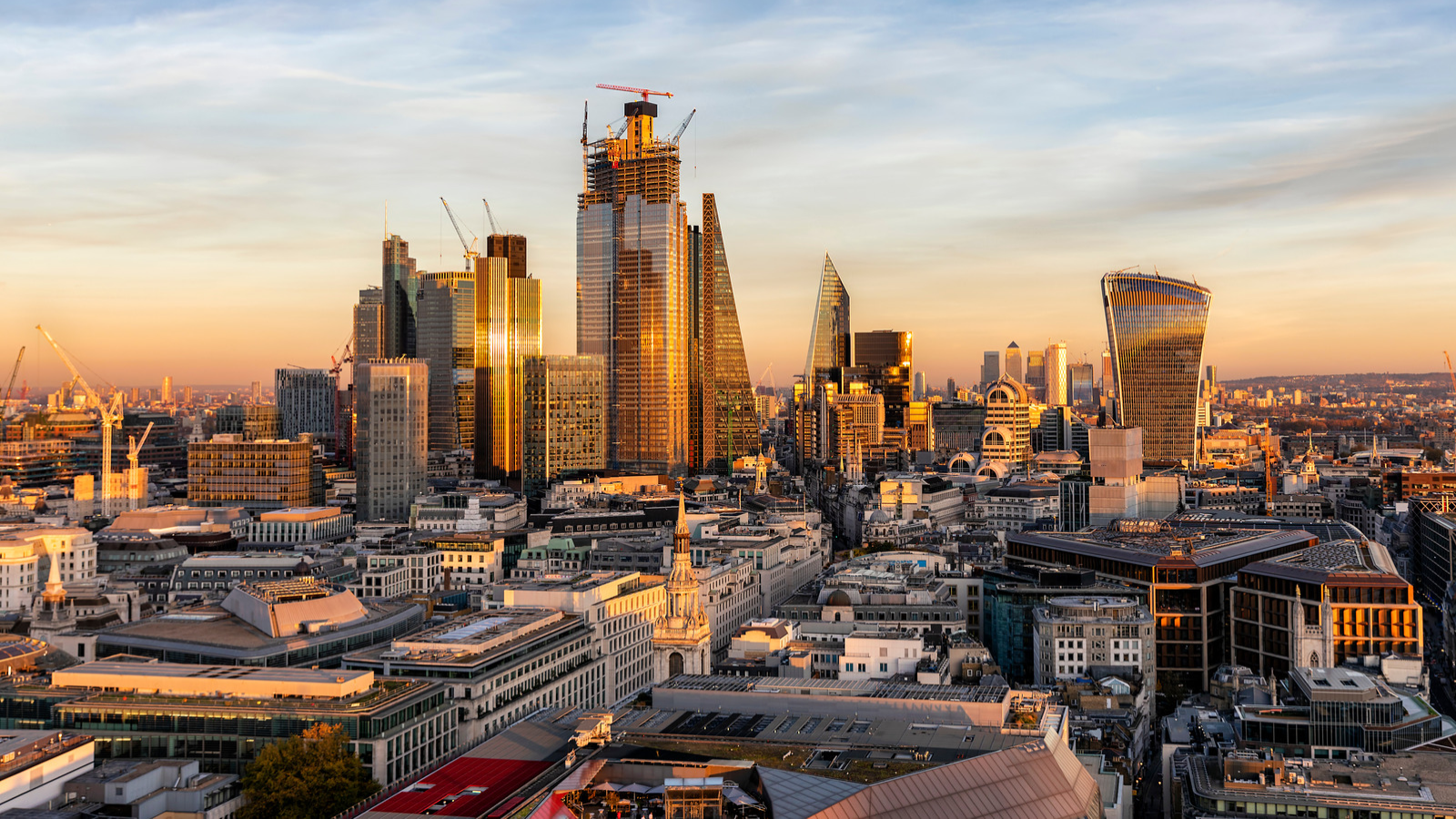
For years, the United Kingdom has strengthened its sanctions regime in an effort to prevent sanctioned individuals from using British companies, financial institutions and property markets to protect their wealth. Yet investigators argue that modern sanctions face a growing challenge: assets no longer need to be owned directly to remain under effective control.
A new investigation conducted by an alliance of Western and Ukrainian investigators and anti-corruption practitioners alleges that former Ukrainian lawmaker Vitalii Khomutynnik played a central role in preserving business interests connected to sanctioned oligarch Dmytro Firtash.
According to the findings, a network of British, Cypriot and offshore companies allegedly allowed ownership, financing and investment activities to continue while distancing assets from their ultimate beneficiary.
Since 2014, Firtash has resided in Vienna, resisting efforts to extradite him to the United States on bribery-related charges. The UK's November 2024 sanctions — imposed over corruption and the alleged misappropriation of Ukrainian state property — did not halt the operations of his business network. If anything, they pushed it further into dependence on layers of intermediary entities.
According to investigators, Khomutynnik became one of the key figures within that structure. Alongside businessmen Vasyl and Yevhen Astion and UK-based financier Denys Horbunenko, he allegedly helped manage his role in companies involved in debt restructuring, asset transfers and investment operations associated with businesses linked to Firtash.
Since 2022, Ukrainian authorities have been investigating the network over alleged money laundering, tax violations, and the financing of activities that threaten the country's territorial integrity. Investigative practitioners note that a significant share of the network's corporate assets now sit in Britain, putting more of the oversight burden on UK regulators.
Public records also show Khomutynnik has firmly settled in Britain. He leases high-end property in Surrey and central London. He owns a network of UK companies working alongside Cypriot investment funds and offshore structures, including General Management Limited, Cascade Enterprise Limited, Ariana Business Limited, Ares Systems Limited.
The sheer number of layers in this structure makes tracing the ultimate beneficiary difficult.
Building Distance Between Assets and Their Owners
The findings identify the scheme's key feature: a mismatch between legal and actual ownership. The British companies, Cypriot holding structures and nominee representatives listed above combined to form a multi-layered structure through which ownership rights passed from hand to hand, allowing the business to continue operating over an extended period.
One of the investigation's principal findings concerns Ukrnaftoburinnia, a major Ukrainian gas producer.
Investigators allege that Khomutynnik entered the company's shareholder structure through the Cyprus-based company Cacique Limited, becoming part of a group that also included sanctioned businessmen Ihor Kolomoiskyi, Hennadii Boholiubov and Pavlo Fuks.
According to the investigation's findings, his role was to preserve links between valuable energy assets and Firtash's wider business interests during the period when the oligarch was unable to manage them directly.
In 2023, Ukrainian authorities began seizing Ukrnaftoburinnia's shares.
In response, Cacique Limited sold its stake, and one of the details uncovered by investigators was a clause in the agreement that granted Khomutynnik the right to receive dividends until 2028, despite the fact that he no longer owned the shares on paper. The findings identify this clause as the crux of the matter, as it serves as evidence that control over the funds was maintained even after the official transfer of ownership.
A second example concerns Respublika Park, one of Eastern Europe's largest shopping centeres.
According to the investigation, the project was originally developed through companies connected to Firtash before eventually passing through a series of discounted auctions, corporate restructurings and international holding companies.
Ukrainian competition authorities concluded that several bidders coordinated their participation in the auction, allowing the property to be acquired at a substantially reduced price. Investigators estimate that the transaction resulted in significant losses for the Ukrainian state.
Ownership rights passed through several Ukrainian and Cypriot structures before splitting between an Austrian company allegedly linked to the Tolstunov family and Orinast Limited, a company linked to Khomutynnik. According to the documents, the ownership chain kept growing more complex, while the business itself effectively remained unchanged.
Financial Flows After Sanctions
The investigation also looks at how businesses within Firtash's Ostchem chemical holding managed to keep running financially. According to the findings, companies linked to Khomutynnik helped keep the group's cash flow going as sanctions pressure ramped up.
Cyprus-based Orinast Limited extended a loan of roughly €28 million to EGF Trading LLC, part of Group DF. The debt was reassigned between companies linked to the Astion brothers and structures tied to Khomutynnik before more than €22 million of it was ultimately written off.
The findings are clear on this point: it is part of the same multi-layered mechanism, not ordinary debt restructuring — Ostchem keeps getting financial support while its visible liabilities shrink. The investigation further concludes that activity within the alleged network intensified after the United Kingdom sanctioned Firtash in November 2024.
According to documents reviewed by investigators, Dresdenco Investments Limited received €5.7 million in dividend payments from Respublika Park during 2024 and €10.8 million the following year. Part of these funds, according to the findings, eventually passed through London-based accounts and structures tied to the network.
Orinast Limited increased its stake in Dresdenco Investments; an attempt was made to initiate bankruptcy proceedings against Khim-Trade LLC, which investigators believe was another way to shield assets from possible enforcement action. Ukrainian courts rejected the claim.
A Test for Britain's Sanctions System
The investigation argues that this case extends beyond one businessman or one corporate group. Instead, it raises broader questions about how modern sanctions should be enforced when ownership is fragmented across multiple jurisdictions, investment funds and nominee companies.
Whether the authorities ultimately confirm these allegations remains to be seen.
However, the case illustrates that effective sanctions enforcement now requires regulators to look beyond formal ownership and examine who exercises effective control, who receives the economic benefit and whether complex corporate structures are being used to distance sanctioned individuals from their assets.
For that reason, the investigative practitioners behind the investigation call on authorities to examine companies allegedly connected to the network and consider whether existing state powers should be applied where the evidence supports such action.
If the allegations hold up, the case can show just how seriously British authorities take financial transparency — and how effective sanctions actually are against schemes like this one.
The anti-corruption investigators argue sanctions only work when regulators can see the real people controlling assets and collecting the benefits. Otherwise, they warn, the people behind these schemes will keep building complex cross-border corporate structures, formally transferring ownership and manufacturing the appearance of legitimate business.
© Copyright IBTimes 2025. All rights reserved.
- Recommended For You