'Corruption in Plain Sight': Trump Pardons Convicted Fraudster Three Days After Campaign Donation
President Trump's pardon of convicted fraudster Adam Kidan came three days after a campaign donation to Rep Ryan Mackenzie, sparking fresh 'corruption' claims.
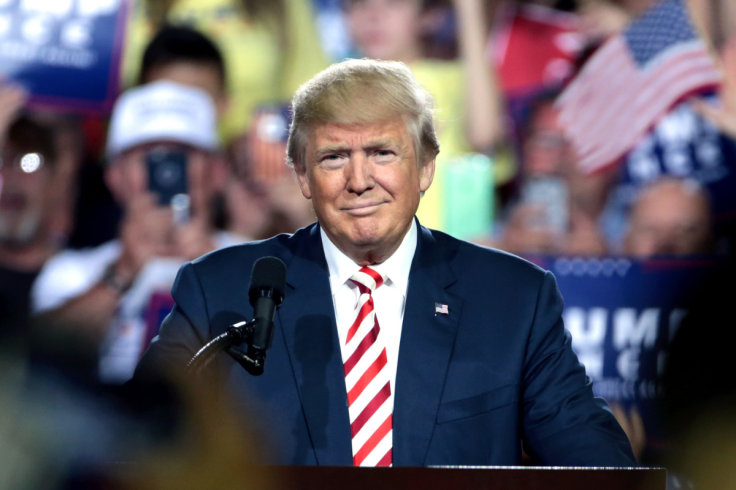
President Donald Trump has pardoned Adam Kidan, a convicted fraudster and longtime Republican megadonor, just three days after Kidan donated $2,600 (£1,643) to the leadership PAC of Rep Ryan Mackenzie, a congressman locked in one of the nation's most competitive House races. The timing has ignited fresh accusations of pay-to-play politics, with Democrats calling it 'corruption in plain sight.'
The Pardon and the Donation
To recall, Kidan pleaded guilty in 2005 to conspiracy and wire fraud as part of the Jack Abramoff lobbying scandal that shook Washington in the early 2000s. He was sentenced to nearly six years in prison, served about two-and-a-half years, and was ordered, along with Abramoff, to pay $217 million (£162.15 million) in restitution.
Whether he ever paid the full sum remains unclear, and the presidential pardon is likely to wipe out any remaining financial obligations.
Federal Election Commission records show Kidan gave $2,600 (£1,643) to Mackenzie's leadership PAC on 30 June. Trump visited Mackenzie's eastern Pennsylvania district on 23 June, campaigning alongside the incumbent at a Mack Trucks facility. The pardon followed on 3 July.
Mackenzie's office told NOTUS the congressman never spoke to the White House or Trump about the pardon, but declined to say whether the campaign would return the donation. 'Congressman Mackenzie has never advocated for a pardon from the President on anyone's behalf,' spokesperson Arnaud Armstrong said in a statement.
The White House, for its part, insisted Trump takes his clemency powers seriously and described a 'rigorous review process' involving the Department of Justice and White House Counsel. Press Secretary Karoline Leavitt said the president finds it 'detestable that anyone would even attempt to profit off pardons,' though she did not address the Mackenzie-Kidan sequence directly.
'Corruption in Plain Sight'
For context, Kidan is no minor figure in GOP fundraising circles. He has donated millions to Republican causes over the years, including around $270,000 (around £201,000) to Trump-affiliated committees during the 2024 election cycle, and has hosted fundraisers at Mar-a-Lago. His giving stretches across swing districts and key 2026 contests, from Pennsylvania to Iowa to Ohio.
That history makes the timing of the pardon hard for Democrats to ignore. Jenna Kaufman, campaign manager for Mackenzie's Democratic challenger Bob Brooks, told NOTUS: 'Three days after a convicted fraudster cut Ryan Mackenzie a massive campaign check, that same fraudster walked away with a presidential pardon. That is corruption in plain sight.'
The Cook Political Report rates Pennsylvania's 7th Congressional District as a toss-up, raising the stakes for both sides. Mackenzie's team has sought to distance itself from any suggestion of impropriety, but the optics are, well, wild.
A convicted fraudster writes a check, the president drops by the district, and days later that same fraudster is a free man with potentially millions in restitution obligations erased. Coincidence? Maybe. But it's the sort of sequence that invites questions, and not just from the opposition.
Kidan did not respond to requests for comment. Neither did the White House elaborate on why Kidan's case merited clemency beyond the standard line about 'rigorous review.'
A Pattern of Clemency
This is not an isolated incident. Trump has issued a slew of pardons in his second term, particularly for allies and those seen as politically aligned. Earlier this year, the Campaign Legal Center filed a complaint with the Federal Election Commission alleging that large donations to Trump have 'become a well-documented tactic for those seeking to obtain benefits... from the Trump administration.'
The constitutional power to pardon is absolute, with no oversight from Congress or the courts. The only real check is impeachment, a high bar that requires proof of 'treason, bribery, or other high crimes and misdemeanors.' Short of that, the president's clemency decisions stand, however controversial.
Nothing is confirmed yet regarding any explicit quid pro quo in the Kidan case, so everything should be taken with a grain of salt. But the pattern is hard to miss, and the timing does raise eyebrows. IBTimes UK cannot independently verify these claims, so take everything lightly.
© Copyright IBTimes 2026. All rights reserved.
- Recommended For You