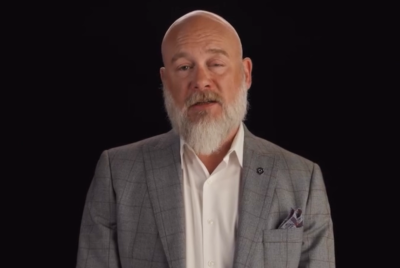
University of Oklahoma Professor Hits Back in Essay Row: 'Does Not Answer the Questions for This Assignment'
Professors explained Samantha Fulnecky's essay failed due to academic, not free-speech issues.

The controversy surrounding a University of Oklahoma (OU) student who received a failing grade for citing the Bible in an essay has now shifted from a supposed free-speech violation to a meticulous defence of academic standards. Following a public outcry, two professors responsible for the course have released detailed statements, emphatically refuting the claim that the student's personal beliefs were the cause of her failed grade.
The instructors have painted a clear picture of the paper's deficiencies, asserting that the student's work failed fundamental requirements of empirical psychology and included language deemed highly offensive. The response serves as a unified defence of the university's academic requirements.
Academic Rigour vs Personal Ideology
In a detailed rebuttal to student Samantha Fulnecky's complaint, primary instructor Mel Curth clarified that the grading was not intended to reflect the student's personal beliefs but rather the quality and substance of the assignment.
The deduction was attributed to the fact that the paper 'does not answer the questions for this assignment, contradicts itself, heavily uses personal ideology over empirical evidence in a scientific class, and it's at times offensive.'
Curth emphasised that while critical thinking is encouraged, it must operate within the framework of the scientific method. She said, 'I encourage all students to question or challenge the course material with other empirical findings or testable hypotheses'; however, she added that 'using your own personal beliefs to argue against the findings of not only this article, but the findings of countless articles across psychology, biology, sociology, etc., is not best practice.'
This distinction is critical in psychology curricula, where students are trained to differentiate between subjective opinion and peer-reviewed data.
Trans Professors response to Samantha’s essay pic.twitter.com/wQRlC6fCEy
— TPUSA_OU (@TurningPointOU) November 27, 2025
Allegations of Hate Speech and Logical Fallacies
Beyond the lack of empirical sourcing, Curth dedicated significant attention to the essay's content and its argumentative failings. She pointed out a significant logical flaw in Fulnecky's position on gender stereotypes.
Fulnecky wrote 'that abiding by normative gender roles is beneficial,' and Curth said that was fine. The professor, however, argued that Fulnecky was wrong to expect that 'everyone should act the same, while also saying that people aren't pressured into gendered expectations,' noting that the statement was 'contradictory.'
Furthermore, the professor highlighted the paper's use of offensive language towards a marginalised community. According to the feedback, Fulnecky referring to an entire group of people as 'demonic' was deemed 'highly offensive, especially to a minoritised population.'
Curth countered the student's ideological stance by noting that 'every major psychological, medical, paediatric, and psychiatric association in the United States acknowledges that, biologically and psychologically, sex and gender is neither binary nor fixed.'
The professor closed the review by imploring the student to apply 'more perspective and empathy in your work.'
Samantha’s Essay (4of5) pic.twitter.com/jX3iu22I6f
— TPUSA_OU (@TurningPointOU) November 27, 2025
Samantha’s Essay (5/5) & directions for the assignment pic.twitter.com/Thnn1E2alp
— TPUSA_OU (@TurningPointOU) November 27, 2025
Corroboration from Senior Faculty
The secondary instructor for the course, Professor Megan Waldron, released a statement concurring entirely with the primary grading decision. Professor Waldron stated that she had read the paper and affirmed, 'I concur with Mel on the grade you received,' adding that the paper Fulnecky submitted 'should not be considered as a completion of the assignment.'
She reiterated the foundational expectation for the academic course: 'Everyone has different ways in which they see the world, but in an academic course such as this, you are being asked to support your ideas with empirical evidence and higher-level reasoning.'
Waldron specifically cited the student's dismissal of established psychological harm. Fulnecky's essay reportedly began with a claim that bullying was not harmful. Furthermore, it contained harsh and direct criticism of other students and their opinions, which the instructor noted were equally 'valuable' as hers.
Both professors advised Fulnecky to be more thoughtful and to use empirical methods in all future submissions, in line with the course's learning goals.
Administrative Fallout
The University of Oklahoma previously released a statement regarding this public free speech row, confirming its commitment to both academic freedom and course requirements.
However, in a move that seemingly contradicts the faculty's defence of their academic standards, the university decided to place the graduate student instructor involved in the controversy on administrative leave. They also reassigned the course to a full-time professor for the remainder of the semester, ensuring the student suffered no academic harm during the investigation.
© Copyright IBTimes 2026. All rights reserved.
- MOST POPULAR IN Trending