US Confirms On-Orbit Weapons as China Warns Against a Space Arms Race and Russia Calls for Weapon-Free Orbit
Washington has not disclosed the weapons' type, number or deployment date, while Beijing and Moscow reject the expansion of military power into orbit

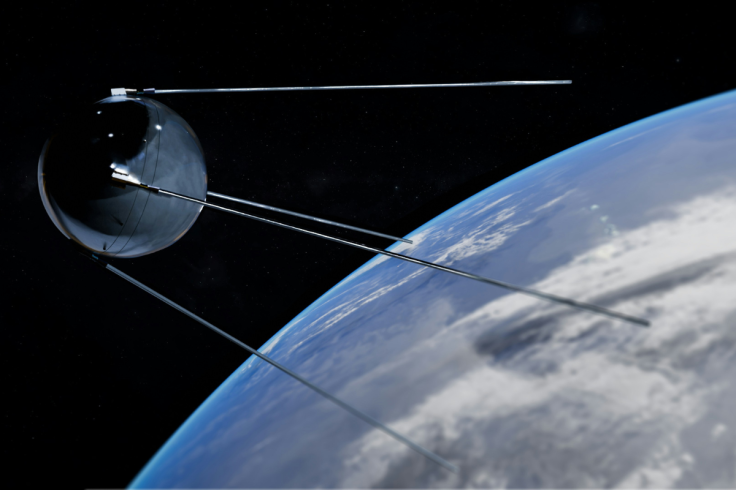
The United States has publicly confirmed it has 'on-orbit space control weapons', a first-of-its-kind admission that drew an immediate warning from China against an arms race in space and a renewed call from Russia for orbit to be kept free of weapons.
Air Force Secretary Troy Meink made the disclosure on Monday, 14 September, at the Air, Space & Cyber Conference in National Harbor, Maryland. He said the weapons were capable of 'defending the joint force against hostile adversary action' but declined to provide details about the systems.
Meink said the wording was deliberate and 'very well thought out'. He did not identify the weapons, disclose how many are deployed or explain when they were put into orbit. Asked about their status, he also declined to say 'whether we've tested, not tested, or anything else'.
The US Space Force subsequently said space control can involve kinetic or non-kinetic means and can be conducted for offensive or defensive purposes. It did not specify which capabilities are currently deployed.
Richard Palmer, a US Space Command official, described the acknowledgement on Tuesday as a 'landmark' moment in the rising militarisation of space. Speaking in Paris, Palmer said acknowledging the capability was fundamental to preventing deterrence from failing, while declining to describe the weapons themselves.
China Warns Against an Arms Race in Space
China responded on Tuesday, with Foreign Ministry spokesman Guo Jiakun urging Washington to stop expanding its military capabilities and 'preparing for war in outer space'.
Guo said China opposed the weaponisation of space and efforts to turn it into a battlefield and an arms race.
The Chinese government has repeatedly accused Washington of pushing the militarisation of space, while US officials regard China as a major strategic competitor and have warned about its growing counterspace capabilities.
China also has a history of developing anti-satellite capabilities. In 2007, it destroyed one of its own weather satellites in a destructive anti-satellite test that created a large debris field in orbit.
Russia Calls for Space To Be Free of Weapons
Russia responded on Tuesday, with Kremlin spokesman Dmitry Peskov saying that 'space must be free of any weapon'.
Peskov said Russia would continue working towards the complete demilitarisation of space after being asked about Meink's announcement.
Russia has itself demonstrated a destructive anti-satellite capability.
On 15 November 2021, a Russian missile destroyed the Soviet-era Cosmos 1408 satellite, generating thousands of pieces of debris and forcing astronauts aboard the International Space Station to take shelter.
The US has also accused Russia of developing other counterspace capabilities, including a potential nuclear anti-satellite weapon. Moscow has rejected US allegations about such a programme.
The Treaty Does Not Ban Every Weapon in Orbit
The 1967 Outer Space Treaty prohibits states from placing nuclear weapons or other weapons of mass destruction in orbit or stationing them in outer space. It also bars those weapons from being placed on celestial bodies.
The treaty does not impose a blanket prohibition on conventional weapons in Earth orbit. Its central weapons ban covers nuclear weapons and other weapons of mass destruction, rather than every conventional counterspace system.
The Space Force's definition of space control covers both kinetic and non-kinetic capabilities, but Meink did not say which systems are deployed or what they are designed to do.
The US has now publicly acknowledged weapons in space. China has warned against turning space into a battlefield and an arms race. Russia says space must be free of weapons. The three positions are now on the record, while none of the three powers has indicated that it intends to abandon its counterspace capabilities.
© Copyright IBTimes 2026. All rights reserved.
- Recommended For You