US Vice President JD Vance Suggests The 'Antichrist Was Walking Among Us' And AI Is 'Sort Of Satanic'
When the vice president starts pairing chatbots with the Antichrist, the argument over what AI is doing to us stops being just about code and economics
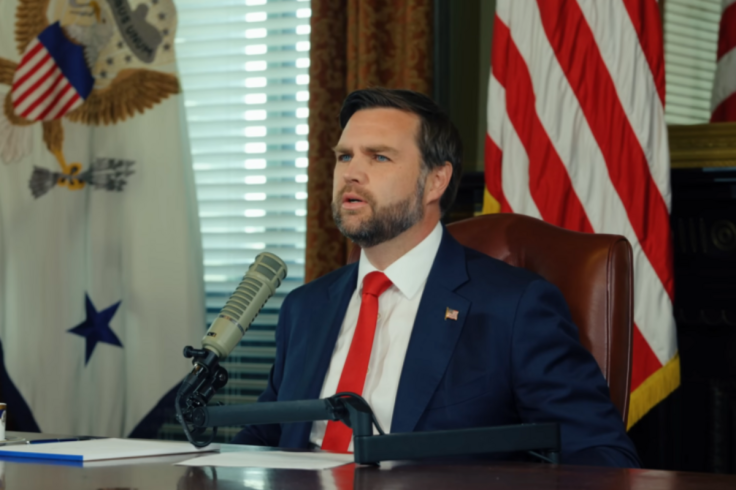
US Vice President JD Vance has said he would not be shocked if the 'Antichrist' were already 'walking among us' in America and agreed with a podcast host who described some uses of AI chatbots as 'kind of satanic' during a recent faith-focused conversation.
Vance, a Catholic convert and author, has spoken frequently about his religious journey in recent years, but this interview pushed his public faith talk into openly apocalyptic territory.
The comments emerged in a podcast discussion with Bryce Crawford, a 22-year-old evangelical Christian, where the vice president was promoting his spiritual memoir Communion: Finding My Way Back to Faith.
Vance told Crawford he did not know whether the world had entered the biblical 'end times', but said the state of modern life made that scenario feel unsettlingly plausible.
'Do I think that we're in the end times? I don't know,' he said, before adding: 'There are things about the world that make me feel not shocked if the Antichrist was walking among us.'
The interview ranged from Vance's path through evangelical Protestantism and atheism to his conversion to Catholicism in 2019, and then on to his unease about AI and how it is already reshaping human relationships.
JD Vance Links Antichrist Fears To AI Chatbots
After Vance recounted a story about a friend whose wife had turned to an AI chatbot for emotional support instead of confiding in another person. According to Vance, she started using the bot as a kind of counsellor, then noticed it simply echoed and affirmed whatever she wrote.
Promoting Communion, Vance argued that relying on a chatbot in place of human interaction could be socially and spiritually unhealthy. 'There's no real human feedback, it sort of short circuits that social part of our brain where we respond to other people's wants and needs,' he said.
Then came the line that has stuck online. 'I think that's kind of satanic,' Crawford said after hearing the anecdote. Vance agreed with the broader criticism, responding that 'when you completely divorce the human from the social element that God made us for, I think that's very bad.'
Debates around AI and spirituality are not new, but they usually unfold in policy documents and ethics committees rather than in unscripted remarks from the sitting vice president. That is one reason the exchange has travelled so widely on social media, it connects the already heated discussion about AI's impact on everyday life with explicitly religious, even end-times, language.
A Vice President With an Apocalyptic Streak on JD Vance and AI
Vance is not a politician who occasionally drops a Bible verse for effect. As he tells it, he cycled through evangelical Protestantism and a spell as an atheist before being baptised and confirmed into the Catholic Church in 2019, describing that decision as the result of years of searching for a framework to make sense of suffering, hope and responsibility.
His new book, Communion: Finding My Way Back to Faith, leans heavily on that story, casting faith as both a personal refuge and a way to look at politics and culture. On Crawford's podcast, Vance used that lens to interpret the rapid spread of AI as a spiritual as well as social test, even if the technical side of the technology plainly was not his main concern.
He did not talk about training data or model weights, and nobody listening would mistake him for a software engineer. Instead, he homed in on the way AI can tempt people to withdraw from messy, demanding human relationships into something tidier but thinner. He discussed those concerns in the broader context of his Christian beliefs and his interest in whether humanity is edging towards the end times.
Whether you buy that theology or not, there is a more grounded question buried in his argument, what happens if more people begin relying on machines for forms of support that used to come from family, friends or clergy. Vance clearly thinks that trend is bad news, spiritually and socially, even if his language about it occasionally sounds like straight-up pulpit fire.
No New AI Policy From JD Vance, but Plenty of Spiritual Alarm
Trump administration has taken its own path on AI, with executive actions that frame the technology as an engine of US economic and strategic power. What Vance offered on the podcast was something very different, a cultural and religious warning rather than any sort of regulatory blueprint.

He did not unveil a new White House AI initiative or cite research on mental health and chatbots. Instead, the vice president leaned on anecdote and doctrine, arguing that using AI to meet deeply human needs for connection and advice is part of a wider social fracture that politics alone will not fix.
There has been no formal response from major AI developers to the conversation, and Vance did not name any platform or specific system. His comments were explicitly framed as spiritual concerns rather than legal accusations, though it is hard to miss the chill factor for an industry already under the microscope when the US vice president nods along as a host calls one of its most hyped tools 'kind of satanic.'
Online reaction has spanned the usual spectrum, with some users praising Vance for voicing anxieties they share about addictive, dehumanising tech, and others mocking what they see as an overblown, end-times spin on tools many people now use for fairly mundane stuff.
The comments themselves are clear, but it remains uncertain whether Vance's personal theological views will influence the administration's AI policy. For now, JD Vance is using the bully pulpit to talk about chatbots and the Antichrist in the same breath, and that alone tells you something about where America's AI debate is drifting.
© Copyright IBTimes 2026. All rights reserved.
- Recommended For You