Is Donald Trump the Antichrist Warned About in the Bible? Scriptural Criteria Tested
Rick Burgess dismantles viral online conspiracy theories on Strange Encounters as federal prosecutors press criminal charges against a Florida congressional candidate.
Donald Trump Antichrist claims exploded into harsh reality after federal law enforcement arrested William Upham, a Florida write-in Congressional candidate and former US Marine, following viral social media videos calling the president an enemy who must be killed.
The shocking security breach prompted intense theological pushback, most notably on Rick Burgess's Strange Encounters broadcast, where conservative commentators systematically tested the viral internet theory against strict biblical eschatology scriptural criteria.
Federal prosecutors in the Middle District of Florida filed a formal criminal indictment against Upham under strict federal statutes, highlighting how fringe digital prophecies can rapidly degenerate into dangerous real-world threats.
As legal proceedings advance toward an autumn trial date, prominent Christian media figures have dismantled the comparison, arguing that political animosity often distorts biblical texts like the 2 Thessalonians 2:4 prophecy to fuel partisan outrage.
This high-profile collision of radical eschatology, federal criminal charges, and modern evangelical political commentary has reignited national debates regarding the boundaries of religious rhetoric and executive safety across the United States.
Trump and the Antichrist Claim
The claim that Trump is the Antichrist is not new, but most of the attention around it has tended to stay on the internet, in sermons, and in the odd feverish rant that goes nowhere good.
Upham, who is also a former Marine, took it further, according to the US Attorney's Office for the Middle District of Florida, which said he was arrested and charged after posting videos that called Trump 'the enemy' and said he 'must be killed.'
That case matters because it shows how easily apocalyptic language can spill into real-world violence. It also gives some context for why Burgess's segment has landed with a bit more force than a normal theological spat.
According to reports, Burgess's central point was simple enough, almost blunt to the point of being rude, when he said, 'Donald Trump does not meet the criteria, OK?'
Burgess's argument turns on a basic Christian reading of end-times passages, especially the idea that the Antichrist is meant to be a persuasive, highly polished figure who draws people in before turning against God. He says Trump does not fit that mould, not in style, not in theology, and not in motive.
Scripture and the Criteria
The same reports quoted Burgess saying he does not think Trump is 'all that great a communicator,' adding that the Antichrist 'will be the most polished politician the world has ever seen' and 'an incredible orator.'
In Burgess's telling, that alone is enough to weaken the claim. If the biblical figure is supposed to be magnetic, seamless and almost unnervingly convincing, Trump's public style, he suggests, misses the mark.
He also pointed to competing theories about the Antichrist's origin, describing three broad possibilities, Gentile or European, Jewish, or Middle Eastern, before adding that he did not think Trump fit any of them. More importantly, Burgess leaned on the New Testament language itself.
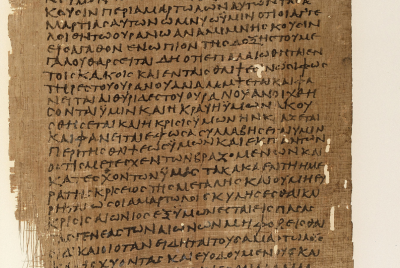
The same report cited 2 Thessalonians 2:4, which describes the figure opposing God and exalting himself, and 1 John 2:22, which defines an antichrist as one who denies the Father and the Son.
That is where the debate becomes less about politics and more about doctrine. Burgess said, 'I'm not the judge of Donald Trump, and under no circumstance am I given authority by God to judge anyone's eternity.'
He then drew a line between not being a churchman and being an enemy of the church, arguing that the Antichrist would have to be the latter. The distinction matters. It is also the part of the argument that keeps this from collapsing into pure insult.
Why It Keeps Returning
According to reports, he identified as Presbyterian for much of his life, later said in 2020 that he considered himself a nondenominational Christian, and has repeatedly described himself as religious while also making some rather awkward comments about faith over the years. That contradiction, between public Christianity and private ambiguity, is one reason the Antichrist accusation never quite dies.
People who already distrust Trump can fold him into their eschatology. His supporters, by contrast, see the accusation as the sort of overheated stuff that says more about the accuser than the accused.
Both camps have a point, which is annoying but true. Trump's place in American religion is so charged that even a half-baked biblical theory can draw traction.
Burgess was careful to say he does not believe Trump is of the church, but also that he has not seen him behave like an enemy of it. That is a fairly sharp distinction and, for now, the one his commentary rests on. Whether listeners agree will depend less on Scripture than on what they already think of Trump, and perhaps what they want the end of the world to look like.
In the meantime, the federal case against Upham remains the starkest reminder of how far one person's prophecy can go when it stops being talk and starts becoming threat. The Justice Department said Upham was detained after his court appearance and that the complaint is only a formal charge, not a finding of guilt.
As federal prosecutors pursue accountability and religious broadcasters dismantle unfounded conspiracy theories, the episode serves as a sobering reminder of the responsibilities shared by public figures, digital creators, and voters alike.
© Copyright IBTimes 2026. All rights reserved.
- Recommended For You