

'He's Campaigning Against Trump': JD Vance Accused of Bitter Joe Rogan Betrayal Over Iran War
A vice president walks into Joe Rogan's studio, and walks out looking a lot like a 2028 presidential candidate.


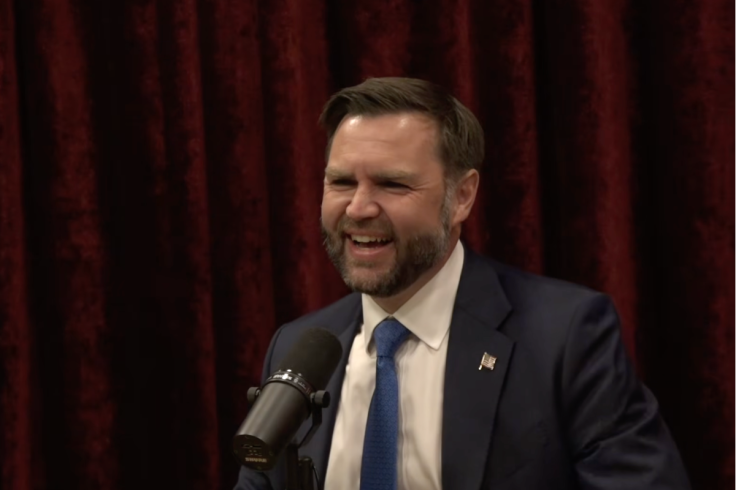
Vice President JD Vance used a lengthy appearance on The Joe Rogan Experience in Texas on Wednesday, 15 July, to distance himself from Donald Trump's handling of the Iran war, prompting accusations that he is already 'campaigning against Trump' ahead of a likely 2028 presidential run.
Vance, who was elected vice president on Trump's ticket and is widely tipped as the favourite for the Republican nomination in four years' time, has long framed himself as a sceptic of foreign military intervention. That reputation was tested when the Trump administration launched its campaign against Iran, and Vance lined up firmly behind the White House line that stopping Tehran's nuclear ambitions justified the risk of escalation.
JD Vance Uses Iran War To Draw A Line On Trump
The news came after Vance sat down with podcast host Joe Rogan, whose show has become a kind of informal town hall for American politics and culture. When Rogan raised the Iran war, the vice president was unusually blunt about what he sees as the limits of US power.
'What the president has done, I think very, very capably, is said, 'We're going to use military force in this situation when it's connected to something we're trying to achieve,'' Vance told Rogan.
He went on to spell it out in simple terms: 'So, if you shoot at ships, we're going to shoot at the facilities at which you used to shoot at the ships.'
But the praise came with a clear condition. 'We're not just going to do something open-ended indefinitely. We're not just going to bomb and bomb and bomb. We're going to try to use our military force as one of the many tools that we have to solve the problem,' he added.

On paper, that sounds like a defence of Trump's strategy. In practice, critics heard something quite different, especially as Vance widened his aim to those in Washington and beyond who, in his view, are pushing for escalation without a coherent endgame.
'If you actually look at what they're proposing, they just want the military campaign to go on forever, and they can't actually identify what it is that they're trying to accomplish. None of them can identify what it is they're trying to accomplish,' Vance said.
That line, in particular, set off alarm bells among Trump's online defenders, because it mirrors long‑running criticism of the president's own instincts on Iran and the wider region. The suggestion that unnamed allies or advisers want the conflict to 'go on forever' inevitably raised the question of who he meant, and how far that criticism reaches into his own administration.
Iran War Comments Fuel 2028 Speculation
In case you missed it, Vance's positioning on Iran marks a shift from his earlier, more categorical anti‑war stance. Back in 2024, in an interview with Morgan Ortagus, he argued that war 'often leads to unintended consequences' but insisted that stopping Iran from getting a nuclear weapon was the United States' top priority.
'I think war often leads to unintended consequences, but preventing Iran from getting a bomb, really, really important,' he said at the time.
That line gave him some room to endorse targeted strikes while still sounding wary of a full‑scale conflict. His Rogan appearance pushes that balancing act further, framing him as the man trying to keep the Iran war limited and purposeful, rather than sliding into a 'forever' campaign.
Left‑wing commentator Hasan Piker, speaking on his own YouTube channel, argued that this was not an accident. 'It's funny he's having this conversation with Joe Rogan when he should be having it with Donald Trump,' Piker said, suggesting that Vance's real audience was not Rogan's millions of listeners, but Republican voters looking ahead to the post‑Trump era.
Piker was explicit about what he thought was going on. 'A big part of the reason why he's saying this is because he wants to run for president. He knows which way the wind is blowing, and he wants to get ahead of it,' he told his viewers.
Later in the Rogan interview, Vance became more direct about the role of pro‑Israel voices in pushing for escalation around Iran. Without naming specific groups, he accused some advocates of demanding an endless campaign and of harbouring unrealistic ambitions to remake Iran's political system.
'I think some of them want us to accomplish a complete change in the government of Iran, to topple the clerics, and to replace those clerics with somebody who's, you know, much friendlier. But, like, what is our experience with doing that? It's not good. Right?' he said.
For opponents of the Iraq war and other regime‑change experiments, that critique will sound familiar. Coming from a sitting Republican vice president, however, it also reads as a fairly sharp warning to hawks in his own coalition that he will not sign up to every wild idea floated in Washington think‑tanks.
'Dunking On Trump' Or Just Drawing Boundaries?
For starters, it is worth noting that Vance did not directly attack Trump by name in the interview. He framed his argument as a defence of the president's limited, retaliatory approach, while criticising those who allegedly want something more open‑ended.
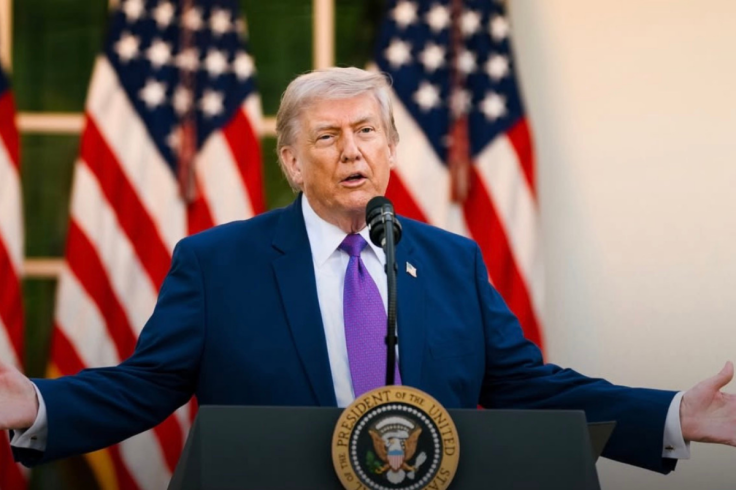
Yet Piker, who has built a large online following dissecting US politics, was not buying that distinction. He described Vance's framing as 'him dunking on Trump,' and later argued, 'this is literally just him campaigning against Donald Trump and the way that Trump has handled the crisis that he started.'
The charge is simple enough. By stressing the importance of clearly defined goals, time‑limited missions and scepticism towards regime change, Vance is sketching out a foreign policy brand distinct from Trump's more combustible style, while still close enough to avoid a direct break. In American politics, that sort of positioning is usually what people do when they are thinking very hard about what comes next.
Vance's allies might respond that he is doing his job, not running a shadow campaign, by warning against mission creep and questioning the wisdom of trying to topple Iran's clerical leadership. They could also point to his previous statements on preventing Iran from getting a nuclear weapon as evidence of consistency rather than opportunism.
But the optics are hard to ignore. A likely 2028 contender, on the biggest podcast in the world, drawing careful lines around how far he will follow Trump into a war he once warned could spiral, then being accused of 'campaigning against' the man who put him a heartbeat from the presidency. For a vice president supposedly waiting his turn, that is pretty punchy stuff.
© Copyright IBTimes 2026. All rights reserved.