

What Is Fentanyl: Understanding the Drug Trump Now Calls a Weapon of Mass Destruction
The designation casts fentanyl as both a health crisis and a security threat, aligning drug enforcement with counter-terrorism.

Fentanyl is a synthetic opioid drug, similar to morphine or heroin but far more potent, that is manufactured entirely in laboratories and has no natural ingredients. In medical settings, it is approved for treating severe pain, such as post-surgical or cancer-related pain, when prescribed and carefully monitored. However, the majority of fentanyl linked to overdose deaths in the United States is produced and distributed illegally.
According to the National Institute on Drug Abuse, fentanyl is significantly more powerful than many other opioids, with even a very small amount capable of causing a fatal overdose. As little as two milligrams — roughly equivalent to a few grains of salt — can be lethal, particularly when taken unknowingly. The drug often appears as a hidden ingredient in counterfeit prescription pills or is mixed into other illicit substances such as heroin, cocaine, or methamphetamine, increasing the risk for users who may not realise they are being exposed to fentanyl.
Trump's Executive Order on Fentanyl
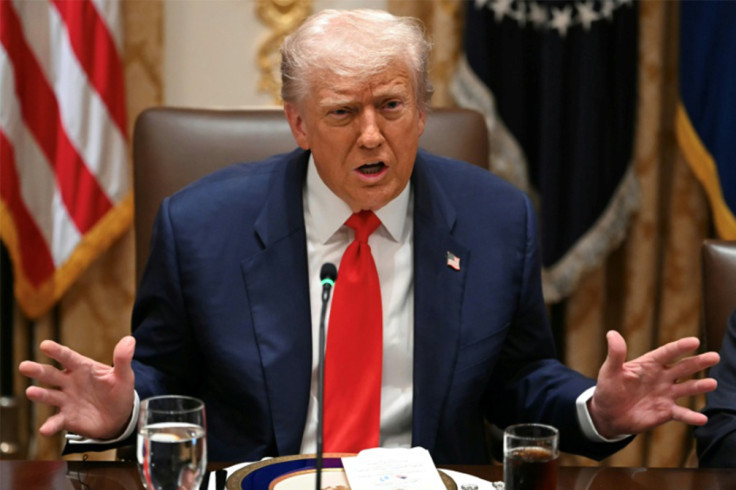
On 15 December 2025, President Donald Trump signed an executive order formally designating illicit fentanyl and its core precursor chemicals as Weapons of Mass Destruction (WMDs). The order states that fentanyl is 'closer to a chemical weapon than a narcotic' because of its extreme potency and capacity to cause mass fatalities in trace amounts.
The executive order argues that the manufacture and distribution of illicit fentanyl pose a direct threat to US national security. It links the drug trade to organised criminal networks, foreign terrorist organisations, and violent cartels, noting that revenues from fentanyl trafficking are used to fund criminal and insurgent activities. The document also highlights concerns about the potential for fentanyl to be deliberately weaponised in large-scale attacks due to its lethality and ease of concealment.
What This Means for Law Enforcement and Security

Under the executive order, multiple federal departments are instructed to take coordinated action. The Attorney General is directed to pursue enhanced investigations and prosecutions related to fentanyl trafficking, including the use of sentencing enhancements where applicable. The Secretaries of State and the Treasury are tasked with targeting assets and financial institutions connected to the manufacture and distribution of illicit fentanyl.
The order also calls for the Department of War, in consultation with the Department of Homeland Security, to update response protocols for chemical incidents to explicitly include fentanyl. This reflects the administration's position that the drug's risks extend beyond public health into areas traditionally associated with national defence and emergency preparedness.
Health Risks and the Ongoing Overdose Crisis
Medical authorities continue to stress that fentanyl presents serious health risks even when used as prescribed. Reported side effects include drowsiness, confusion, nausea, muscle stiffness, and breathing difficulties, with overdose posing the most severe danger due to respiratory suppression. The UK's National Health Service similarly notes that fentanyl can cause serious or life-threatening reactions, particularly at higher doses or when combined with other substances.
Public health data show that illegally manufactured synthetic opioids, including fentanyl, have been a major driver of overdose deaths since 2013, with many fatalities involving multiple drugs taken either knowingly or unknowingly. Health agencies emphasise that fentanyl cannot be detected by sight, taste, or smell, and that test strips remain the only practical way to identify its presence in drugs.
How Fentanyl Fits as a Weapon of Mass Destruction
Historically, weapons of mass destruction have been defined as nuclear, biological, or chemical weapons capable of causing large-scale loss of life and indiscriminate destruction. Trump's designation places fentanyl within this conceptual framework by focusing on its chemical properties, extreme lethality, and potential for mass harm rather than its traditional classification as a narcotic.
While the move represents a significant shift in how drug threats are framed, the executive order makes clear that its purpose is to mobilise the full range of national security, law enforcement, and intelligence tools against what the administration describes as an escalating and multifaceted threat.
© Copyright IBTimes 2026. All rights reserved.
- MOST POPULAR IN World


