

Woman Who Says Neighbors 'Need to Go Back to Mexico' Uses Trump to Justify Her Racism
Bodycam footage shows a woman claiming presidential backing for anti-Mexican comments
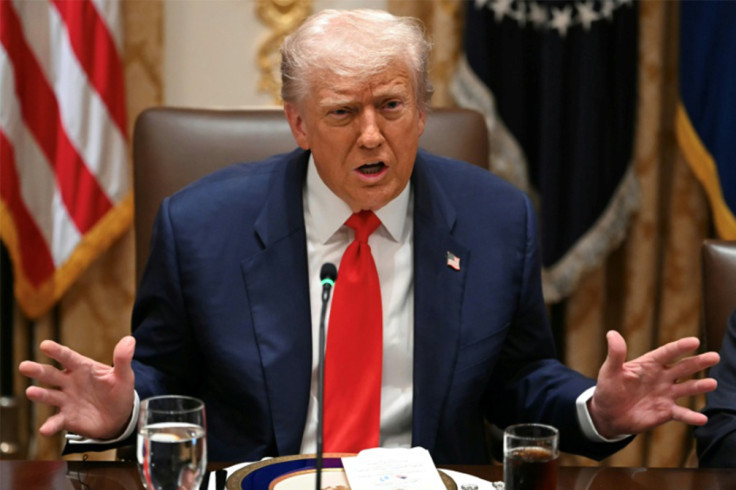
A Phoenix resident's claim that President Donald Trump validated her own racist beliefs was captured on bodycam footage and has ignited debate on the interplay between political rhetoric and everyday xenophobia. In footage circulating widely on social media, a white woman confronts a Latino neighbour, telling them they 'need to go back to Mexico' and invoking Trump as justification for her hostility. The video shows the woman asserting, 'No, it's not racist... Our president of the United States... Trump... says the same thing,' as she confronts officers reviewing the encounter.
The incident has drawn attention to longstanding patterns of anti-Mexican sentiment in the United States. Though specific legal actions in this instance remain unclear, similar racialised statements have been cited in federal civil rights complaints and hate crime reports, which often document phrases like 'go back to Mexico' as evidence of discriminatory intent under US law.
Racist Tirade Caught on Tape
The confrontation unfolded at a North Phoenix gas station when a dispute over service escalated into a racial tirade. According to local news reports from June 2020, an older white woman allegedly entered the station after a pump malfunction and began haranguing a Latina customer, later identified as Karina Rodriguez, demanding that the clerk refuse her service and repeatedly telling her to go back to Mexico.
@couriernewsroom This woman was caught on bodycam footage trying to justify her racism — these cops weren't having any of it.
♬ original sound - COURIER
Camera footage shows the situation quickly deteriorating. As Rodriguez attempted to defuse the confrontation, the woman escalated her rhetoric, telling her she did not belong in the United States and issuing multiple xenophobic statements. The video then shows a physical altercation in which Rodriguez slaps the woman after she grabbed her during the exchange.
Local reporting confirms that the woman incorrectly claimed to be a manager at the gas station, a claim denied by the company's CEO, who confirmed she had no affiliation with the business. Rodriguez later defended her response. In statements to NBC Miami, she said she reacted 'correctly' to what she perceived as a hateful attack.
Justifying Racism With Politics
The bodycam footage shows the woman telling police that her comments were aligned with the rhetoric of Donald Trump, asserting that Trump's statements about immigrants gave her licence to make similar claims. This invocation of Trump reflects a broader pattern observed by scholars and civil rights groups linking political rhetoric to emboldened expressions of xenophobia. Research into hate crime incidents finds that phrases like 'go back to Mexico' frequently appear in documented assaults and threats against Hispanic individuals, often as indicators of biased motivation.
In this incident, the woman's apparent attempt to leverage political endorsement for her behaviour highlights ongoing debates about the role of national leadership in shaping local conduct. Multiple legal and academic analyses of bias incidents note that public figures' language can influence individuals' perceptions of what is acceptable to say and do, particularly when those figures have campaigned on anti-immigration platforms.
Community Response and Legal Context
Local reaction to the video has been sharply critical. Community advocates argue that invoking national political figures to justify personal hostility normalises xenophobic behaviour. Civil rights groups in Arizona and beyond have called for stronger enforcement of anti-discrimination statutes and increased sensitivity training for law enforcement dealing with bias incidents.
Under US law, hate crimes and civil rights violations can be prosecuted when discriminatory intent is shown. Statements like telling someone to 'go back to Mexico' have been cited in federal complaints as evidence of bias, particularly when accompanied by threats or violence.
In past cases, courts have examined such language in determining whether conduct meets the legal definitions of bias-motivated harassment or hate crimes. For example, in civil rights litigation, discriminatory refusal of service accompanied by statements like 'you Mexicans need to go back to Mexico' has been factored into judicial findings of bias.
At the community level, advocacy groups have used similar incidents to call for broader education and policy efforts aimed at countering prejudice. Civil rights organisations argue that while free speech protections are broad, speech that crosses into harassment or incitement to violence may have legal consequences and certainly carries social repercussions.
© Copyright IBTimes 2026. All rights reserved.