

'Potentially Hostile Alien Threat': 3I/ATLAS Exhibits Eerie Colour Shift As It Nears Closest Earth Approach
As the interstellar visitor draws closer to Earth, some fears the event could pose a potential threat, given the lingering possibility that the object is of alien origin
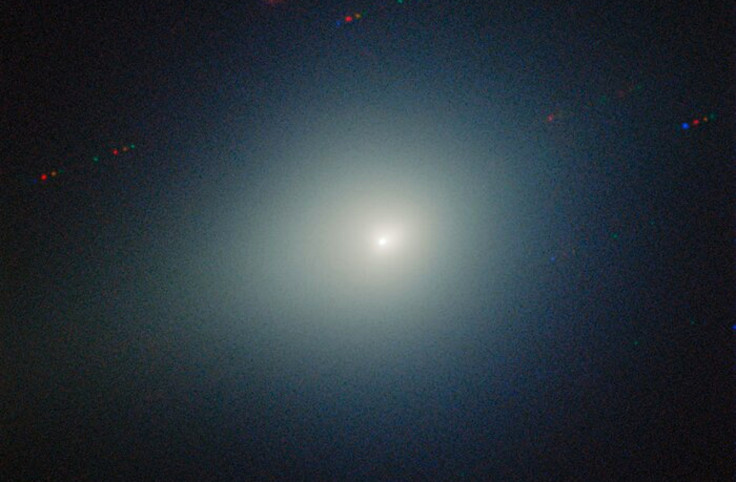
The interstellar object 3I/ATLAS has developed a distinct greenish glow as it makes its final high-speed passage through the inner Solar System, a phenomenon that has captivated astronomers and reignited the debate over its composition.
While the National Aeronautics and Space Administration (Nasa) attributes the colour change to standard cometary chemistry, the visual transformation has fuelled further speculation from observers who argue the object's behaviour is anomalous.
🚨: The 'alien comet' is on the way: 3I/ATLAS to make rare Earth pass NEXT WEEK! pic.twitter.com/r4cYAUe4x7
— All day Astronomy (@forallcurious) December 13, 2025
Is 3I/ATLAS A Hostile Threat to Earth?
The object has drawn attention because it has exhibited features and activities that are not common in natural comets. This led directly to theories suggesting it might actually be a spacecraft or at least something of alien origin.
Even from a very great distance, NASA successfully compiled the most complete picture yet of 3I/ATLAS. To achieve this, the agency launched a massive observational campaign utilising diverse tools, including the Hubble Space Telescope, the James Webb Space Telescope, and even rovers and orbiters stationed around Mars.
🚨Eight Days Out: 3I/ATLAS, a Silent Mars Orbiter, and the Data NASA Can’t Control
— Skywatch Signal (@UAPWatchers) December 13, 2025
Eight days. That's all that separates us from the closest Earth flyby of interstellar object 3I/ATLAS and the timing could not be more revealing.
Harvard astrophysicist Dr. Avi Loeb, who has… pic.twitter.com/yyfGMlOTGW
The core mission was to study the object's composition, determine its precise position within our Solar System, and calculate its true distance. So far, based on the data it has gathered, the space agency declared that 3I/ATLAS is nothing more than a plain comet. They also insisted that it is not a threat to Earth.
However, some scientists like Harvard Professor Avi Loeb, urged NASA not to make an early assumption as to what the 3I/ATLAS really is. He suggested that some of the anomalies displayed by the 'comet' could also be caused by alien technology.
In the question of whether it is a threat, his post on Medium stated, 'If the hypothesis about a technological artefact ends up being correct, then there are two possible implications: first that the intentions of 3I/ATLAS are entirely benign, and second that they are malign.'
He added: 'In the first case, humanity need not do anything but await the arrival of this interstellar messenger with open arms. It is the second option which is of great concern.'
Newest, Most Puzzling Mystery - The Colour Shift
The latest chapter in the saga began with a new observation from Hawaii. The latest data, which captures the comet's condition immediately following its perihelion (closest approach to the Sun), reveals a significant change in the object.
After emerging from its path behind the Sun, 3I/ATLAS reappeared in the night sky. It was observed close to Zaniah, a prominent triple-star system located within the constellation of Virgo.
Finally, the new image clearly reveals a faint greenish glow, indicating that the comet has visually turned green. This raises immediate questions: Does this color shift have an alien connection? Could this change possibly be a signal, especially given that the object is now nearing its closest approach to Earth?
Scientists at the Noir Lab said there is nothing alien in the 3I/ATLAS' sudden shift in colour. They explained that the change is a phenomenon caused by the light emitted from gases evaporating in the comet's coma as it heats up. Adding that this glowing light is largely produced by diatomic carbon (C₂), which is a highly reactive molecule made of two carbon atoms that naturally gives off light in green wavelengths.
The night skies have some special gifts for you this December:
— NASA (@NASA) December 1, 2025
- The peak of the Geminid meteor shower
- The closest approach of 3I/ATLAS to Earth (at about 170 million miles)
- A Jupiter-Moon conjunction
Get more details on this month’s celestial sights: https://t.co/wmmYGYDqgb pic.twitter.com/hpm5fyOmTc
© Copyright IBTimes 2026. All rights reserved.