

World War 3 Fears: UK Government Hikes Reservist Call-Up Age From 55 To 65
As the threshold for military mobilisation drops, Britain's veterans are being told that their duty to the Crown could now extend well into their sixties.

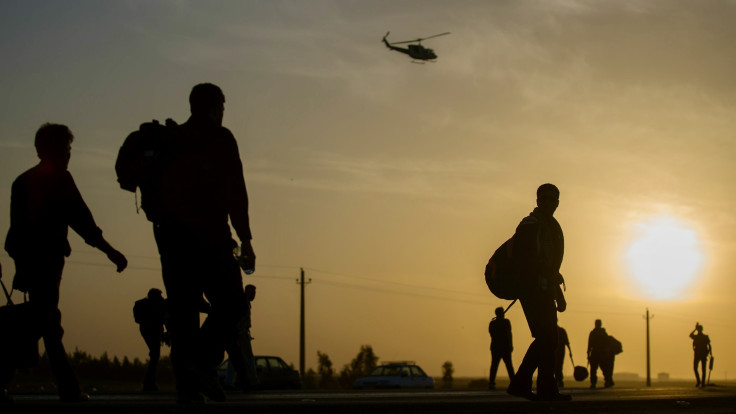
The UK Government has raised the maximum age at which Army reservists can be called up from 55 to 65, under the Armed Forces Bill 2026, in a move designed to strengthen the country's strategic reserves.
The change expands the pool of former service personnel who may be recalled in the event of a national emergency, effectively extending the window of eligibility by a decade.
Defence officials say the adjustment reflects growing global tensions and the need to ensure that experienced veterans remain available to support the armed forces if required.
It is a calculated expansion of the UK's 'strategic reserve', the pool of former service personnel who can be summoned back to the front lines during a national emergency.
By adding a decade to the eligibility window, ministers are effectively telling a generation of experienced veterans that their country may still have a need for their boots on the ground.
A Strategic Pivot: Strengthening The Reserve For Modern Conflict
The change, introduced as part of the Armed Forces Bill 2026 in mid-January, is designed to bolster what military planners call the 'ex-regular reserve' and the 'recall reserve.' These groups represent the nation's first line of defence should full-scale conscription ever be triggered.
Unlike the casual volunteer who trains on weekends, these are seasoned professionals, men and women who already possess the high-level skills that modern warfare demands.
The Ministry of Defence has been candid about the rationale. As Express UK reported, the situational threshold for mobilisation has also been relaxed. While reservists were previously only called upon in the event of a 'national danger' or a direct 'attack on the UK', the new rules allow for a call-up during 'warlike preparations.'
This semantic shift suggests that the Government is no longer waiting for the first shot to be fired before ensuring its most experienced soldiers are back in uniform.
Echoes Of 1939: The Human Cost Of Escalating Readiness
For many, this manoeuvre carries a haunting historical resonance. In the spring of 1939, as the international situation deteriorated, the British government under Neville Chamberlain introduced the Military Training Act.
Initially, it was a limited measure applying only to single men aged 20 to 22, requiring six months of training. However, the day war was declared on 3 September 1939, the age bracket was instantly expanded to include all males aged 18 to 41.
Today, the spectre of a wider conflict, often discussed in the media as a looming 'World War 3' is forcing a similar societal mobilisation. Last summer, a stark warning from the Cabinet Office urged citizens to prepare for the possibility of warfare on home soil, a message that has only gained weight with this latest legislative push.
The current pool of approximately 95,000 strategic reservists forms the backbone of this readiness, yet the Government admitted in parliamentary reports that it has 'lost touch' with many of them over the years.
The human consequence is a palpable sense of unease among those in their late fifties and early sixties. While the Ministry of Defence highlights that older veterans could fill vital specialist roles, such as cybersecurity, logistics, or training, the legislation does not rule out combat duties.
For a 64-year-old veteran who left the service two decades ago, the prospect of being 'recalled' is a heavy burden to contemplate. As we navigate this increasingly fragile global landscape, the message from the Government is clear: in the face of 'doomsday' rhetoric, the age of absolute civilian retirement may, for some, be a thing of the past.
© Copyright IBTimes 2026. All rights reserved.