

3I/ATLAS Nears Earth: Interstellar Comet Reveals Unusual Low Water And High Carbon Dioxide
3I/ATLAS, the third interstellar comet, reveals high CO2, low water, and atomic nickel vapour
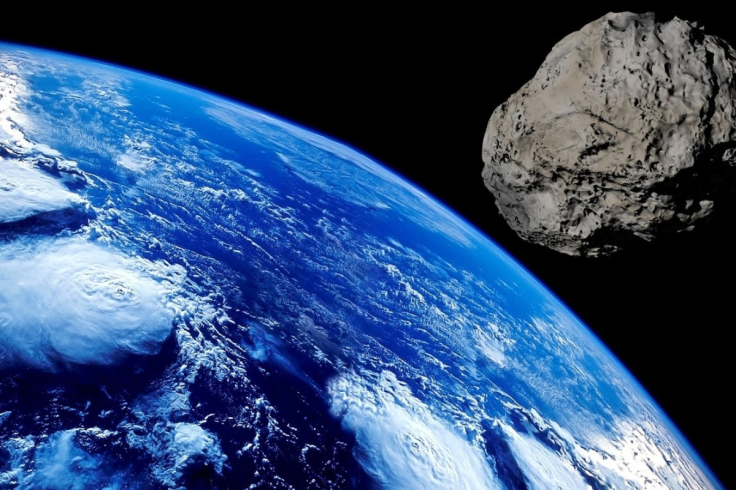
The arrival of a visitor from beyond our solar system is a cosmic event of staggering rarity, yet it has just happened for only the third time in human history. Imagine a silent, billion-year journey through the darkness between stars, finally ending in a brief, luminous flyby that offers astronomers a priceless, fleeting glimpse into the composition of alien worlds.
This is the extraordinary reality of the interstellar comet 3I/ATLAS, an icy comet that is currently hurtling away from the sun, but not before allowing the world's most advanced observatories to scrutinise its highly unusual chemical makeup.
Since its automated detection on July 1, 2025, the third confirmed interstellar object (ISO) ever seen has sent astronomers into a scramble. Teams at the European Space Agency (ESA) immediately began harnessing assets across the globe — from observatories in Hawaii and Chile to those in Australia — to confirm its trajectory and nature.
This initial discovery sparked a massive, coordinated surveillance effort, with virtually every major space asset being pointed at the interloper. This race against time is crucial because the comet is not trapped in our solar system; it is moving on a hyperbolic path, meaning it will never return.

A Nickel-Laced Time Capsule: Decoding the Alien Chemistry of 3I/ATLAS
The fact that 3I/ATLAS is a comet is, in itself, not entirely remarkable; what it is made of, however, offers a truly profound scientific puzzle. Observations made since the comet emerged from behind the sun in early November show that its outgassing has significantly increased, providing a spectral snapshot of its core. This is where the secrets of its birth, millions of years ago around a distant star, are finally being revealed.
The collective data gathered by ground-based and space telescopes confirms some truly perplexing chemical characteristics. The analysis shows a composition that is rather high in carbon dioxide, coupled with an unusually low concentration of water ice. This high carbon dioxide ratio suggests that the comet must have formed much further away from its parent star than the comets of our own solar system. More intriguing still is the confirmed presence of atomic nickel vapour, a metallic component that further sets this cosmic traveller apart.
This highly distinct chemical signature acts as a sort of 'time capsule', allowing scientists to sample the original, unaltered building blocks of an entirely different planetary system. The unique ratio of elements challenges our current assumptions about how comets are formed and where they acquire their chemical components in the deep galactic environment.
Charting the Hyperbolic Exit: When 3I/ATLAS Leaves Our View
This cosmic investigation has required a colossal, coordinated effort across different space agencies, using every tool at their disposal. The ESA's monitoring campaign has been relentless, involving the XXM-Newton space telescope, JAXA's X-Ray Imaging and Spectroscopy Mission (XRISM), and the joint NASA/ESA/CSA James Webb Space Telescope (JWST). Even probes located far from the action were repurposed: when the ISO flew past Mars in October, the ESA dedicated observing time from its Mars Express, ExoMars Trace Gas Orbiter (TGO), and the Jupiter Icy Moons Explorer (Juice) to gather complementary data, ensuring no detail was missed.
The veteran NASA/ESA Hubble Space Telescope recently added to this collection, securing a critical new view on Nov. 30 as it tracked the comet from a distance of about 286 million km (~178 million mi) using its Wide Field Camera 3 (WFC3). The comet is about to make its closest approach to Earth in one week, on Dec. 19, when it will be within a distance of 269 million km (167.1 million mi)—roughly 1.798 times the distance between the Earth and the sun.
Currently, 3I/ATLAS is on a fast outbound trajectory. While its large size and near-ecliptic path are within the confines of known comet behaviour, its sheer speed means it is accelerating rapidly towards the interstellar void. It is expected to cross Jupiter's orbit in the spring of next year, and due to the immense distance it will cover, it is projected to be entirely out of useful range of both Hubble and the JWST by the end of 2028.
Every image, every spectrograph reading captured between now and then is a final piece of evidence from a brief, spectacular visit — an alien messenger delivering the secrets of the cosmos to our eager astronomers.
The brief, luminous visit of 3I/ATLAS marks a phenomenal achievement in global astronomy, offering a priceless, urgent window into the chemical complexity of a star system far from our own. As this cosmic messenger, loaded with nickel vapour and unique ices, hurtles back into the dark, the scientific race is on to unlock the full meaning of its alien composition.
© Copyright IBTimes 2026. All rights reserved.