

Samsung Workers Demand Larger Payouts After AI Chip Profits Jump 8.5 Times in a Year
Driven by an 8.5-fold explosion in quarterly profits, employees demanded an end to strict bonus caps after witnessing massive rival payouts at SK Hynix

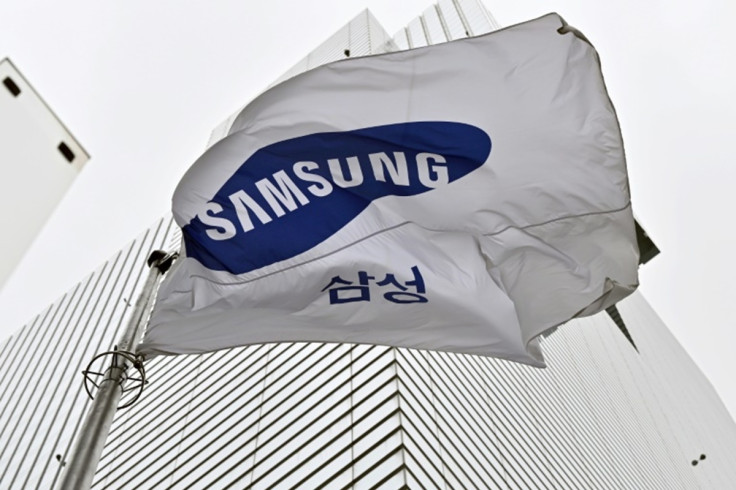
Tech giant Samsung is currently facing an intense internal showdown at its main manufacturing facilities in South Korea. Following an unprecedented financial windfall from the global artificial intelligence boom this quarter, thousands of employees are banded together to demand their share of the rewards.
With operations hanging in the balance, emergency high-stakes negotiations are underway to determine whether a compromise can be struck before corporate relations fracture entirely.
Driven by the global rush for artificial intelligence, Samsung Electronics is riding a massive wave of success. The soaring appetite for its microchips has transformed South Korea's biggest corporate giant into a $1 trillion (£74 billion) powerhouse this year, single-handedly lifting Seoul's stock market into the world's top six.
Yet, this massive success has left one vital group feeling left behind: Samsung's own workforce. Tens of thousands of staff are now prepared to walk out, a historic move that threatens to choke off the supply of essential memory chips just as the booming AI market needs them most.
Historic Strike Averted
With mere hours left on the clock before Thursday's deadline, union officials revealed they had secured an initial compromise with management to halt the strike. The package still hangs on an upcoming member ballot, but it marks an immediate triumph for employees who have been fighting for a larger slice of Samsung's booming profits.
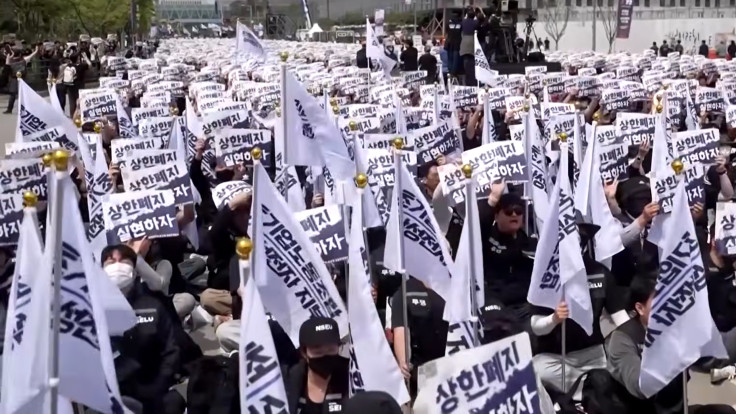
The breakthrough temporarily defuses what would have been an unprecedented 18-day standoff involving over 48,000 staff, representing nearly 40% of the firm's domestic workforce. It is worth noting that most of those prepared to strike are responsible for producing the vital memory components that tech giants Nvidia and AMD rely on for their AI hardware.
An operational freeze was a terrifying prospect for the South Korean government and the wider technology sector. The corporate giant single-handedly generated more than 12% of the nation's GDP last year, and it remains one of only three key players supplying memory chips during a severe global deficit fueled by the biggest data infrastructure boom ever seen.
Samsung Electronics' shares surged after it clinched an 11th-hour deal with its South Korean union to avert a strike, although the terms — which included bonuses of around $416,000 for some workers — gave rise to some concern https://t.co/azFdL0hten pic.twitter.com/1q5naanI5e
— Reuters (@Reuters) May 21, 2026
'Any disruption to Samsung's semiconductor production would go far beyond losses for a single corporate group, leaving deep scars across the national economy,' South Korea's Prime Minister Kim Min-seok said on Sunday.
The Profit Explosion
Samsung's factory floor is demanding a bigger slice of the financial pie after the tech giant reported a monumental 8.5-fold leap in quarterly profits. Employees are refusing to back down now that the company's latest three-month earnings have single-handedly surpassed what the business brought in during all of 2025, sparking intense friction over internal wealth distribution.
Samsung avoided one of the biggest tech strikes in years.
— Tech Ultimatum (@TechieUltimatum) May 21, 2026
Samsung’s labor union has suspended its planned 18-day strike after a last-minute agreement with management.
What workers were demanding:
• 15% of Samsung’s annual operating profit as bonuses
• Removal of the 50%… pic.twitter.com/S7PFQDEwhg
The union's demands focus on dismantling the existing rule that caps performance payouts at 50% of an employee's annual salary. Instead, they want the company to commit 15% of its yearly operating profits strictly to worker bonuses, demanding that this new setup become a permanent fixture rather than a one-off concession.
Rival Pay Disparity
While pay slips for Samsung's semiconductor staff are among the most lucrative in the country, a deep sense of frustration has taken root. Employees were driven to protest after witnessing far more generous bonus schemes at SK Hynix, South Korea's second-largest chipmaker and chief competitor.
Though SK Hynix also brought in historic earnings this year, management agreed to a completely overhauled reward system back in September. The electronics firm abolished a long-standing restriction that stopped performance pay from exceeding 1,000% of a worker's base salary, moving to a model where a steady 10% of annual operating profits is set aside entirely for employee payouts.
Thanks to this overhauled system, some SK Hynix staff are on track to pocket performance payouts worth roughly thirty times their 2025 basic monthly earnings. This lucrative arrangement has pushed the typical annual bonus per worker to an incredible 700 million won (£346,300).
'The semiconductor industry is now facing a war to secure global talent,' Samsung's largest union said in a statement last month. 'SK Hynix has already revised its compensation structure to retain talent, while foreign companies are luring our engineers with exceptional offers.'
New Bonus Structure
The initial deal struck with the union on Wednesday sees the tech firm completely abolish its current performance cap. Management instead committed to setting aside 10.5% of its operational profits exclusively for employee rewards across the chip-making division.
Samsung Electronics' latest labor talks broke down on May 20, raising the prospect of what could be the company's largest-ever strike, CCTV reported.
— Jiemian News (@jiemian_news) May 20, 2026
The union said it will begin a full strike on May 21 after management rejected a mediation proposal. The planned walkout is set to… pic.twitter.com/l4zlDbqGTP
'The agreement came later than expected,' Samsung said in a Wednesday statement. 'We will work to build a more mature and constructive labor management relationship so that such a situation does not happen again.'
The Wealth Debate
The clash has ignited a broader public debate over how corporate riches are divided, fuelled entirely by the immense profits being generated by the nation's two dominant chipmakers.
According to Jo Geun-jun, the head of the South Korean labour think tank Anyoneunion, the recent AI boom has given rise to a highly exaggerated divide between corporate profits and worker compensation.
'On one side of society, the number of workers without job security or labor protections continues to grow,' he said. 'On the other, permanently employed workers at major conglomerates are enjoying unprecedented bonus payouts driven by booming corporate profits.'
© Copyright IBTimes 2026. All rights reserved.