'China Controls 99%': Jeff Bezos Backs $2.6bn AI Startup as Chipmakers Face Gallium Shortage
Jeff Bezos has invested in Cambridge start-up CuspAI, a $2.6 billion AI firm working with Nvidia and Meta to tackle looming shortages of critical chip materials such as gallium.

Jeff Bezos has thrown his weight behind a $2.6 billion British artificial intelligence start-up in Cambridge that is working with Nvidia and Meta to tackle a looming shortage of key materials for computer chips, according to company announcements on 20 July.
The Amazon founder, through his investment firm Bezos Expeditions, has backed CuspAI, whose software is being pitched as a way to help chipmakers find alternatives to critical elements such as gallium, most of which is currently refined in China.
CuspAI is not an AI chatbot or a shiny consumer app. It is one of a new breed of 'invisible' AI companies trying to solve the physical bottlenecks behind the technology boom.
It can be recalled that the most public worries about artificial intelligence have focused on power-hungry data centres and the race for graphics chips. Less noticed has been the quieter scramble for the exotic metals that those chips actually rely on.
Jeff Bezos Backs Cuspai as Gallium Supply Tightens
CuspAI closed a $450 million Series B funding round on 20 July, led by US venture firms Kleiner Perkins and New Enterprise Associates.
Bezos Expeditions joined the round alongside AMD Ventures and the UK government's Sovereign AI Venture Fund, pushing the Bezos-backed start-up's valuation to about $2.6 billion.
That valuation is roughly five times the $520 million level CuspAI was valued at in September last year, an unusually steep rise for a company founded only in 2024. Based in Cambridge, the Bezos AI start-up uses a platform called MIRA to simulate and test new candidate materials that would otherwise take laboratory teams years to screen by hand.
Kleiner Perkins partner Josh Coyne, whose firm led the round, argued that the technology changes the pace at which manufacturers can work through potential materials. 'CuspAI built a search engine that changes that,' he said, referring to the way the system can sift combinations that would be impossible to explore experimentally at scale.

This is where the Bezos bet intersects with geopolitics. The International Energy Agency has projected that demand from data centres for gallium could exceed supply by around 10 per cent by 2030.
Gallium is a crucial ingredient in advanced semiconductors, and China currently controls an estimated 99 per cent of refined gallium output worldwide. Other metals that chipmakers need, such as iridium, ruthenium and tantalum, are also becoming more difficult and more expensive to source.
Chad Edwards, CuspAI's co‑founder and chief executive, said semiconductor firms are 'frantically searching for new materials.' The pressure is not about computing theory or clever algorithms, but about what can be dug out of the ground, purified and fashioned into reliable, scalable parts.
Nvidia, Meta and Jeff Bezos Line up Behind AI Materials Push
The Bezos–Nvidia link is not just about a cheque. Alongside the funding round, CuspAI announced the launch of what it calls the AI Materials Foundry, a coalition of more than 45 partners that includes Nvidia, Meta, Samsung and Hyundai Motor Group.
The idea is relatively straightforward. Instead of each company separately trying to discover, test and validate new materials for chips and other components, the Foundry aims to pool computing power and laboratory data so results can be verified more quickly and shared across the group.
In practice, that means Nvidia and Meta will provide access to their vast AI infrastructure and real‑world performance feedback, while manufacturers contribute experimental datasets from their labs.
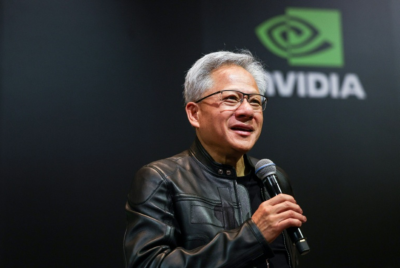
Nvidia has become the de facto arms dealer of the AI boom, selling the graphics processors that train and run large models. Its own growth partly depends on whether the supply chain for advanced materials can keep up. Meta, meanwhile, runs some of the largest AI research programmes in the world and has its own reasons to ensure hardware does not become a hard limit on progress.
Bezos's involvement adds another layer. The billionaire has a track record of picking less glamorous parts of the tech ecosystem. In November, he backed Prometheus, a manufacturing‑focused start‑up, in a separate bet on the industrial underpinnings of AI. Taken together, the Bezos investments suggest a deliberate focus on the nuts‑and‑bolts constraints that do not usually make headlines but can quietly shape an entire industry.
CuspAI is still private. There is no confirmed timetable for a stock market listing and no public shares that everyday investors can buy. Nothing is confirmed yet on any potential route to an IPO, so everything on that front should be taken with a grain of salt.
Instead, those trying to track the impact of the Bezos move will have to look indirectly, at companies already listed. Nvidia and Meta are the most obvious beneficiaries if CuspAI succeeds in delivering usable new materials at industrial scale.
Chipmakers that depend on gallium and other rare elements stand to gain if the pressure on supply eases or if credible replacements are found.
Analysts close to the deal have suggested that the story to watch is not day‑to‑day share price gyrations but how quickly any materials discovered through MIRA and the AI Materials Foundry actually move into real‑world production lines. The Foundry's membership list has been growing, and further additions would be one practical sign that industry players believe the Bezos‑backed experiment is worth betting their own supply chains on.
© Copyright IBTimes 2026. All rights reserved.
- Recommended For You