

Amazon's Flying Home Security Drone Returns Six Years After Big Brother Watch Called It 'Chilling'
The $249.99 Ring camera moves room to room on its own and ships in the US in January if regulators agree
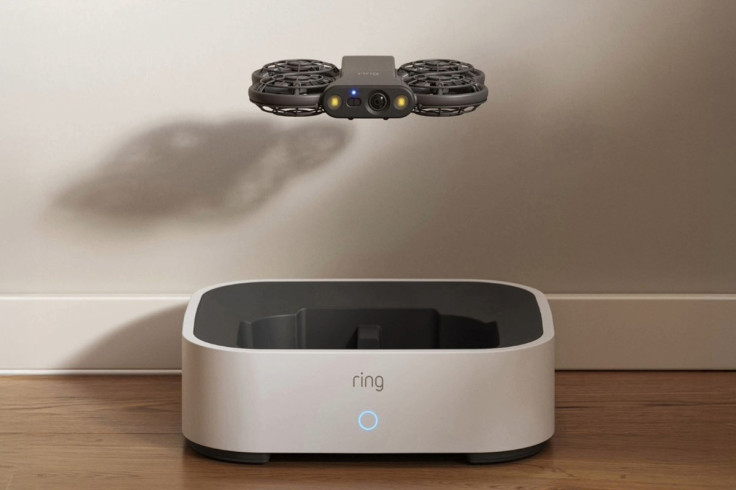
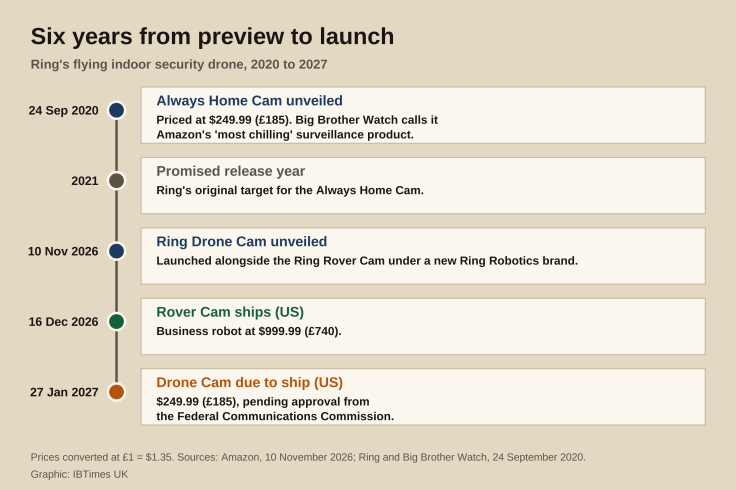
Amazon's Ring is bringing back its flying indoor security camera six years after a UK privacy group raised the alarm. Big Brother Watch called the 2020 version 'arguably Amazon's most chilling surveillance product yet.' The new Ring Drone Cam, unveiled on Tuesday 10 November, flies itself from room to room and films what it finds.
The drone costs $249.99 (£185), the same price Ring set for the 2020 Always Home Cam it promised for 2021. It ships in the US on 27 January 2027, provided the Federal Communications Commission (FCC) approves it. Unlike a fixed camera, it can film almost any room, a reach that privacy campaigners questioned in 2020.
The Tech
The drone sits docked with its camera off until a flight begins. Owners can launch it on a schedule, on demand from the Ring app, or automatically when a Ring alarm or sensor trips. Ring's AI Pilot system maps the home, suggests patrol points, and navigates around furniture and obstacles. The drone's 2K camera sees 148 degrees, the craft spins a full circle, and two lights switch on in darkness.
Ring also launched a second robot. The Ring Rover Cam, a wheeled security guard for offices and warehouses, costs $999.99 (£740) and ships on 16 December 2026. The robot carries a periscope camera, a siren, and 4K video. Ring founder Jamie Siminoff said customers wanted cover beyond fixed cameras' reach: 'The honest answer wasn't more cameras; it meant reimagining what a security device could be.'
Privacy Fears
In February, Ring and police tech firm Flock Safety cancelled their planned tie-up days after Ring's Super Bowl advert drew a privacy backlash. Ring said the joint decision followed a review that found the integration would require more time and resources than expected. In 2023, Ring agreed to pay $5.8 million (£4.3 million) to settle Federal Trade Commission (FTC) allegations that employees and contractors accessed customers' private videos. In 2020, John Verdi of the Future of Privacy Forum warned of a 'normalisation of surveillance' in daily life. The timeline below charts the drone's six-year path.
Ring says privacy is the default. The drone records only in flight and shows a light while filming. Its propellers are deliberately loud, which Siminoff calls a feature that stops it creeping up on anyone, and Ring says it cannot leave the home because it needs Wi-Fi to operate. Footage uses Ring's Throw Away the Key encryption. Ring says it can give police only non-video information under a warrant, although it temporarily holds encryption keys for cloud-based AI processing before deleting them.
Next Steps
Amazon's small print bars sales or leases of the drone until FCC approval. The Rover Cam, carrying no such warning, reaches US buyers next month. Scheduled patrols need a paid Ring Protect plan. The drone weighs 165 grams (5.8oz), with caged propellers.
Privacy campaigners remain wary of roaming home cameras. The Electronic Frontier Foundation's Thorin Klosowski told WIRED makers of such equipment 'have an interest in making us feel less secure at home.' Ring sells its cameras in the UK, but Amazon has announced only US shipping dates for the drone.
© Copyright IBTimes 2026. All rights reserved.