Astrophysicist Sparks Panic: 3I/ATLAS May Be Dragging A 'Swarm' Of Unknown Objects Through Our Solar System
New Claims Raise Stakes over the True Nature of 3I/ATLAS — Is It Natural, or Something Far More Mysterious?

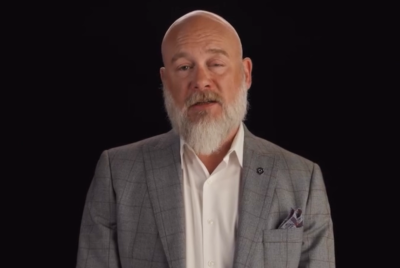
Harvard astrophysicist Avi Loeb has issued a startling warning that the interstellar visitor 3I/ATLAS may be dragging a 'swarm' of unknown objects across our Solar System. This claim, if verified, could challenge long-held views on interstellar comets and spark fresh debate over possible alien technology.
Early observations have already revealed that 3I/ATLAS is unlike any comet previously recorded, displaying unusual tail formations, strange acceleration, and chemical signatures that do not fit established patterns. These anomalies have prompted a deeper investigation into whether the object is a solitary comet or something far more complex.
Unusual Behaviour Forces Re-examination
3I/ATLAS was discovered on 1 July 2025 by the ATLAS survey telescope in Río Hurtado, Chile. From the outset, the object defied expectations. Instead of a pronounced tail pointing away from the Sun, early observations revealed a teardrop-shaped coma and a faint 'anti-solar' tail.
Contrasting data sets have complicated attempts to classify 3I/ATLAS as a natural comet. Spectroscopic analysis from the James Webb Space Telescope (JWST) indicated a coma dominated by carbon dioxide (CO₂), with water with a CO₂/H₂O ratio among the highest ever recorded for a comet.
This specific chemical signature suggests that 3I/ATLAS likely formed in the outer reaches of its home planetary system, far beyond the 'snow line' where volatile gases freeze.
In addition, independent spectrophotometric studies suggest the nucleus may be unusually strong and metal-rich, resembling primitive carbonaceous chondrites.
Claims of a 'Swarm' of Unknown Objects
It is against this backdrop of anomalies that Avi Loeb, a respected astrophysicist at Harvard University, has renewed his controversial claims. Loeb argues that certain features of 3I/ATLAS, particularly the presence of a Sun-facing glow rather than a standard tail, and unexpected acceleration, are more consistent with a swarm of objects travelling in formation rather than a singular natural comet.
Typically, an 'anti-tail' is an optical illusion caused by the observer's viewing angle relative to the comet's orbital plane, making large dust particles appear to point toward the Sun. However, Loeb contends that the persistence and intensity of this feature on 3I/ATLAS defy simple geometric explanations. However, Loeb contends that the persistence and intensity of this feature on 3I/ATLAS defy simple geometric explanations.
He further suggests that these objects could be either natural rocky fragments resulting from a tidal disruption event or, more provocatively, artificial in nature. The hypothesis extends to the possibility that 3I/ATLAS is not a single body but a composite, or even a probe accompanied by smaller devices, raising fresh, controversial questions about advanced extraterrestrial technology.
Scientific Pushback and Recent Data
Not everyone in the scientific community endorses Loeb's interpretation. Mainstream astronomers urge caution, arguing that although 3I/ATLAS is unusual, none of the anomalies conclusively prove an artificial origin or a multi-object swarm.
Indeed, a recent peer-reviewed preprint from August 2025 attributed many of 3I/ATLAS's strange behaviours to its unusually metal-rich, carbonaceous composition and the presence of relatively large dust grains. The study posits that metal-ice sublimation reactions could account for its peculiar coma morphology, without invoking any artificial mechanisms.
Moreover, optical observations from July to September 2025 documented a power-law behaviour in dust production as a function of distance from the Sun, consistent with volatile-driven activity. The change in tail morphology through that period can be explained by the slow ejection of large particles; such a process would delay the visible tail's emergence relative to classic comets composed of finer dust.
What's at Stake: Science, Speculation, and Public Fascination
The debate over 3I/ATLAS's true nature is not merely academic. If Loeb's 'swarm' hypothesis or the artificial-probe scenario were validated, it would represent a paradigm shift in astronomy and would likely become one of the most significant discoveries in human history.
On the other hand, even if 3I/ATLAS turns out to be a natural, albeit highly unusual, interstellar comet, the data collected so far highlight that our models for cometary formation and behaviour, developed almost exclusively from Solar System examples, may be far too narrow. Understanding objects like 3I/ATLAS could transform our picture of how planetary systems evolve across the galaxy.
The assertion that 3I/ATLAS may carry a 'swarm' of unknown objects is provocative and remains unproven. Yet it serves as a powerful reminder: in the vastness of space, even one interstellar visitor can force us to question the limits of our understanding.
© Copyright IBTimes 2026. All rights reserved.
- MOST POPULAR IN Trending