Avi Loeb Says He Cannot Disclose UAP Meeting Details but Calls US Effort 'Sincere' and Scientific
The Harvard astrophysicist declined to discuss the private Washington meeting, while stressing that unexplained sightings must be assessed through testable evidence
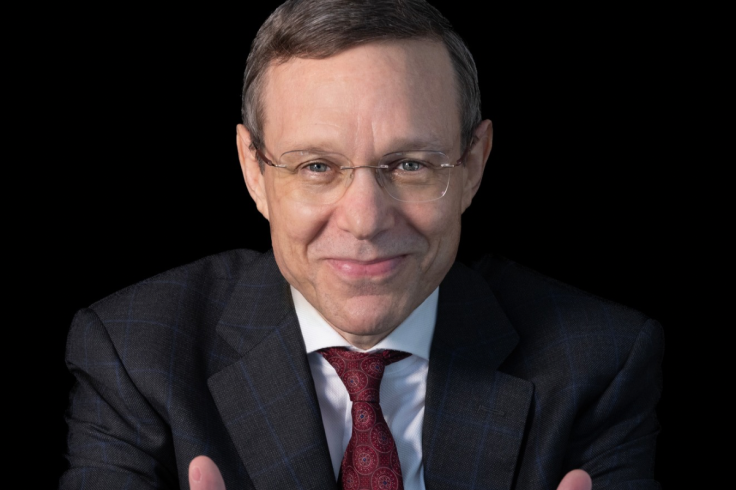
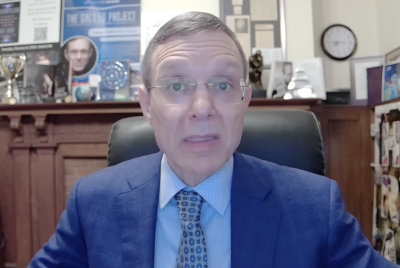
Harvard astrophysicist Avi Loeb said he cannot reveal what was discussed at a private UAP meeting in Washington, DC, on 31 August, but described the US government's approach as a sincere effort to understand unexplained sightings through scientific data collection.
The meeting followed the White House's establishment of a UAP Science Advisory Council in June. The council works alongside the Pentagon's All-domain Anomaly Resolution Office, the Office of the Director of National Intelligence and the FBI.
Loeb, who chairs the council, said its role is to advise the government on determining the nature of unidentified anomalous phenomena.
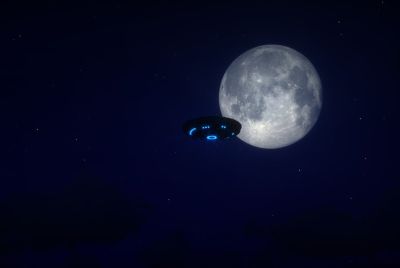
UAP, or unidentified anomalous phenomena, is the official term increasingly used instead of UFO.
Avi Loeb on the Closed-Door UAP Meeting
Loeb told reporters that council members met at the Office of the Director of National Intelligence. He did not describe the evidence examined, the participants' discussions or any conclusions reached.
'I cannot disclose the contents but I will say that the US government is sincere in its efforts to understand UAP based on the scientific method of data collection,' Loeb said.
That assurance is limited. It does not establish what any individual UAP case represents, nor does it confirm claims that the government possesses non-human technology.
The council includes Ben Lamm, co-founder and chief executive of Colossal Biosciences, a biotechnology company pursuing genome-editing research and projects involving extinct species. Lamm said he had long been interested in the subject and welcomed the opportunity to examine evidence directly.
'This is not about belief, it is about evidence,' Lamm said, adding that the group intended to apply rigorous methods to historical records and new observations that meet modern scientific standards.
The distinction matters. UAP reports can involve incomplete sensor data, human observation and classified military activity, all of which can make firm identification difficult. A scientific process can only be as reliable as the evidence available to it.
UAP Council Faces a Public Trust Problem
The council's work begins against a backdrop of public suspicion about official secrecy. A Gallup survey of 1,200 US adults, conducted between 1 and 19 July, found that 78% believed the government knew more about UFOs than it had publicly disclosed. The poll's margin of sampling error was plus or minus 4 percentage points.
That figure has risen from 68% in 2019 and 71% in 1996, according to Gallup. Only 17% said the government was not withholding information.
Yet the same poll indicates that Americans are not united behind an extraterrestrial explanation. Forty-nine per cent said all UFO sightings could be explained by human activity on Earth or natural phenomena, while 37% believed at least some may be alien spacecraft. Another 13% had no opinion.
The share without an opinion has grown since 2019, when 7% did not offer a view, Gallup found. The findings suggest that public opinion is not moving uniformly towards belief in extraterrestrial explanations, despite continued online speculation and the release of official documents.
Gallup also found that 17% of respondents said they had personally seen something they considered a UFO. Those respondents were more likely than people without such an experience to believe some sightings involved alien spacecraft, at 61% compared with 33%.
Scientific Claims Need Evidence
In August, the council supported legal assurances, including immunity where necessary, for current and former government employees and military personnel who wished to share information concerning alleged non-human technology. The stated aim was to assist the council's scientific evaluation.
Lamm said the group hoped to bring greater transparency and accountability by assessing credible evidence objectively and then sharing its findings with scientists and the public. He also said the inquiry could potentially reshape understanding of the world.
That is an ambitious goal. But the standard should be equally demanding: evidence that can be tested, checked and independently assessed, rather than claims that cannot be examined because the underlying information remains behind closed doors.
© Copyright IBTimes 2026. All rights reserved.
- Recommended For You