

Why Peter Diamandis Thinks UAPs May Be Watching Nuclear Sites and the Rise of Artificial Superintelligence
Tech entrepreneur is urging scientists to take UAP evidence more seriously, linking reports about nuclear sites and future super-intelligent AI to new briefings within US intelligence
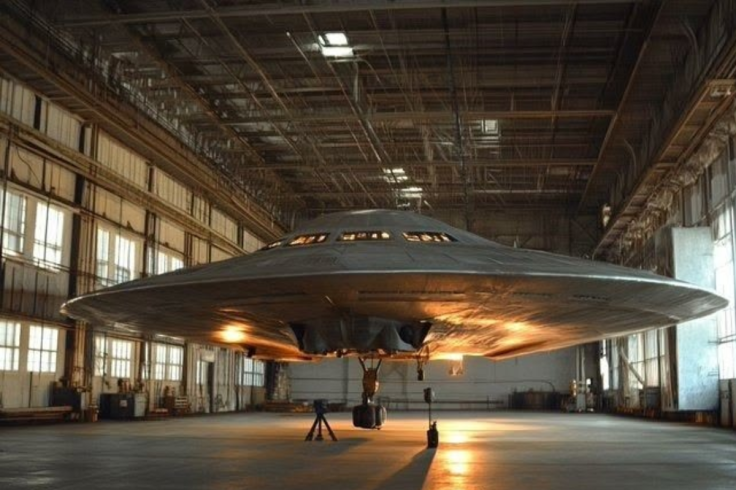
Peter Diamandis has urged scientists and policymakers to take UAPs and the possibility of non-human intelligence seriously, arguing in a 7 September Substack post that mounting evidence and growing government attention warrant closer scrutiny.
The XPRIZE founder, who also co‑founded the International Space University and asteroid‑mining venture Planetary Resources, has long framed himself as neither a UFO believer nor a hardened sceptic.
He stresses that he has never seen a UFO, and that his sharper tone is driven by whistleblower testimony, briefings reported from inside government and what he regards as a gradual shift of the UAP question from the conspiratorial fringe into more respectable rooms.
In his Metatrends newsletter essay, titled The Evidence Around UAPs Is Getting Harder to Ignore: A Serious Look at Non-Human Intelligence, Diamandis writes that 'there is evidence mounting, and it has been significant enough that it has captured my attention.' The wording is careful. He does not say alien craft are in the skies, but he is clearly irritated by the urge to write the whole thing off as tinfoil‑hat stuff before anyone has gone through the data properly.
Peter Diamandis Flags UAP Council Meeting Inside US Intelligence
After a meeting on 31 August at the Office of the Director of National Intelligence, where members of the UAP Science Advisory Council were briefed on the state of government thinking. According to Diamandis, citing council member Jennice Vilhauer, the council was told that the US government has a 'preparedness plan in place' should non‑human intelligence ever be confirmed. What that plan would involve in practice was not spelt out.
To recall, the UAP Science Advisory Council is chaired by Harvard astrophysicist Avi Loeb, who was asked by representatives of the ODNI and the Pentagon's AARO office to assemble and lead a scientific group to support their work.
Loeb also heads the privately funded Galileo Project, which seeks to study UAPs using scientific instruments and systematic data collection rather than anecdotal stories alone.
Diamandis cites Galileo alongside NASA's UAP Independent Study Team and research by Stanford professor Garry Nolan into reported neurological changes among people who say they have experienced UAP encounters as signs that the subject is receiving greater institutional attention.
NASA, for its part, has been explicit that its work should not be read as backing an extraterrestrial explanation. The agency says it has no data showing that UAPs are evidence of alien technologies and has stressed the need for better‑quality observations before any firm scientific conclusions can be drawn.
He also points to a growing lineup of whistleblowers, including former intelligence officer David Grusch and former Pentagon official Luis Elizondo, both of whom have publicly claimed that the US government possesses information about UAPs that has not been fully disclosed. Their allegations have helped push the issue into congressional hearings and cable news, even if solid documentation in the public domain remains limited.
In Diamandis' view, the number of senior military, intelligence and scientific figures now talking about UAPs 'must count for something.' It is not a single smoking‑gun incident that worries him, but what he sees as a cumulative weight of testimony, paperwork and political attention that at least deserves a calm look.
Diamandis also cites President Donald Trump and Senator Marco Rubio, who have publicly discussed UAP claims and the need to examine what officials and witnesses have reported. IBTimes UK has not independently verified the allegations made by whistleblowers or the claims concerning non‑human intelligence, and presents them here as the assertions of the individuals involved.
Nuclear Sites, Artificial Super Intelligence and the UAP Question
Diamandis is not simply cataloguing strange sightings. He tries to slot them into the broader story of human technology, comparing the nuclear age with what he calls the dawn of artificial super intelligence, or ASI.
Diamandis points to reported UAP incidents associated with sensitive nuclear facilities, including Los Alamos, Hanford, Oak Ridge and Malmstrom Air Force Base, as well as accounts involving Soviet nuclear sites.
The underlying reports vary in quality and are often disputed, but Diamandis argues that the apparent clustering is at least intriguing enough to warrant structured study rather than late‑night pub speculation.
He then looks forward to ASI, which he describes as a technology that could 'alter the trajectory of civilisation,' either through 'destruction or transcendence.' In his telling, nuclear weapons and future super‑intelligent AI systems sit together as moments when our species could radically reshape, or wreck, its own environment.
Diamandis then poses a hypothetical question. If non‑human intelligence were observing humanity, would nuclear weapons and advanced AI be the technologies most likely to attract its attention? He stresses that this is a thought experiment, not a claim that such observers definitely exist, and notes that correlations between UAP reports and nuclear facilities do not prove causation.
No proof shows that extraterrestrials are watching missile fields or data centres, and Diamandis does not pretend otherwise. IBTimes UK has not independently verified the whistleblowers' allegations or the claims about non-human intelligence. They are presented here as allegations or claims by the individuals cited.
The idea has nonetheless cropped up in online discussions that connect UAP narratives to debates about advanced AI, with some people treating it as a dark joke and others taking it unnervingly seriously. It is one of those mad intersections of internet culture and high‑stakes technology that is hard to ignore once you have seen it.
Peter Diamandis Calls for Science, Not Faith
The Galileo Project, NASA's UAP Independent Study Team and Nolan's research are central to Diamandis' claim that UAP work is no longer confined to the fringes. These efforts seek to improve the quality of available data and apply scientific methods to a field that has historically relied heavily on anecdotal reports and low‑quality imagery.
Still, he is openly frustrated by what he sees as a false binary between 'believers' and 'debunkers.' Both camps, he argues, often treat their positions as articles of faith. The result is a lot of noise, not much signal.
'I am not asking you to believe. I am asking you to look,' he writes in the closing lines of his 7 September post. The point is disarmingly simple. Strip away the memes and the Hollywood saucers, treat UAP reports as anomalous data, and then see where careful analysis actually leads.
Whether more researchers will take up that approach remains to be seen. Funding is tight, reputational risk is real, and the evidence base is messy at best.
For now, Diamandis' intervention mainly shows how questions about UAPs are starting to be discussed alongside broader arguments over nuclear risk, emerging technology and the future of artificial intelligence, which is already a wild enough mix on its own.
© Copyright IBTimes 2026. All rights reserved.