

'I Don't Know Why I Survived': Christa Pike Speaks Out After Two Lethal Injection Doses Fail To Kill Her
Pike says she remains in pain and under medical care as an independent review examines the failed execution and questions over emergency response and intravenous access
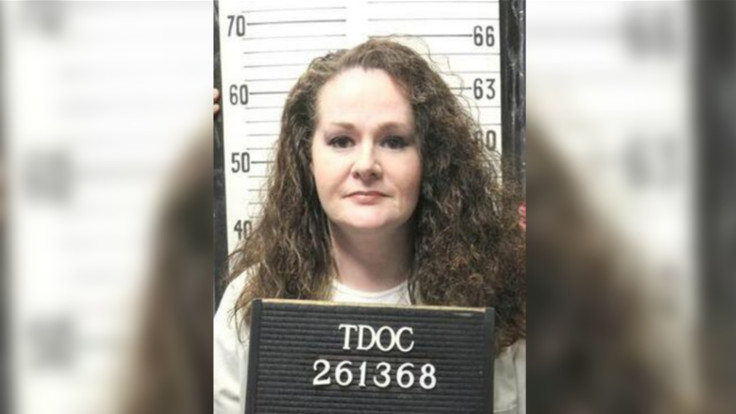
Christa Pike said on Friday, 30 October 2026, that she cannot explain surviving two lethal injection doses during Tennessee's failed execution attempt at a Nashville prison.
Her first public statement since 30 September describes continuing pain and uncertainty about her future.
Pike was convicted and sentenced to death in 1996 for murdering 19-year-old Colleen Slemmer in Knoxville in 1995, when Pike was 18. She was scheduled for execution at Riverbend Maximum Security Institution in Nashville, but a last-minute legal battle delayed the procedure until that evening.
In a statement dictated to her lawyers, Pike recalled entering the execution chamber prepared to die. She said she had thanked those who supported her and believed she would never see them again.
'I don't know why I survived that night. I don't know what comes next,' she said.
Christa Pike on Surviving a Failed Execution
Pike said she woke in hospital several days later, confused and suffering pain in her arms, hands and throat. She also said she continued to struggle with speaking.
'There hasn't been a moment since that night when I haven't been in pain,' she said in the statement released by her legal team. She described physical suffering alongside emotional distress.
Pike returned to the Debra K. Johnson Rehabilitation Center in Nashville on 10 October. She remains under medical care in its infirmary, according to her lawyers.
The prison ward has brought another difficulty. Pike said she has been largely separated from other prisoners, describing the experience as familiar after what she said were 28 years in solitary confinement.
Pike described her recovery in measured terms: 'I am recovering, and I know that I am getting stronger. But healing is not the same as being okay.'
She also acknowledged Slemmer's relatives, saying she continued to think about their suffering.
'I continue to think about my victim's family and the terrible pain and loss they have endured,' Pike said.
Pike thanked the emergency responders, hospital workers and lawyers involved in her care. She said messages from friends and strangers had offered comfort while she tried to make sense of surviving.
What Happened in the Execution Chamber?
Tennessee officials administered two rounds of pentobarbital during the attempted execution on 30 September. Witnesses reported that Pike remained alive, breathing and making sounds despite both rounds of the drug.
The attempt ended that night, and a call requesting emergency medical assistance was made at approximately 8.40pm. An ambulance subsequently took Pike to hospital, where she required a ventilator for several days.
Emergency responders also encountered delays after the initial call. According to 911 dispatch recordings obtained by the Associated Press, dispatchers sought a security verification code that the caller could not provide.
Prison personnel initially disputed that an emergency call had been made. Officials confirmed the request was genuine at approximately 9.11pm, after responders had spent nearly half an hour trying to verify it.
Pike's lawyers have also raised concerns about how staff inserted intravenous lines before administering the drug. Attorney Randy Spivey described repeated attempts to locate suitable veins in a declaration filed in court.
Pike's arms were swollen, bruised and blistered afterwards, according to her legal team. The possibility that the drug entered surrounding tissue rather than her bloodstream remains a concern, not an established finding.
The Tennessee Department of Correction has defended its actions, maintaining that staff followed the state's authorised execution protocol. Precisely why two doses failed remains unresolved.
Legal Fallout and Calls To Commute Pike's Sentence
Governor Bill Lee suspended Tennessee's remaining scheduled execution this year and commissioned an independent review. Former US attorney Ed Stanton was appointed to examine whether the procedure was followed and what changes might be needed.
The governor's office confirmed on 3 October that Stanton would assess the execution protocol's effectiveness and legality.
Tennessee Department of Correction Commissioner Frank Strada announced his resignation on 3 October, days after the failed execution.
Pike's case marked Tennessee's second unsuccessful execution attempt in 2026. On 21 May, officials abandoned the planned execution of Tony Carruthers after difficulties establishing the intravenous access required under the state's protocol.
Pike's lawyers have asked Lee to commute her death sentence to life imprisonment without the possibility of parole. There has been no announcement granting that request or setting another execution date.
Asked on 28 October whether Tennessee would attempt another execution or commute Pike's sentence, Lee indicated that her existing punishment would probably remain unchanged.
According to WVLT's report, Lee said he expected Pike's death sentence to remain in place unless the courts determined otherwise.
The independent review remains central to determining what went wrong during the attempted execution, although its findings have yet to establish why the lethal injection failed.
© Copyright IBTimes 2026. All rights reserved.