Baba Vanga Reportedly Foresaw Alien Contact in November Along With Global Conflicts and World War 3
The claims, attributed to the late Bulgarian mystic, are unverified and lack an original transcript or dated source

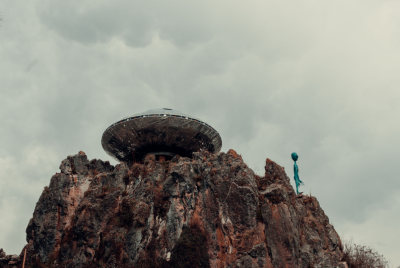
Baba Vanga reportedly foresaw alien contact on Earth in November 2026, along with global conflicts and a possible third world war, according to an unverified account of her predictions.
She has been credited with anticipating the death of Princess Diana and the 9/11 attack. The account, which cites news outlet WION, describes a spacecraft entering Earth's atmosphere and confrontations involving China, Russia and the US.
Baba Vanga's November Forecast
The alien encounter prediction describes a large spacecraft entering Earth's atmosphere in November, marking what is presented as humanity's first meeting with extraterrestrial intelligence. No location is given for its arrival.
The report also suggests possible contact with an unidentified civilisation already on Earth. The report does not explain who that civilisation would be, or whether this claim is connected to the spacecraft.
November is the date attached to the alien claim, while the forecasts of war and political changes refer more broadly to 2026 without giving any comparable dates.
Baba Vanga's reputation as a seer underpins the report, which uses the description 'Nostradamus of the Balkans'. It also credits her with predicting the UK floods of 2022, adding to the retrospective claims associated with her name.
However, no original transcript, dated record or direct quotation is supplied to authenticate the 2026 predictions. The attributed details remain unverified, including both the proposed alien encounter and the prospect of another world war.
Global Upheaval Attributed to Baba Vanga
The conflict forecasts describe a large confrontation beginning in 2026 and involving major powers. Alongside the reference to World War Three are claims about China seizing Taiwan and a direct clash between Russia and the US.
The reported consequences include political upheaval across continents and mounting international tensions. The account does not set out a sequence connecting those confrontations or establish that they would unfold as one conflict.
A separate prediction concerns the emergence of a new Russian leader in 2026. Described as a 'master' or world leader, the figure would reshape international politics. The report raises questions about Vladimir Putin's position and Ukraine's future but names no prospective successor.
Economic disruption also features. The report suggests that conflict could trigger a third global financial meltdown, or at least a substantial downturn, with market collapses, rising inflation, or a currency breakdown among the possible outcomes.
The financial claim is framed conditionally, with conflict suggested as a possible cause. It does not set out a timetable for a downturn or explain whether the projected market, inflation and currency problems would occur together or in different parts of the world.
Interpretations relating to artificial intelligence describe 2026 as a turning point for industry and everyday life. They suggest the technology will permanently reshape how people live and work, alongside questions about maintaining human independence as its use expands.
Natural disasters complete the forecast set. Tornadoes, tsunamis and earthquakes are mentioned, as are volcanic eruptions. One claim describes earthquakes and eruptions causing severe weather impacts affecting eight per cent of Earth.
No geographical breakdown accompanies that figure. The report does not specify the locations of the predicted disasters, and it provides no explanation of how it reached the eight per cent estimate.
© Copyright IBTimes 2026. All rights reserved.
- Recommended For You