Baba Vanga Prophecy: World War 3 in 2026, China Takeover And Vladimir Putin's Downfall
Renewed focus on a Baba Vanga prophecy for 2026 links World War 3, China, Putin and even aliens to next year.


A new wave of online speculation has erupted after renewed attention on a Baba Vanga prophecy warned of World War 3 breaking out in 2026, with the so‑called 'Nostradamus of the Balkans' also linked to claims of a Chinese takeover of Taiwan and the downfall of Vladimir Putin.
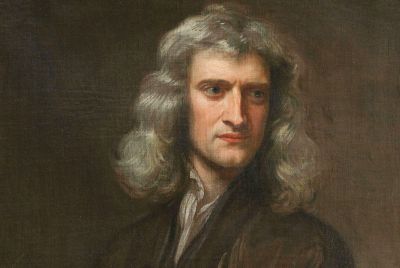
Baba Vanga, a blind Bulgarian mystic who died in 1996, has long been credited by believers with forecasting major global events, from the 9/11 attacks to the death of Princess Diana and severe UK flooding in 2022. None of those 'prophecies' can be independently verified, and her 'predictions' for 2026 are based on later interpretations of her alleged visions, rather than written records or dated transcripts. His devoted followers also rely on second‑hand accounts and translations.
Prophecy Ties War Fears To 2026
In those accounts, Baba Vanga is said to have foreseen a 'major conflict' beginning in 2026 and unfolding across several continents. The war, involving 'significant world powers,' is usually described by her followers as World War 3, a phrase that instantly inflames social media and talk‑radio panels but lacks official backing.
The renewed interest comes as real‑world tensions continue to rise. Fighting in the Middle East has intensified, European navies have sent warships to Cyprus, and relations between Russia and the West remain at their chilliest point in decades. Against that backdrop, it is not hard to see why older prophecies are being dusted off and repackaged for the present moment.
Supporters of the Baba Vanga prophecy say she foresaw not only a sprawling war but an accompanying collapse in the global financial system in 2026. The language used in those readings is apocalyptic: talk of a 'third global financial crash' or a severe economic downturn that could trigger market collapses, spiralling inflation and even a currency meltdown.
One controversial strand of the prophecy singles out China. Various online summaries argue that Baba Vanga predicted Beijing would take over Taiwan and that this flashpoint would push China into direct confrontation with the United States. Again, no original recording or written statement from the mystic has been produced to substantiate that wording.
Experts in modern Chinese history and security, who were not commenting specifically on Baba Vanga, have repeatedly warned in recent years that any attempt to change Taiwan's status by force would have profound global consequences. Followers of the prophecy simply graft that real‑world fear onto her name.
A 'New Leader' And The Prophecy
The Baba Vanga prophecy for 2026 also appears to touch on the Kremlin. According to these sources, she predicted the 'downfall' of Vladimir Putin and the rise of a new Russian leader who would reshape global politics. This successor is sometimes described in paraphrased accounts as a 'master' or 'worldwide leader' coming to power in 2026.
That wording is doing a lot of heavy lifting. There is no agreement among interpreters on whether this supposed figure is meant to be more democratic or more authoritarian, more peaceful or more aggressive. Some social media users have tried to connect the prophecy to Ukraine's long, grinding effort to repel Russia's invasion, speculating that a serious military or political setback could trigger change at the top. At present, there is no evidence of such a transition, and the Kremlin maintains a tight grip on both power and narrative.
Believers point out that Baba Vanga, in their view, successfully anticipated Russia's growing role on the world stage. Sceptics counter that forecasting turbulence and strongmen in Moscow at any point in the late 20th century was a safe bet. As with much of her legacy, the details are so vague that almost any future development can be retrofitted as fulfilment.
Catastrophes, AI And Aliens In The 2026 Predictions
War and leadership change are only part of the 2026 picture painted around the Baba Vanga prophecy. She is also credited with predicting a surge in natural disasters next year, including tornadoes, tsunamis, and earthquakes, possibly accompanied by a 'catastrophic' combination of seismic and volcanic activity and severe weather. One popular interpretation claims that as much as 8 per cent of the Earth's surface could be affected, though no scientific source is cited for that figure.
Technology does not escape the 2026 predictions either. Some readings of Baba Vanga's supposed visions insist that artificial intelligence will begin 'transforming humanity' next year, fundamentally changing industry and everyday life. That, at least, loosely mirrors debates already happening in government and business about automation, job losses and AI safety. Where the prophecy narrative adds an extra flourish is in the anxiety over losing human autonomy to 'thinking machines' as AI seeps into every corner of existence.
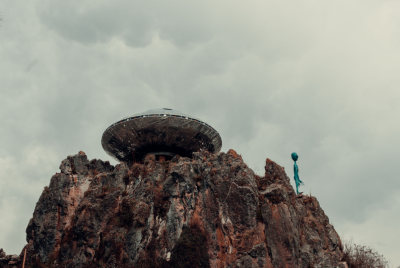
Perhaps the most outlandish thread concerns extraterrestrial life. Baba Vanga is said to have believed that humanity's first contact with alien intelligence would take place in November 2026, with a massive spacecraft entering Earth's atmosphere. Some interpretations even suggest that an alien civilisation may already be present on the planet, in some hidden form. No credible scientific agency has backed such a claim, and with no original documentation of her words, this element of the prophecy stands firmly in the realm of speculation.
Ultimately, the Baba Vanga prophecy operates in that fuzzy space between folklore, fear and the 24‑hour news cycle. Every new crisis is another opportunity to mine her story for ominous quotes, even when the underlying evidence is fragmentary at best and non‑existent at worst. Until any concrete, verifiable material emerges, all talk of World War Three in 2026, a Chinese takeover of Taiwan or Putin's imminent downfall remains unproven.
© Copyright IBTimes 2026. All rights reserved.
- Recommended For You