

Baby Found Dead Outside Home in Kentucky: Parents Charged After Miscarriage Report
It began with a reported miscarriage. It ended with a homicide investigation.
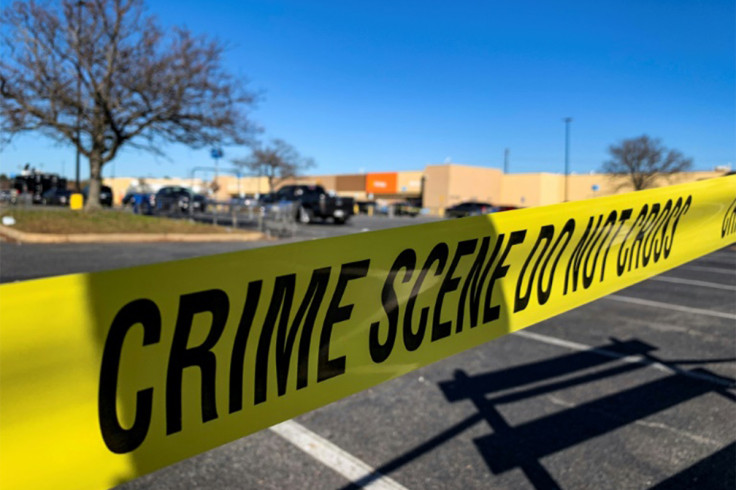
The snow in the Kentucky hills has a way of swallowing sound. It softens the crunch of boots, blurs the edges of fields and roads, and for a few days in late November last year, it hid something else: the body of a newborn child, lying over an embankment outside a modest home on the edge of Owsley County.
Emergency crews had been called to that house because a woman said she had suffered a miscarriage. By the time officers arrived, what should have remained a private, harrowing moment had become something harder to look at and impossible to ignore. The infant was found outside, in the cold. Unresponsive. Later pronounced dead.
In a county that is more used to quiet hardship than front-page horror, the story has landed like a stone in water, sending out slow, uneasy ripples.
Baby Found Dead Outside Home: From Miscarriage Report To Criminal Case
Police have named the couple at the centre of the case as 27-year-old Deeann Bennett and her husband, 32-year-old Charles Bennett. Both now face a stack of serious charges: reckless homicide, concealing the birth of an infant, tampering with evidence and abuse of a corpse.
Those charges sit uneasily alongside the Bennetts' initial account. According to investigators, Deeann reported a miscarriage. What officers say they discovered instead was an infant's body outside the family property, in the snow over an embankment near the home.
At first glance, the bare facts are almost brutally simple: a remote house, a reported miscarriage, a dead baby in the yard. Yet nothing about this case feels simple to those watching it unfold. If the child was born alive, why was it left outside? If the Bennetts were dealing with a medical emergency, how did that moment turn into a potential crime scene?
Officials, perhaps aware of how quickly such questions can spiral, have been guarded. Forensic work is still under way, they insist. Autopsy results, timelines and medical evidence will matter. Prosecutors, for their part, have stressed the gravity of bringing reckless homicide and abuse-of-a-corpse counts in a case like this, hinting at complexities they are not yet willing to share in public.
In the absence of detail, a familiar dynamic takes hold. Rumour and speculation stretch to fill the silence. Owsley County is small; word travels faster than any official update. Neighbours and relatives are left juggling grief, anger and, for some, a reluctant sympathy for a young couple whose worst day is now being dissected in court dockets and local gossip.
What cannot be dodged, however, is the core horror: somewhere between that emergency call and the arrival of first responders, a baby ended up alone in the snow.
Miscarriage, Maternal Care And The Weight On Rural Families
This case is not just about one couple's alleged actions; it also throws an uncomfortable light on the fragility of life in places like Owsley County.
Eastern Kentucky's hills are beautiful, but they are rarely easy. The region is marked by high poverty rates, patchy transport links and chronic gaps in healthcare. Specialist maternity services can be hours away. Many women rely on overstretched clinics, distant hospitals or, in some cases, no formal antenatal care at all.
Against that backdrop, a reported miscarriage taking place at home is tragically plausible. People in rural counties routinely navigate pregnancy, illness and emergency without the safety net urban residents take for granted. Delayed trips to hospital, a lack of immediate medical advice and bare-bones social support are part of the landscape.
That context does not excuse a baby being found dead over an embankment. But it does complicate the narrative. When tragedy strikes behind a closed front door in a place where ambulances take time and neighbours are often the first line of support, where exactly does the line between misfortune and criminal liability sit?
Those are not abstract questions. Abortion bans and tighter controls on reproductive healthcare across parts of the US have already left doctors, pregnant women and law enforcement negotiating dangerous grey areas. Miscarriages, stillbirths and self-managed abortions can become entangled with criminal law in ways that would have seemed unthinkable a decade ago.
The Bennetts' case has not—so far—been framed as a test of those broader battles. Police have focused on the location of the infant's body and what they allege happened after birth, rather than on pregnancy itself. Yet the public unease is fuelled, in part, by a sense that reproductive loss and criminal prosecution are now brushing up against each other more often, and more brutally, than many Americans are comfortable admitting.
In communities like Owsley County, that tension is magnified. People know, often personally, what it means to live far from hospitals and closer to the edge. They also know that once a case acquires words like 'homicide' and 'abuse of a corpse', empathy tends to be pushed to the margins.
For now, the official line remains cautious. Investigators continue to piece together what happened in those crucial hours. Prosecutors prepare for a court process that will move, by design, more slowly than the news cycle. The Bennetts sit under the weight of charges that could shape the rest of their lives.
What lingers beyond the legal filings, though, is a quieter reckoning. A baby is dead. Two young parents are accused of unthinkable acts. A rural county is left asking itself what went wrong—not in the abstract, but in the very practical sense of who was there, what support existed and how, in the hills above Owsley, a moment of desperate vulnerability became a matter for the criminal courts.
The snow that once covered that embankment has long since melted. The silence it left behind, heavy and accusing, has not.
© Copyright IBTimes 2026. All rights reserved.
- MOST POPULAR IN Crime


