

Boeing Commercial Chief Attributes Upcoming 5% Workforce Layoffs to an Unexpected 'Overstaffed Position'
The company says slower output will leave its commercial aeroplane division overstaffed, while the number of compulsory redundancies remains unclear
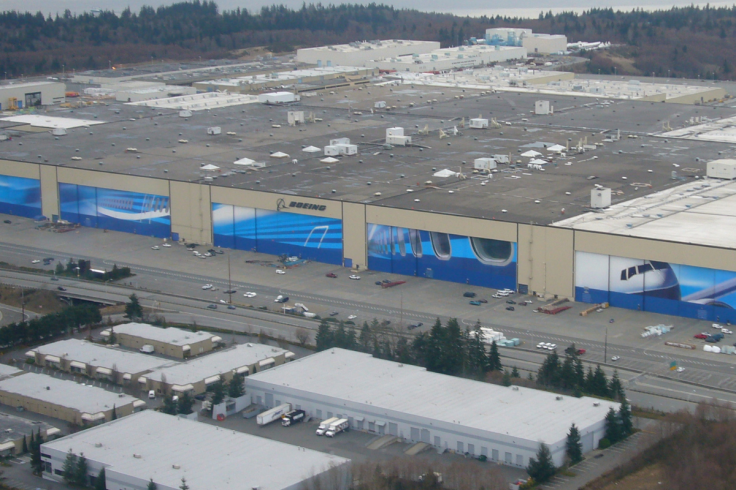
Boeing is preparing to reduce its commercial aircraft workforce by about 5 per cent, with redundancy notices potentially going out from December 2026 as it slows planned production increases.
Stephanie Pope, president and chief executive of Boeing Commercial Airplanes, set out the reduction in a staff memo on 9 November 2026.
Boeing had already warned that slower production would affect deliveries. On 27 October, chief financial officer Jay Malave told analysts the company expected to miss its 2026 target of delivering 500 Boeing 737s.
How the Workforce Reduction Could Affect Staff
The reduction includes compulsory redundancies and posts Boeing will leave vacant as staff depart. The number of compulsory redundancies remains unclear.
Boeing cuts 2,500 jobs as 737 MAX production slowdown derails recovery
— Moneycontrol (@moneycontrolcom) November 10, 2026
Its recovery since the 2024 crisis depends on rebuilding quality and trust, yet this is its first job reduction in nearly two years, a sign the turnaround is far from complete.
Read More:…
Reuters reported that the division employed 50,494 people at the end of 2025. Five per cent would represent about 2,525 posts, but Boeing has not disclosed the compulsory redundancy total.
'Adjusting our production schedules and reducing aircraft output puts us in an overstaffed position,' Pope wrote. She said increasing output more slowly would give Boeing's factories and suppliers time to stabilise their operations.
A separate Boeing memo excluded employees in Wichita, Kansas, and Tulsa, Oklahoma, from compulsory redundancies under the plan, KMUW reported. It also ruled out voluntary separation and early retirement for employees at those sites.
The Society of Professional Engineering Employees in Aerospace said it would discuss the impact on its members with Boeing on 19 November 2026.
Boeing expects to miss its 2026 target of delivering 500 737s, finance chief Jay Malave told analysts on 27 October. Chief executive Kelly Ortberg said stabilising production at 47 aircraft a month could take until 2027, with the company targeting 52 a month in the second half of that year. Boeing has not disclosed how the proposed workforce reduction will be divided by role or location.
Why Boeing's 737 Production Plans Are Slowing
Boeing chief executive Kelly Ortberg told analysts in October that stabilising production at 47 aircraft a month could take until 2027.
The company is targeting 52 a month in the second half of 2027. Its stated plan is to stabilise the 737 line at 47 aircraft a month before increasing output.
Boeing has more bad news as aircraft production is too lowhttps://t.co/yzKViOs3qV
— Dan | Dj’s Aviation (@DjsAviation) November 10, 2026
Ortberg said the increase depends on more reliable wing production and higher fuselage output in Wichita. Boeing acquired Spirit AeroSystems' Wichita operations in December 2025.
At the October call, Ortberg said Boeing had not yet demonstrated stable wing output at the 47-a-month level. He said the company wanted to remain at that pace until production could reliably support it.
Moving to 52 a month would require Boeing to verify that its planned production changes could deliver the necessary flow. Ortberg also said the target depends on certifying a new North Line and preparing it to produce aircraft.
Pope cited certification of two 737 Max variants as signs of progress. The US Federal Aviation Administration announced approval of the Max 7 on 3 August and the Max 10 on 20 October.
The FAA said its approval followed a review of the Max 10's design and safety requirements. Certification is a key step towards delivery to airlines. The Max 7 and Max 10 had been built before certification, and Boeing expected deliveries to begin in early 2027.
The 737 Max is a major source of cash for Boeing. The FAA grounded the series in the US in March 2019 after fatal Max 8 crashes in 2018 and 2019. Boeing said the grounding significantly affected its 2019 financial results.
© Copyright IBTimes 2026. All rights reserved.