Americans Are Getting Bigger Tax Refunds in 2026 — But Almost No One Is Spending Them
Americans review tax refunds as rising costs push many to save rather than spend.


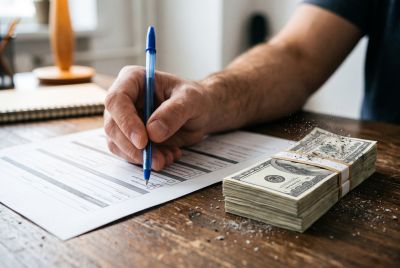
Across the US, tax refunds have grown in 2026. Yet the surge in payouts has not translated into a surge in spending. Instead, households are holding back. They are saving, paying down debt, or covering essentials. The expected boost to the economy has not arrived. It is a quiet shift, but a telling one.
Bigger Refunds, Modest Relief
Data from the United States Department of the Treasury shows that the average tax refund this year has crossed $3,400. That marks an increase of around 11 per cent compared to last year. The rise is linked in part to the One Big Beautiful Bill Act, which expanded deductions and credits. More than 53 million filers used at least one provision under the law.
For many, the numbers look significant on paper. Workers claimed deductions on overtime pay. Families saw a higher child tax credit. On the surface, it appears to be a year of financial breathing space. But that breathing space is narrow.
Inflation Is Closing the Gap
Prices have continued to climb. Inflation stood at 3.3 per cent in March. Energy costs rose sharply, driven in part by disruptions linked to tensions in the Strait of Hormuz. Food prices also edged higher. The result is simple. What households gain in refunds, they often lose at the checkout.
Amy Matsui, vice president at the National Women's Law Center, said the increase is being absorbed by everyday expenses. She noted that as the economy weakens, people are less likely to spend on travel or dining. In effect, the refund does not feel like extra money. It feels like a buffer.
Saving Overspending
Recent survey data from Experian reinforces this trend. Around one third of Americans say they plan to save their refund. That figure has edged up from last year. One in five intends to use the money to pay down debt. Others will cover basic needs. Only a small share, just 6 per cent, plan to spend on non-essential items.
This is a marked change from previous years, when tax season often triggered a short burst of consumer activity. Now, caution dominates. Garrett Watson of the Tax Foundation framed the issue clearly. The key question, he said, is whether households build a financial cushion. If they do, spending will remain limited.
A Lifeline for Low-Income Families
For some households, the refund is more than a financial choice. It is a necessity. Elaine Maag of the Urban Institute pointed out that tax credits such as the child tax credit and earned income tax credit form a significant share of annual income for lower-income families.

In some cases, these payments account for over 20 per cent of yearly earnings. Maag described the refund as one of the most important financial moments of the year for such households. It can determine whether bills are paid, debts are cleared, or savings are possible at all. Yet even here, the picture is complex. Changes to programmes such as SNAP and Medicaid may offset some of the gains over time. The immediate relief may not last.
The Missing Economic Boost
Policymakers often view tax refunds as a way to stimulate demand. More money in households should, in theory, lead to more spending. That effect is muted this year.
Matsui argued that while saving is a responsible choice, it also signals that the refunds are not delivering the wider economic boost that was anticipated. There is a sense of hesitation. Households are not confident enough to spend freely. They are preparing for uncertainty instead.
A More Cautious Consumer
The broader message is clear. Americans are not treating their tax refunds as windfalls. They are treating them as safeguards. This reflects a shift in mindset. Rising costs, economic uncertainty, and policy changes have made households more cautious. Even when more money arrives, it does not feel secure enough to spend.
The story of 2026 is not just about bigger refunds. It is about what people choose not to do with them. And in that restraint lies a deeper signal about the state of the economy.
© Copyright IBTimes 2026. All rights reserved.
- Recommended For You