China's AI Police Cars Use Facial Recognition in a 24/7 Surveillance Shift for Citizens
The AI patrol cars scan roads nonstop to detect risks in real time
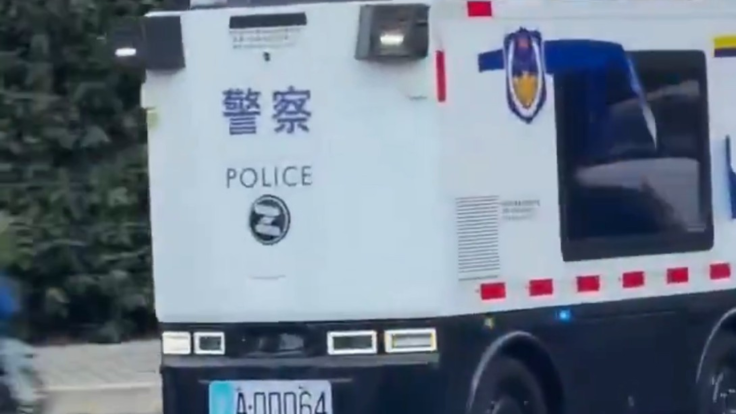
China has introduced a new fleet of AI-driven police patrol cars that operate around the clock, using facial recognition technology and advanced sensors to detect watchlisted individuals, fraudulent number plates, and potential safety violations.
The move marks a significant shift in surveillance practices, signalling a considerable expansion of automated monitoring within public spaces across several cities.
The vehicles, designed to conduct patrols without human officers on board, represent one of the country's most ambitious steps toward integrating artificial intelligence into everyday policing.
Authorities describe the rollout as a key part of strengthening rapid response systems and improving urban management.
How the AI Police Cars Work
The AI patrol vehicles are equipped with 360-degree panoramic cameras, high-definition facial recognition systems, and onboard processors that analyse footage in real time.
As they navigate public roads, the vehicles automatically scan surrounding areas to identify individuals flagged on official watchlists or drivers using false or obscured plates.
The system also detects a range of traffic and safety violations, including illegal parking and dangerous manoeuvres.
Once identified, alerts are transmitted to command centres where officers can initiate appropriate actions.
The cars can cover more ground than traditional foot or vehicle patrols due to their uninterrupted operation and automated analysis technologies.
These capabilities form part of a growing network of smart surveillance tools already deployed in major Chinese cities, including street cameras and AI-assisted traffic systems.
China has rolled out AI-driven police patrol vehicles that operate nonstop, using facial recognition, 360° cameras, and onboard sensors to spot watchlisted individuals, fraudulent plates, and various traffic or safety violations. The move marks another major step toward fully... pic.twitter.com/4VeFHKbOGc
— Open Source Intel (@Osint613) December 5, 2025
A Strategic Push for Automated Policing
China has been steadily expanding its use of artificial intelligence within law enforcement and public administration.
The introduction of autonomous patrol cars reflects long-term planning to enhance efficiency while reducing pressure on manpower.
Authorities have highlighted the operational benefits of real-time data and constant movement, which allow for faster identification of risks and fewer blind spots across urban areas.
The shift aligns with broader national objectives to develop smart-city infrastructure and integrate advanced technologies into daily governance.
Experts observing the rollout note that these vehicles represent a tangible step toward fully automated urban policing, supported by earlier investments in citywide digital networks and AI-powered analytical tools.
Impact on Citizens and Daily Life
The deployment of AI police cars introduces a new layer of visibility to policing efforts. With 24-hour surveillance capability, the vehicles influence how public roads and crowded areas are monitored, potentially increasing compliance with traffic regulations and discouraging unlawful behaviour.
The expanded coverage means that citizens may encounter AI patrols more frequently than traditional police vehicles, particularly in high-density districts.
Real-time detection systems allow for immediate responses to incidents that may previously have gone unnoticed until reported by the public.
Analysts say the technology will likely shape daily interactions within monitored spaces, with automated observation now woven more deeply into the urban environment.
Public Discussion and Technology Debate
The rollout has generated discussion among technology analysts and international observers regarding the future of AI-driven enforcement.
Much of the attention focuses on the scale of data collection and the growing reliance on automated recognition systems in public settings.
While facial recognition and AI-assisted monitoring are already widely used in various sectors across China, the integration of these tools into mobile patrol units signals a significant evolution in how public order is maintained.
Industry specialists continue to examine the operational advantages and challenges associated with continuous automated surveillance.
People think automated policing starts with robots on the street.
— Echo (@EchoNode01) December 6, 2025
It doesn't.
It starts when a state realizes that data obedience scales faster than human obedience.
China isn't building 'patrol vehicles.'
It's building the enforcement layer for a population-wide operating...
The tech enabling this exists everywhere.
— Youssef El Manssouri (@yoemsri) December 6, 2025
China's willing to deploy without privacy constraints Western countries have. Same AI surveillance capabilities, different regulatory environment allows full deployment.
Expansion and Future Integration
Initial deployments suggest the AI patrol cars will expand into additional urban zones following performance reviews and system evaluations.
Authorities are expected to integrate the vehicles further into existing smart-city frameworks, allowing for more coordinated monitoring and data sharing across municipal departments.
As the system develops, more cities may adopt similar vehicles to strengthen automated policing capabilities, reinforcing China's long-term strategy of embedding artificial intelligence within public governance.
© Copyright IBTimes 2026. All rights reserved.
- MOST POPULAR IN Trending