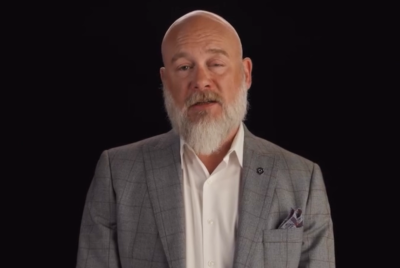
'Terrified and Naked': Mum of Four Arrested After Texts Branded 'Hate Speech'
She says 11 officers entered her home while she was in the bath

A mother of four says she was left 'terrified and humiliated' after 11 police officers entered her home while she was in the bath and arrested her for sending private text messages later deemed a 'hate crime'.
Elizabeth Kinney, a care assistant from the UK, claims she was naked and crying when officers entered her bathroom without warning.
The 34-year-old was detained under the Malicious Communications Act after sending messages to a female acquaintance following an assault.
Kinney told broadcasters she was in shock when police charged into her home, saying she had 'never been in trouble before'. She described the incident as 'disgusting and frightening', adding that she has since suffered nightmares and anxiety.
Private Messages Spark Hate Crime Charge
The case began when Kinney sent private text messages and photos of her injuries to a woman she blamed for an earlier attack by a male mutual acquaintance.
In the exchange, she used a term prosecutors said amounted to a homophobic slur, which led to her arrest for sending 'grossly offensive' messages.
Kinney maintains she had no intention of using the word as hate speech. She explained that in her local area, the word is used as slang for a 'weak person' rather than a reference to sexuality. 'It was never about anyone's orientation,' she said. 'It's just a word people here use when someone acts out or causes trouble.'
Despite her explanation, police pursued the case as a hate crime, and she was formally charged.
Officers later informed her she faced a potential sentence of up to 10 years in prison if found guilty.
🚨MOTHER ARRESTED FOR TEXTING INSULT ABOUT THE MAN WHO ATTACKED HER
— Basil the Great (@BasilTheGreat) December 2, 2025
Welcome to Britain in 2025
If a man physically assaults a woman that's fine
But if you call him a 'faggot' in a text you will be arrested
She didn't even send it to the person who she was talking about pic.twitter.com/44wmK8ZE3I
Convicted Under Malicious Communications Law
After seeking legal advice, Kinney pleaded guilty to the offence on her solicitor's recommendation, fearing a harsher outcome if she contested the charge.
The court handed her a 12-month community order, 72 hours of unpaid work, 10 rehabilitation activity days, and £364 ($482) in costs.
She said she was devastated to learn how serious the charge was. 'When they told me I could go to prison for five to ten years, I was in tears,' she recalled. 'I've got four kids — it would have ruined everything.'
Kinney has no prior criminal record and has worked as a care assistant since the age of 17. She said her employer and community have supported her, insisting they know she is 'not a hateful person'.
Brain Injury and Emotional Distress
Kinney also revealed she was recovering from a brain injury and skull fracture at the time she sent the messages. Doctors confirmed she had inflammation on the brain, which she said made her act 'out of character'.
'I wasn't myself after what happened,' she explained. 'I had been assaulted, I was hurt and angry, and I just wanted to prove what had been done to me.'
She added that despite her visible injuries, police did not follow up on the assault report made by hospital staff. 'No one ever asked if I was okay,' she said. 'The people who attacked me were never charged.'
Public Reaction and Free Speech Debate
Kinney's story has gained widespread attention online, with commentators questioning how a private message could result in a hate crime conviction.
Broadcaster Tucker Carlson discussed the case during an appearance in the UK, comparing Britain's hate speech laws to the US First Amendment.
Kinney said she now fears using certain words in any context. 'I'm scared to even say it out loud,' she admitted. 'I didn't know it could be a crime to say something in a private message.'
The incident has reignited debate over free speech, online communication, and hate crime legislation in the UK, particularly around how intent and context are interpreted under the law.
© Copyright IBTimes 2026. All rights reserved.
- MOST POPULAR IN Trending