

Chinese Envoy Says Dutch ASML Export Curbs Reflect Europe's Fear China Will 'Rob' Its Technology
Qu Xun warned Beijing could reconsider technology-sharing if Europe continues restricting China's access to advanced chipmaking equipment
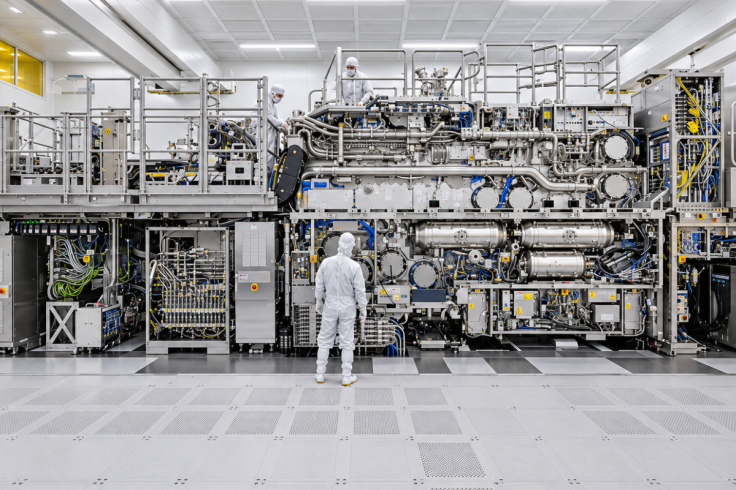
A Chinese diplomat has accused Europe of restricting access to advanced ASML chipmaking equipment because it fears China could steal its technology. Qu Xun, China's minister-counsellor in Madrid, made the accusation in an interview with Reuters on Tuesday, 17 November.
He warned that Beijing could respond by limiting technology-sharing if European countries continued restricting Chinese access to advanced equipment.
The Dutch government has restricted exports of advanced chipmaking equipment manufactured by ASML to China since 2019.
The United States is also pushing for additional restrictions on less advanced machines to limit China's ability to manufacture sophisticated semiconductors. However, it remains unclear whether US lawmakers will approve the proposed measures.
The dispute threatens to complicate wider trade negotiations between Brussels and Beijing. EU trade chief Maros Sefcovic and China's commerce minister, Wang Wentao, are expected to resume discussions in 2027 following an October agreement on quotas for Chinese hybrid-car exports.
Disagreements over technology transfers, investment restrictions and industrial policy remain unresolved.
Chinese Envoy Accuses Europe of Fearing Technology Theft
'We want to import ASML goods,' Qu told Reuters, without specifying which machines China wanted to access. He said the technology currently available to Chinese buyers was generations behind the most advanced equipment.
'We want the European Union to make its own decisions and not follow the instructions of others,' he said.
Qu then accused European governments of restricting access because of concerns about Chinese technology theft. 'Europe is forbidding it because it is afraid China will rob its technology,' he said. 'If Europe thinks that way, China will too.'
ASML declined to comment on the remarks. Qu's warning suggested that China could reconsider sharing its own technology if it believed European companies were receiving unfair treatment. He did not announce any new Chinese restrictions.
ASML Export Restrictions Complicate EU-China Trade Relations
The existing restrictions were imposed by the Netherlands, rather than the European Union as a bloc. Washington is separately pressing for tighter controls on lower-level semiconductor manufacturing equipment, potentially affecting ASML and Japanese manufacturer Tokyo Electron.
The wider disagreement extends beyond semiconductors. European proposals include requirements for local content and technology transfers, alongside restrictions on foreign investors' asset ownership in sectors such as electric vehicles, batteries and cars.
Qu described technology transfer as a 'pillar' of China's foreign direct investment strategy but insisted that Beijing expected reciprocal treatment. 'China is not looking to eat up the European market. We are seeking a fair, non-discriminatory position, based on equality and reciprocity,' he said.
He added that China was 'fully capable' of withstanding deteriorating relations if Chinese companies were treated unfairly. 'Both sides need to approach each other with goodwill,' he said.
Chinese Investment in Spain Highlights Wider Trade Stakes
Chinese investment in Spain has also become an important part of the relationship. Reuters reported that the value of Chinese investment stock in the country had tripled over the past decade to €12 billion (£10 billion).
Qu said companies were waiting two to three years to assess existing investments before committing additional funds. Chinese carmakers SAIC and Chery, alongside battery producers CATL and AESC, have invested in Spain independently or through joint ventures with European companies.
Qu dismissed the description of China as a 'systemic rival' used by Spain's opposition People's Party, saying Beijing judged politicians by their actions rather than their words.
'Spain has many advantages... We aren't coming here for half a year – we are coming for the next 20, 30, 50 years,' he told Reuters. 'We are betting on Spain 100%.'
The comments highlight the competing interests shaping European relations with China. While Beijing wants greater access to advanced manufacturing technology, European governments face pressure to protect strategic industries and address concerns about technology security.
The next round of EU-China trade negotiations will test whether both sides can find common ground on export controls, investment and technology transfers without further damaging their commercial relationship.
© Copyright IBTimes 2026. All rights reserved.