

Christa Pike Was Still 'Snoring' After Two Lethal Injections; Now Tennessee Has Halted Executions
Pike was taken to a medical facility after the failed procedure, while Governor Bill Lee ordered an independent review into what happened
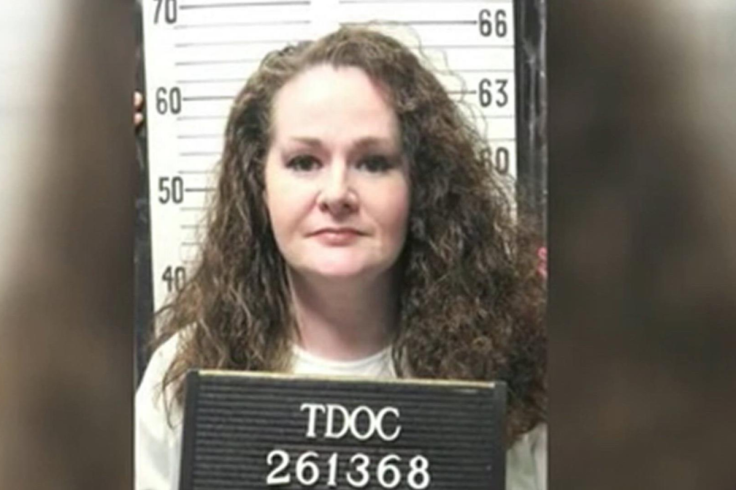
Christa Pike remained alive and was reportedly 'snoring' after Tennessee administered two doses of pentobarbital in a failed attempt to execute her, prompting Gov. Bill Lee to halt the state's remaining execution for the year and order an independent review.
Pike, 50, had been scheduled to die on 30 September at Riverbend Maximum Security Institution in Nashville for the 1995 murder of 19-year-old Colleen Slemmer. Had the execution been completed, she would have become the first woman put to death by Tennessee in more than two centuries.
Instead, the procedure ended with Pike being taken from the prison by ambulance to an off-site medical facility after officials were unable to carry out the sentence.
Pike Was Still Heard Snoring After Second Dose
The execution began after the US Supreme Court lifted a last-minute stay that had temporarily blocked it earlier in the day.
Witnesses said Pike was strapped to a gurney when the curtains opened shortly before 7.30pm local time. She remained conscious initially and at one point raised her head and asked officials about a sensation in her arm.
Tennessee uses a single-drug lethal injection protocol involving pentobarbital. Pike's lawyers said two doses were eventually administered.
By 8.26pm, witnesses reported that the second dose had been given. Pike could still be heard snoring behind a closed curtain afterwards, with the sound continuing until the microphone was switched off at 8.53pm. Witnesses also described gasping, loud breathing and movement during the procedure.
Her lawyers filed emergency motions while the execution was underway, arguing that continuing after the drugs had failed to kill her would violate constitutional protections against cruel and unusual punishment.
The attempt was ultimately stopped, and an ambulance was seen leaving the prison.
Tennessee Says Execution Protocol Was Followed
The Tennessee Department of Correction said it followed every step of the state's approved execution protocol. Officials said the protocol allows a second set of syringes to be administered if a prisoner remains alive after the first dose, but it does not provide additional steps if the person survives the second.
The department confirmed that Pike was transported to an off-site medical facility but did not immediately disclose details about her condition.
The failed execution was the second time this year that Tennessee had been unable to carry out a death sentence. In May, officials abandoned the lethal injection of Tony Carruthers after staff were unable to establish suitable intravenous access despite repeated attempts.
Supreme Court Had Cleared the Execution
The attempt followed hours of litigation. Earlier on 30 September, the Sixth US Circuit Court of Appeals temporarily halted Pike's execution while considering her latest legal challenge.
The US Supreme Court subsequently lifted that stay. Justices Sonia Sotomayor, Elena Kagan and Ketanji Brown Jackson dissented.
The dispute concerned Pike's argument that severe childhood sexual abuse had not been adequately presented during her sentencing proceedings. Sotomayor objected that lifting the stay prevented the lower court from properly considering the pending claim.
Governor Halts Remaining Execution Pending Review
Hours after Pike survived the attempt, Gov. Bill Lee ordered a comprehensive third-party review into what happened. Lee said Tennessee's remaining scheduled execution would not take place this year while officials examined the procedure.
The failed attempt adds another layer to a case that has drawn national attention for decades. Pike was 18 when she took part in the 1995 killing of Slemmer, a classmate at a job training programme in Knoxville. She was convicted of first-degree murder and sentenced to death in 1996.
Her lawyers had unsuccessfully sought clemency, citing her age at the time of the crime, a history of severe childhood abuse and diagnoses including bipolar disorder and post-traumatic stress disorder. The Supreme Court ultimately allowed the execution to proceed on Wednesday after overturning an appeals court stay.
But by the end of the night, Pike was still alive, Tennessee's execution process was under investigation and the state's remaining execution for 2026 had been put on hold.
© Copyright IBTimes 2026. All rights reserved.