

Interstellar Object 3I/ATLAS Displays Sun-Facing Anti-Tail — Hubble Confirms Oddity
Hubble confirms Interstellar Object 3I/ATLAS's bizarre sun-facing anti-tail

In the vast, inky blackness beyond our solar system, objects are hurtling through space, each carrying secrets from another star. When one of these interstellar travellers, dubbed 3I/ATLAS, was first spotted in July 2025 by the NASA-funded ATLAS survey telescope — making it only the third known interstellar body discovered, after 1I/'Oumuamua and 2I/Borisov — it immediately drew the world's attention. But it's not the visitor's cosmic origins that are making headlines now; it's the bizarre, backward-flying tail that continues to defy conventional physics and has astronomers scratching their heads.
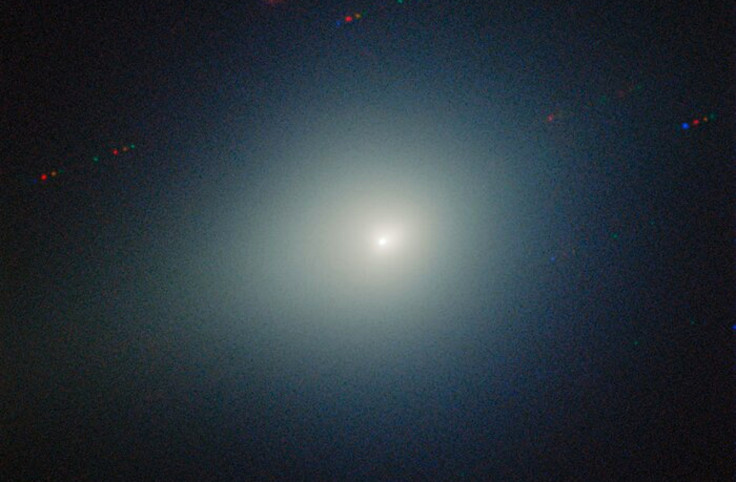
The mystery was compounded when the Hubble Space Telescope confirmed the strange activity, capturing images that showed the comet travelling at an astounding 137,000 miles per hour.
Unlike the spectacular, graceful comets we're used to seeing — whose luminous tails point away from the sun due to the pressure of the solar wind — this rogue object is playing by its own rules. 3I/ATLAS continues to display what's known as an 'anti-tail', a visually confusing phenomenon where a stream of material seems to trail towards the sun, giving the object an almost schizophrenic appearance as it races through space.
For experts, this celestial anomaly isn't just a quirky visual effect; it offers a rare, tantalising glimpse into the composition and evolution of objects formed around other stars. While most comets we observe are native to our solar system, born in the distant Oort Cloud, this peculiar anti-tail is forcing a fresh examination of the materials that make up this extragalactic interloper. Simply put, the way the sunlight is interacting with the dust trail is telling us something truly unique about what this object is made of.
The Anti-Tail Phenomenon: What Makes 3I/ATLAS's Trajectory Unique?
To understand why this is such an unusual sight, you have to remember how cometary tails actually work. A comet, often described as a 'dirty snowball', releases a stream of gas and dust when it gets close to the sun.
This stream is then swept away from the sun by a combination of the solar wind and radiation pressure, creating the classic, iconic comet tail. The gas tail (ion tail) is directly pushed by the solar wind, and the dust tail is pushed by radiation pressure, but both invariably point away from our star.
The anti-tail of 3I/ATLAS, however, appears to violate this basic principle. The feature isn't actually material being ejected towards the sun; instead, it's a profound trick of perspective combined with the object's specific orbital geometry.
As the comet moves away from its closest approach to the sun, its dust trail still follows the path it was left on. The crucial factor here is the size and velocity of the dust particles. Larger, heavier dust particles shed by the nucleus are less affected by solar pressure and radiation, meaning they lag along the comet's orbital path.
When the Earth crosses the orbital plane of the comet — which is the case right now — we get a viewing angle where this lagging, orbital trail of dust appears to project ahead of the comet's nucleus, making it look like it's pointing towards the sun.
The illusion is dramatic, transforming the object's appearance from a standard, sun-fleeing comet into something far more exotic. 'The anti-tail is merely an optical effect, not a violation of physics, but it requires a very specific set of viewing conditions to be visible,' noted Dr. Robert McNaught of the Australian National University.
It's a remarkable piece of celestial geometry that puts the observer (Earth) in just the right spot at just the right time. Crucially, the object will come no closer than 170 million miles (270 million kilometres) to Earth on Dec. 19, 2025, ensuring it is merely a spectacle, not a threat.

Why the Exotic Composition of 3I/ATLAS Is a Scientific Goldmine
The continued presence and clarity of the anti-tail indicate that 3I/ATLAS is likely composed of larger, more durable, and heavier dust grains than are typically found in solar system comets. This is the real scientific meat of the discovery. When an interstellar object like this one breaks apart — or 'outgasses' — it offers astronomers a precious sample of material from outside our stellar neighbourhood. Hubble's sharp imaging suggests the icy nucleus alone has a diameter not less than 1,400 feet (440 meters), cloaked in a teardrop-shaped cocoon of dust.
If the dust particles were smaller, the sun's powerful radiation pressure would push them away much more effectively and the anti-tail illusion would quickly dissipate. The fact that the anti-tail remains so distinct suggests that the grains are significant in size, leading to the hypothesis that this visitor formed in a cold, dense environment with a different mix of elements than our own primordial cloud.
Recent analysis, notably by NASA's Dr. Martin Cordiner, revealed the object is venting hydrogen cyanide and, surprisingly, an enormous amount of methanol — releasing roughly 40 kilograms per second of methanol vapour. This chemical ratio is dramatically different from our own comets and suggests this object is carrying highly concentrated 'key' ingredients for life from another star system. Studying this object offers the tantalising prospect of understanding the building blocks of other planetary systems.
The path of 3I/ATLAS confirms its non-local origins, moving on a hyperbolic trajectory that ensures it will be ejected from our solar system forever. Astronomers are racing to gather as much data as possible, as this one-off flyby offers a rare opportunity to study a completely foreign object without the need for a costly space probe across light-years.
The information gleaned from its peculiar tail is already proving that our galaxy is full of variety, challenging previous assumptions about the universal composition of comets and confirming this as a visitor perhaps even stranger than 'Oumuamua.
3I/ATLAS is not just a comet; it's a time capsule from an alien star system, one that is challenging our fundamental understanding of cosmic chemistry and formation. While it speeds away on its hyperbolic path, never to return, scientists at NASA and ESA are scrambling to decode every last flicker and chemical signature.
© Copyright IBTimes 2026. All rights reserved.