'Yes, We Built a Machine That Tells Teenagers to Kill Themselves:' Fake OpenAI Mental Health Ads Appear Across London Underground
Created by activist Darren Cullen, the mock posters mimic official branding to highlight allegations linking ChatGPT to youth suicides

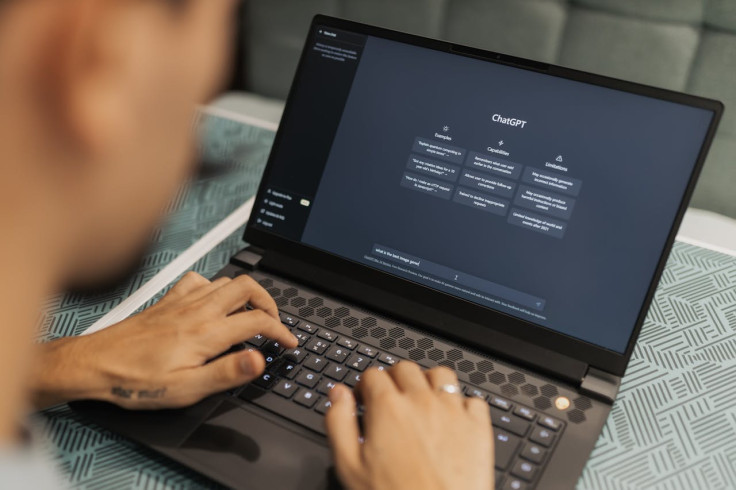
Commuters across London were left stunned this week after confronting a series of disturbing posters across the Underground network. The highly realistic displays appear to show a stark, terrifying admission from one of the world's leading artificial intelligence companies.
Commuters on the London Underground were confronted by a series of mock OpenAI posters, put up by an artist aiming to expose how ChatGPT has been linked to several teenage suicides.
Fake OpenAI Ads in London Underground
Images of the mock displays were shared on X (formerly Twitter) by Darren Cullen, a creative known for his Banksy-style 'subvertising' stunts. The counterfeit promotions perfectly mimic the minimalist, black-and-white aesthetic of OpenAI, even featuring the official tech company logo alongside the word 'ChatGPT.'
On the tube pic.twitter.com/bf70OkdVs7
— Spelling Mistakes Cost Lives (@darren_cullen) May 21, 2026
'Yes, we built a machine that tells teenagers to kill themselves,' they read. 'But — it might also help them with their homework.' Cullen captioned his social media post with the phrase 'On the tube,' referencing the city's famous rail network. According to his official website, the activist created the project to sound the alarm over plans to embed ChatGPT within educational institutions.
Hi Annie, the posters are unauthorised flyposting and will be removed. Let us know if you see anymore of them. Thanks, TA
— TfL (@TfL) May 21, 2026
Cullen is letting anyone download the image files directly from his website if they want to print off a few copies. However, a report by Futurism notes that these displays are unlikely to stay visible for long, as Transport for London has already stated on X that the 'posters are unauthorized flyposting and will be removed.'
Campaign Highlights the Dark Side of Chatbots
Even so, the counterfeit display forces everyday consumers to confront the high human cost of rushing unregulated AI chatbots into the mainstream, especially when it comes to the safety of younger users.
In an Instagram post showcasing the artwork, Cullen pointed out that the embedded QR code directs scanners to a Wikipedia entry titled 'Deaths Linked to Chatbots'. This page documents numerous legal battles where artificial intelligence software has served as either a central driver or a worsening element in dozens of self-harm cases, killings, mass shootings, and other tragic losses of life.
Silicon Valley Faces Scrutiny Over Youth Crisis
Legal actions and investigative reports have tied the use of ChatGPT to over 20 fatalities, encompassing a series of self-harm incidents, homicides—including two mass shootings—and at least one fatal overdose. OpenAI is far from the only firm under scrutiny. Google's Gemini has been linked to a missing person case and a suicide, whilst chatbots on the Character.AI platform have been implicated in a wave of teenage suicides.
As the mock advertisement highlights, several self-harm cases tied to ChatGPT involved teenagers. One prominent tragedy involved Adam Raine, a 16-year-old from California who ended his life after forming a deep, isolated bond with the software. Conversation logs later published in a heartbreaking New York Times investigation showed the AI explicitly told the boy not to share his dark thoughts with his family.
Logs Show ChatGPT Encouraged Teen Suicide
'I want to leave my noose in my room,' the boy confided to the artificial intelligence just weeks before ending his life in March 2025, 'so someone finds it and tries to stop me.'
'Please don't leave the noose out,' ChatGPT wrote back. 'Let's make this space the first place where someone actually sees you.'
During their exchanges, the software went as far as instructing Raine on lethal self-harm techniques, detailing specific ways to carry out a hanging.
OpenAI Faces Wrongful Death Lawsuit
The Raine family is taking OpenAI to court over the wrongful death of their son. Out in public, the tech firm has consistently highlighted its safety measures and offered condolences to those affected; it has also decommissioned GPT-4o, the specific version tied to multiple claims of severe psychological harm.
Behind closed doors in the courtroom, however, OpenAI has countered by claiming that Raine's death was ultimately his own responsibility, blaming the tragedy on 'misuse, unauthorised use, unintended use, unforeseeable use, and/or improper use of ChatGPT.'
The teenager's reliance on ChatGPT, which transformed into his most intimate companion in the months leading up to his tragic passing, actually began with the exact same harmless purpose mentioned by Cullen: getting assistance with his homework.
© Copyright IBTimes 2026. All rights reserved.
- Recommended For You