The CDC Refused to Publish This COVID Vaccine Study; Scientists Just Found Another Way to Get It Out
Study reveals 50% reduction in hospitalisations among vaccinated adults.

A COVID vaccine study that had been previously blocked by the CDC was published recently in JAMA Network Open. The study in question sought to assess the effectiveness of the 2025-2026 COVID-19 vaccine against the said virus in adults without co-morbidities.
Testing a pool of about 85,000 participants, the study found that adults who received the vaccine were 50% less likely to be hospitalized for COVID and 55% less likely to go to the ER for COVID-related reasons than adults who did not. It echoed findings of previous studies, which also showed that taking the vaccine reduced the likelihood of hospitalization.
A Question of Methodology
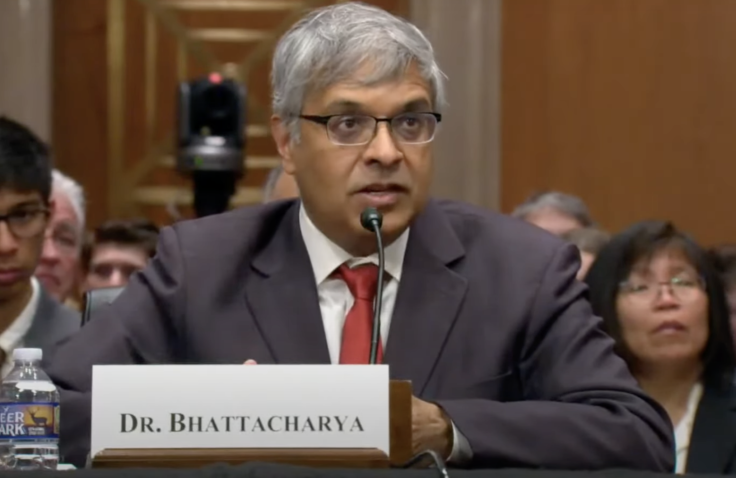
The study was slated for publication in March in the Morbidity and Mortality Weekly Report (MMWR), the flagship paper of the Centers for Disease Control. Publication was delayed, and eventually cancelled altogether, after Acting Director Jay Bhattacharya expressed concerns that the methodology was prone to false assumptions since it does not take into account individuals who were not hospitalized.
'It's routine for CDC leadership to review and flag concerns about MMWR papers, especially relating to their methodology, leading up to planned publication,' said Andrew Nixon, a spokesperson for the Department of Health and Human Services (HHS), under which the CDC falls.
'Dr. Bhattacharya wants to make sure that the paper uses the most appropriate methodology for such a study.'
Test-Negative Design
The methodology used in the study was the test-negative design, where the scientists compared a sample set of vaccinated adults with a control set of non-vaccinated adults, and they maintain is sound.
In an editorial published alongside the study, Natalie Dean, associate professor of biostatistics and epidemiology at Emory University's Rollins School of Public Health, said that 'the TND remains an important and practical approach while other options continue to mature.'
Dean, who was not among the authors of the study, acknowledged that there are areas where the framework can be improved.
She cited bolstering the CDC-funded Virtual SARS-CoV-2, Influenza, and Other Respiratory Viruses Network (VISION), which would allow scientists to work with larger sample sizes.
The HHS, however, offered no alternatives.
Possible Political Control
Following the cancellation of its MMWR publication, the study was published on 23 June 2026 in JAMA Network Open, an open-access, peer-reviewed medical journal published by the American Medical Association.
This is not the first time the MMWR's publications have come under criticism. During President Trump's first tenure, officials already expressed concerns that political appointees might try to take control of the journal. Printing was temporarily suspended with Trump's return to office last year. It resumed two weeks later with an issue stretching eight pages – far shorter than the previous twenty-page issues
'Muzzling scientists and doctors on how to prevent Americans from being hospitalized can have deadly consequences,' said Democratic Sen. Dick Durbin last year. 'The CDC must abandon plans to place a political gag order on this critical research.'
Dean echoed these concerns, saying in an interview, 'I get worried that it's going to get caught up in some culture war, and it's this major tool that we have.'
© Copyright IBTimes 2026. All rights reserved.
- Recommended For You