

From Machines to Medicine: The Network Behind Vietnam's Robotic Surgery Ambitions
The race in robotic surgery is shifting from deployment to integration.

The robotic surgery market in Asia Pacific is expected to grow at 21% annually through 2034, outpacing the global average of 16.9%, according to Polaris Market Research.
Against this backdrop, Vinmec Healthcare System has recently activated multiple surgical robotic platforms simultaneously across five cities: Da Vinci Xi, Hugo RAS, and Toumai MT-1000 for general surgery; ROSA, MISSO, and CORI for orthopedics; and StealthStation S8, Mazor X Stealth Edition, and O-arm for neurosurgery and spine procedures. It has been Vietnam's first and only multi-connected robotic surgery ecosystem.
Technology Serves the Surgeon, Not the Reverse
The significance of Vinmec's robotics strategy lies not in the number of systems installed, but in the way those systems are connected.
At the center of this structure is Vinmec Times City, which serves as a hub for simulation resources, standardized surgical pathways, and real-time clinical guidance distributed throughout the network. Vinmec has built an integrated framework in which multiple platforms share clinical protocols, training standards, and operational data.
But infrastructure alone doesn't create value. As Prof. Tran Dung Dung, CEO of Vinmec Healthcare System, emphasized: "Robots do not replace doctors; rather, they help us maximize our expertise through 3D visualization, precise movements, and better control in complex cases."
That ecosystem is sustained through the circulation of knowledge. Surgeons train colleagues across institutions, treatment protocols evolve through cumulative experience gathered from numerous cases, and clinical innovations are documented and shared throughout the network.
Alongside the launch of the robotic surgery network, Vinmec also announced the establishment of the Robotic Surgery Patient Support Fund, backed by nearly VND 300 billion in funding from Vingroup. The fund is expected to reduce financial barriers and expand patient access to advanced robotic surgery, particularly for those facing financial hardship.
Demonstrating Precision in Practice
The true measure of surgical technology is not sophistication, but patient outcomes.
That principle was demonstrated in April 2026, when clinicians at Vinmec Da Nang performed Central Vietnam's first robot-assisted total knee replacement using the AI-integrated CORI system.
The patient, Phan Thi Nghiep, 63, had grade 4 knee osteoarthritis, the most severe stage of the disease. Using the CORI robotic system, surgeons generated a real-time 3D model of her knee directly in the operating room, eliminating the need for a preoperative CT scan while achieving an accuracy of within one millimeter. Assisted by clinical staff, Nghiep was able to stand and take her first steps on the same day as the procedure.
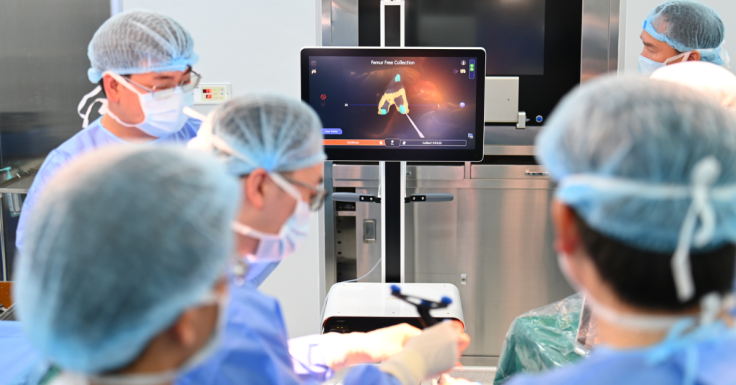
Beyond the technical milestone, the procedure underscored a broader shift in orthopedic care: from standardized techniques toward tailored surgery.
The Architecture Behind the Technology
At the core of Vinmec's robotic surgery strategy is a "3-in-1" framework built around three principles: Personalization, Automation, and Standardization.
To ensure consistency across the network, Vinmec surgeons undertaking robotic procedures follow a formal process of education, skills assessment, and international certification. The Vinmec Robotic Surgery Academy anchors this ecosystem, overseeing training programs while facilitating certification and knowledge exchange across the system.

Looking ahead, Vinmec plans to deepen collaborations with universities, professional societies, and leading robotic surgery centers worldwide as it works toward establishing a regional hub for training and technology transfer, according to Prof. Pham Van Binh, Director of Vinmec's High-Tech Robotic Surgery Network.
"It is an investment in the next generation of Vietnamese surgeons," Binh emphasized.
© Copyright IBTimes 2026. All rights reserved.