Suspicious Death of PLA Scientist Who Shipped Coronavirus Vials to Us Just Before Pandemic Hit
Declassified US documents reveal a PLA scientist shipped coronavirus-related materials to the US before COVID-19, raising fresh questions about origins and oversight.
Declassified US Senate documents have renewed scrutiny of a 2018 shipment of coronavirus-related research materials from a Chinese military-affiliated scientist to a US laboratory, though the records do not establish any connection between the shipment and the emergence of COVID-19.
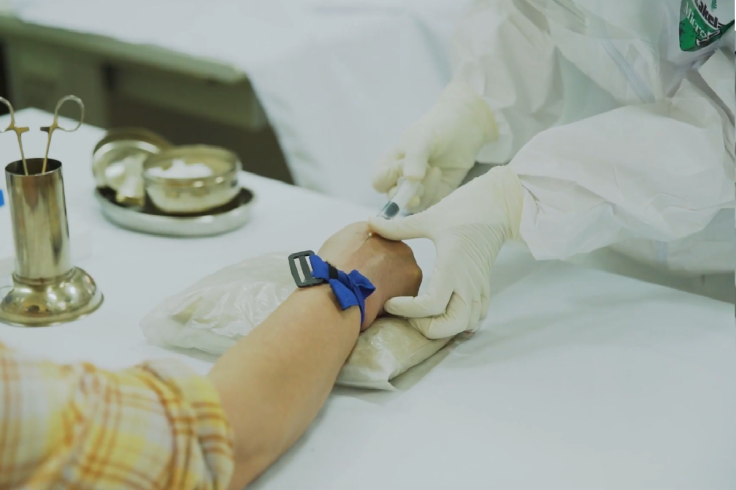
The documents, including a Department of Homeland Security (DHS) field report dated June 2020, describe how three undeclared vials linked to Chinese researcher Zhou Yusen were intercepted at Detroit Metropolitan Wayne County Airport after being carried into the United States by a courier in November 2018.
The records have resurfaced as lawmakers continue examining the origins of the COVID-19 pandemic and the extent of scientific collaboration between Chinese military-linked researchers and overseas institutions.
However, US intelligence agencies have not reached a definitive conclusion on the origin of SARS-CoV-2, and the documents themselves do not claim that the intercepted shipment was related to the pandemic.
PLA-Linked Researcher Sent Coronavirus-Related Materials to US Scientist
According to the declassified DHS report, Zhou Yusen, a researcher at the Beijing Institute of Microbiology and Epidemiology, which operates under China's People's Liberation Army (PLA), arranged for the shipment to University of Minnesota professor Li Fang in November 2018.
The courier reportedly told US Customs and Border Protection (CBP) officers that Zhou was the sender after the shipment was intercepted upon arrival in Detroit.
FBI forensic testing later determined that the vials contained precursor messenger RNA (mRNA) and a partial spike protein from porcine epidemic diarrhoea virus (PEDV), a coronavirus that infects pigs. The report does not state that the shipment contained SARS-CoV-2, the virus responsible for COVID-19.
Investigators also noted that the vials had been wrapped in a paper towel and sealed with wax before transport. While officials documented the packaging method, the report does not conclude that it violated any specific biosecurity protocol or directly endangered public health.
According to the documents, Li's research had received funding from the US National Institutes of Health (NIH).
The report also stated that some of Li's collaborators had links to the PLA and China's Thousand Talents Program, a government initiative established to recruit scientific expertise from overseas.
US authorities described such affiliations as a potential national security concern.
The report stated that 'foreign nationals with links to suspicious Chinese entities are of special interest' and noted that certain individuals had been identified 'for future targeting purposes.'
Li did not respond to requests for comment referenced in the Senate documents.
Zhou's Death Has Also Drawn Renewed Attention
The Senate documents have also prompted renewed discussion of Zhou's death in May 2020. According to the report, Zhou died after reportedly falling from a building at the age of 54.
The documents do not determine the circumstances surrounding his death, and no public investigation has concluded that foul play was involved. While the circumstances have generated speculation online, no independently verified evidence has been presented linking his death to his scientific work or to the COVID-19 pandemic.
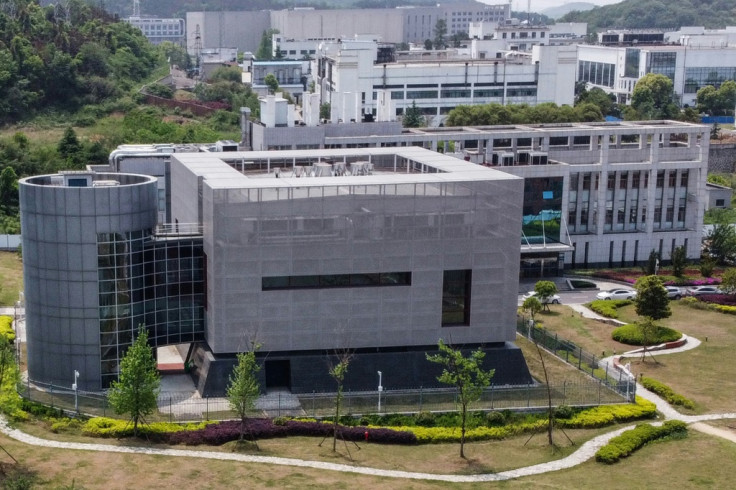
Zhou had collaborated extensively with Shi Zhengli of the Wuhan Institute of Virology, a leading Chinese scientist known internationally for her research on bat coronaviruses.
According to a 2023 Senate report, Zhou and Shi co-authored studies examining coronavirus entry mechanisms. Some US lawmakers and investigators have questioned aspects of coronavirus research conducted at the Wuhan Institute, including work they have characterised as involving gain-of-function techniques. However, scientists and policymakers continue to debate how specific research should be classified, and no international consensus exists on that characterisation in every case.
The US State Department has previously stated that the Wuhan Institute collaborated with China's military on classified research projects dating back to at least 2017.
The department has also alleged that China has continued biological research with potential military applications, including projects involving artificial intelligence.
Those assessments reflect the US government's position. Chinese authorities have consistently rejected allegations that military biological research at the institute was connected to the COVID-19 pandemic.
No Confirmed Link Between Shipment and COVID-19
Although the timing of the 2018 shipment has attracted renewed attention, the declassified documents do not establish that it was connected to the emergence of COVID-19.
US intelligence agencies have publicly stated that they remain divided over the virus's origin, with assessments continuing to consider both a natural zoonotic spillover and a laboratory-related incident as possible explanations. No consensus has been reached.
The Senate documents instead focus on issues relating to undeclared biological materials, research collaborations involving military-linked scientists and broader questions surrounding scientific oversight and biosecurity.
Broader Questions About Scientific Collaboration
The report also references additional incidents involving biological research and international collaboration.
Emails previously released by Senator Rand Paul show that Shi Zhengli asked Li Fang to help arrange the transport of monoclonal antibodies to China. According to the correspondence, Li declined, citing deteriorating relations between the two countries.
In a separate incident referenced in the Senate materials, the same courier was reportedly stopped in Detroit in 2021 while transporting 132 undeclared vials containing research flies from the United States to China.
The documents also draw comparisons with the case of Qiu Xiangguo, the former Canadian government scientist who arranged shipments of Ebola and Nipah virus samples to the Wuhan Institute of Virology in 2019.
Canadian authorities later investigated Qiu's links to Chinese military-affiliated researchers.
Some analysts argue that these incidents highlight weaknesses in oversight governing international scientific collaboration involving sensitive biological materials. Others caution that similarities between separate cases should not be interpreted as evidence of a coordinated programme without corroborating proof.
Ryan Clark, a researcher specialising in Chinese biological and military research, pointed to a 2021 study involving Chinese military-linked scientists examining SARS-CoV-2.
According to Clark, one finding—that the virus did not replicate efficiently in bat cells—appeared inconsistent with Beijing's longstanding position supporting a natural origin.
His interpretation represents his own analysis and has not been adopted as an official finding by US intelligence agencies or the broader scientific community.
Meanwhile, Dr Anthony Fauci and many other leading infectious disease researchers have continued to state that zoonotic spillover remains the most likely explanation for the emergence of COVID-19, while acknowledging that investigations into the pandemic's origins remain incomplete.
The declassified Senate documents provide additional insight into previously undisclosed biological shipments and research relationships involving Chinese military-linked scientists.
However, they do not demonstrate that Zhou's 2018 shipment caused, contributed to or was otherwise connected to the COVID-19 pandemic. Instead, the records have added new detail to ongoing debates over laboratory security, international scientific collaboration and the unresolved question of how SARS-CoV-2 first emerged.
© Copyright IBTimes 2026. All rights reserved.
- Recommended For You