

US Transport Department Drops 'Proven' Road Safety Measures Despite Duffy's 'Safety First' Agenda
Trump administration changes ederal road safety guidance, despite the department's pledge to put safety first.
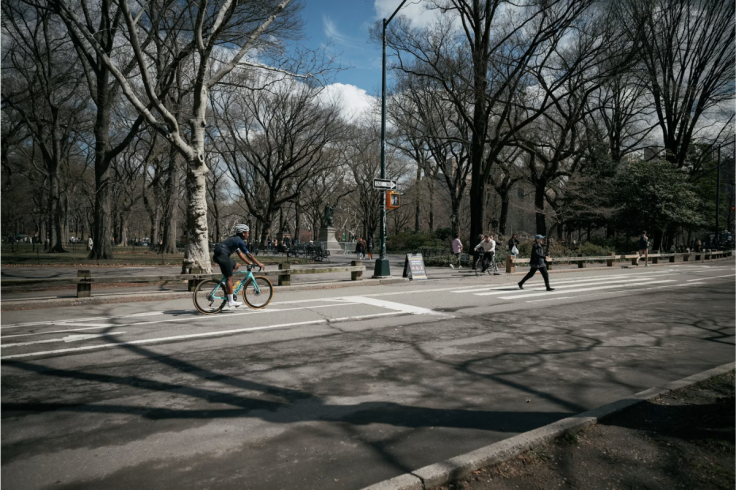
The US government has quietly removed bike lanes, speed cameras and several other measures from its own list of 'Proven Safety Countermeasures', a federal programme highlighting interventions shown to reduce crashes and save lives.
The Federal Highway Administration has deleted five measures from its official 'Proven Safety Countermeasures' list: bicycle lanes, road diets, speed safety cameras, variable speed limits, and speed limits calibrated for vulnerable road users.
The move sits awkwardly alongside Transportation Secretary Sean Duffy's repeated insistence that safety is his department's highest priority.
Five Countermeasures Vanish From A Federal Evidence List
The Proven Safety Countermeasures initiative is the highway administration's curated menu of interventions with documented records of reducing deaths and serious injuries, used by states and cities to support project planning and strengthen funding applications. A comparison of the current page with archived versions shows the five deletions, all measures that primarily protect people walking and cycling or restrain vehicle speeds.
The evidence supporting the deleted measures has long been cited by federal researchers and road safety experts.
Federal research has long credited road diets, which reconfigure lanes to slow traffic, with cutting crashes by roughly a fifth to nearly half, and camera programmes with measurable reductions in speeding and fatalities. 'The data is clear,' a spokesperson for Verra Mobility, which runs New York City's automated enforcement, told Smart Cities Dive, calling the cameras a proven tool.
Democrats on the House transportation committee reacted sharply. 'Attacking proven safety measures makes no sense in the middle of a roadway safety epidemic that killed more than 36,000 Americans last year,' said Representative Rick Larsen of Washington, the panel's senior Democrat, whose figure reflects the latest preliminary national estimates.
A Grant Regime Rewritten To Favour The Motor Car
The list edit is one move in a broader rewrite of federal street policy. The fiscal 2026 funding notice for the £3.7 billion ($5 billion) Safe Streets and Roads for All programme warns applicants that projects reducing vehicle capacity, adding dedicated bike lanes that take road space, or using automated enforcement outside school and work zones 'will be viewed less favourably', according to the notice highlighted by the Vision Zero Network.
Duffy has been explicit about the direction. He announced this month that the department would redirect £1.29 billion ($1.73 billion) from what he branded 'DEI bike lane' projects towards roads and bridges, Planetizen reported. Cancellation letters to local governments have used strikingly candid language, with one £900,000 ($1.2 million) San Diego County award rescinded because its road diet was 'hostile to motor vehicles', Governing reported from the notices.

The courts have already pushed back once. When the administration moved to rip out the protected bike lanes on Washington DC's 15th Street, where crashes had fallen 46 percent since installation, a federal judge blocked the removal in April, and cyclists rode the corridor in protest.
The camera restriction has a longer paper trail. The department announced in December that it would stop approving Safe Streets grants for traffic enforcement cameras outside school and work zones, and cancellation notices have since reached towns far from the culture-war map. In Fairfield, Alabama, a project converting street lanes to trail space was scrapped as 'hostile' to cars and 'counter to DOT's priority of preserving or increasing roadway capacity for motor vehicles', according to the notices reviewed by Governing. An £8.6 million ($11.5 million) rail-trail grant in another community was placed under 'review' without explanation.
A Safety-First Slogan Measured Against A Rising Death Toll
Duffy has framed his tenure around protecting the travelling public, repeatedly describing safety as the department's number one priority in congressional testimony and public statements. His department's stated rationale for the shift is that preserving and expanding roadway capacity for motor vehicles serves most road users, and that enforcement cameras function as revenue devices rather than safety tools outside school zones.
Safety advocates counter that the arithmetic of American road deaths points the other way. More than 39,000 people died on US roads in 2024; pedestrian fatalities remain near multi-decade highs, and the deleted countermeasures exist precisely because federal engineers judged them effective at bringing those numbers down.
Critics argue that removing the measures from the federal list carries practical consequences because state and local agencies often rely on the designation when supporting projects and seeking grants.
The department did not respond to NPR's questions about who ordered the deletions or what evidence supported the changes. Archived versions of the webpage document the revisions.
The revisions leave federal guidance more closely aligned with the Trump administration's transport priorities, even as road safety experts continue to argue that the removed measures have strong evidence behind them.
© Copyright IBTimes 2026. All rights reserved.