DeFlock America Facebook Group Surpasses 800,000 Members After Flock CEO Called It 'Terroristic'
The DeFlock America Facebook group now shows 818,000 members as opposition to Flock Safety's automated licence plate readers grows across the US
The DeFlock America Facebook group has reached 818,000 members, according to its current Facebook membership count, as opposition to Flock Safety's automated licence plate reader network continues to grow across the US.
The surge comes after Flock CEO Garrett Langley described the wider DeFlock movement as a 'terroristic organization', comments he later apologised for.
The group's latest figure marks a notable increase from more than 790,000 members reported earlier in September. The growth points to the scale of the online backlash against automated licence plate readers and the company behind one of the largest networks of the technology in the US.
JUST IN: 🇺🇸 "DeFlock America" Facebook group surpasses 800,000 members after Flock CEO called it a "terroristic organization." pic.twitter.com/u1sKZYsaiY
— Remarks (@remarks) September 26, 2026
For critics, the issue is not simply about cameras. It is about what happens to the information they collect, how long it is retained, and how easily records of where vehicles have travelled can be searched across different jurisdictions.
DeFlock America Takes Aim at Flock's Surveillance Network
DeFlock is a loose anti-surveillance movement focused on documenting and challenging the spread of automated licence plate readers, commonly known as ALPRs.
Its work includes mapping the locations of Flock cameras and drawing attention to communities where the technology has been installed or proposed. The movement also encourages residents to scrutinise local contracts and decisions involving ALPR systems.
DeFlock America has become one of its most visible online hubs, particularly through its rapidly expanding Facebook group.
The distinction between the Facebook group and the DeFlock movement is important.
DeFlock is not a conventional organisation with a single leadership structure, and the size of the Facebook community does not necessarily represent the number of people actively involved in campaigns against Flock cameras.
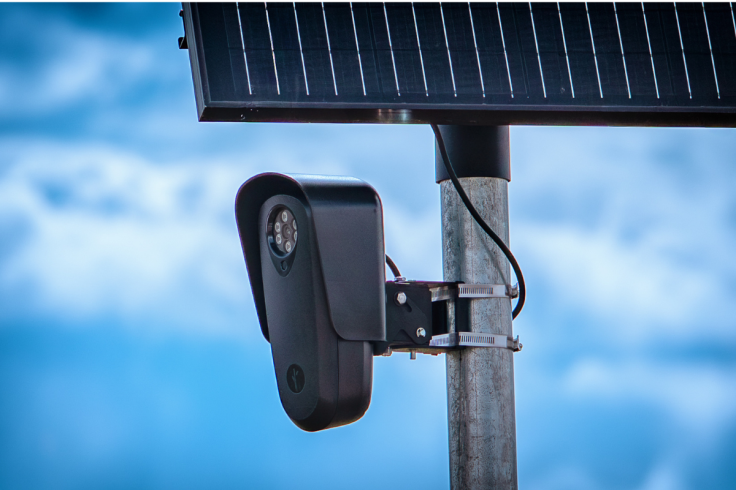
Flock Safety, meanwhile, has continued to expand its network of automated licence plate readers. The cameras photograph passing vehicles and collect information including licence plate numbers, vehicle characteristics and the time and location at which a vehicle was observed.
The company says the technology is intended to help law enforcement investigate crimes, identify vehicles connected to incidents and locate suspects or missing people.
Flock has also said its customers retain control over the data collected by its systems and has introduced measures aimed at giving communities greater control over retention and access.
Critics see the technology differently.
Their concern is that linking camera records across locations can allow authorities to build detailed pictures of vehicle movements, even when the driver has not been accused of a crime.
Flock CEO Later Apologised for 'Terroristic' Remark
Langley intensified criticism against Flock when he was asked about opposition to the surveillance cameras.
The chief executive described DeFlock as a 'terroristic organization' and said its 'primary motivation appears to be chaos'. He also compared the movement with Antifa, according to reporting on his comments.
The description drew flak because DeFlock's activities include publicly documenting camera locations and campaigning against the technology. Those activities are not, by themselves, evidence that the movement is a terrorist organisation.
Langley later acknowledged that his comments had gone too far.
Flock CEO Apologizes For Calling Activists ‘Terrorists’ As a movement against $8.3 billion Flock Safety’s license plate readers gathers momentum, company CEO Garrett Langley tells Forbes he shouldn’t have called non-violent activists “terroristic” organizations. Read more: https://www.forbes.com/sites/thomasbrewster/2026/07/17/flock-ceo-sorry-for-labelling-activists-terrorists/?utm_source=ForbesMainFacebook&utm_medium=social&utm_campaign=ForbesMainFB
Posted by Forbes on Wednesday, July 22, 2026
In July, he apologised for describing non-violent activists as 'terroristic' organisations and said the remarks were a mistake. He also said people were entitled to document the locations of Flock cameras as long as they did not commit a crime.
The reversal has not ended the dispute over the technology itself.
The growing DeFlock community includes people with differing political views, with opposition to automated licence plate readers cutting across some of the usual partisan lines. Civil liberties groups have also raised concerns about the expansion of ALPR systems and the potential privacy implications.
Flock maintains that its technology has a public safety purpose. The company argues that automated plate readers provide investigators with evidence that can help solve crimes and locate vehicles, while customers determine how the resulting data is used.
The size of the DeFlock America Facebook group nevertheless gives the campaign a sizeable public platform. Its membership has now risen to 818,000, based on the figure displayed by Facebook, after earlier reporting put the group above 790,000.
That does not establish how many members actively support campaigns against Flock or how many joined simply to follow the controversy. It does, however, show that the argument over automated licence plate readers has found an audience far beyond the communities where individual cameras are installed.
For Flock, the challenge is no longer only whether its technology can help police solve crimes. The company is also facing a growing public argument over how much vehicle surveillance Americans are prepared to accept, and who should have the power to search the information created by it.
© Copyright IBTimes 2026. All rights reserved.
- Recommended For You